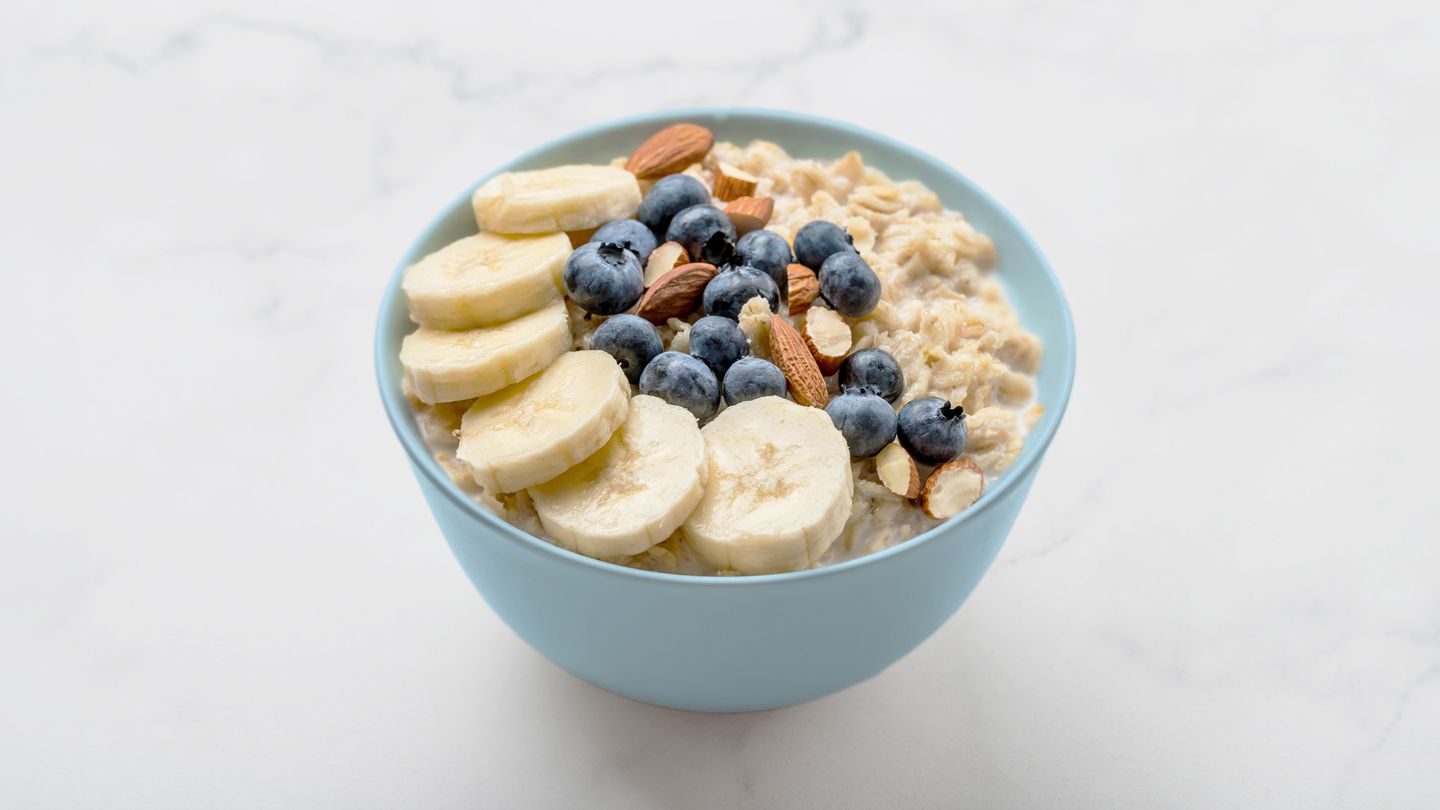
You can enjoy a bowl of oatmeal by itself, but it’s more interesting — and potentially healthier — when it includes something extra. “Oatmeal is a blank canvas, like a pizza crust or a bowl of plain noodles, that you can ‘paint’ with your own nutrient-dense ingredients,” says Carrie Gabriel, RDN, a registered dietitian-nutritionist and private chef in Los Angeles.
Both sweet and savory mix-ins boost the nutrition of your bowl — from berries for fiber and antioxidants to nut butter for healthy fats and protein. Below, dietitians dish on seven nutritious ways to elevate your oats.
1. Nuts and Nut Butters
“Nuts are my favorite addition to oatmeal,” says Danielle VenHuizen, RDN, a registered dietitian-nutritionist in Seattle. Nuts and nut butters are rich in heart-healthy monounsaturated fats, along with satiating fiber and protein. One tablespoon (tbsp) of peanut butter, for example, contains 4 grams (g) of monounsaturated fat, nearly 1 g of fiber, and 3.5 g of protein.
Research shows that people who eat more nuts tend to have a lower risk of cardiovascular disease and related death than those who eat fewer nuts. They also tend to have better weight control. Researchers believe this may be due to nuts’ combination of satiating nutrients, such as protein, fiber, and fat.
VenHuizen says if she had to pick, she’d put walnuts at the top of the list of nutty oatmeal upgrades. “Walnuts are a good source of plant-based omega-3s and are rich in unique antioxidants,” she explains. These include ellagitannins, which promote the growth of good bacteria in the gut.
Note that nuts and nut butters are calorie-dense, so a little bit goes a long way. One serving of nuts is 1 ounce (oz), or a small handful, while a serving of nut butter is 2 tbsp.
2. Seeds and Seed Butters
Like their nutty counterparts, seeds and seed butters supply healthy fats, fiber, and protein. Seventy percent of the fat in sunflower butter is the heart-healthy monounsaturated variety. Plus, 1 tbsp of sunflower butter boasts nearly 3 g of protein and 1 g of fiber.
Seeds and seed butters are also high in minerals like magnesium, zinc, and iron, and vitamins C, E, and K — not to mention a handful of antioxidants that may help mitigate oxidative stress and inflammation linked to many chronic diseases.
Gabriel recommends experimenting with tahini (ground sesame seeds) or chia seeds in oatmeal. Like nuts, seeds tend to be high in calories, too. Stick to a serving size of 1 oz of loose seeds or 2 tbsp of seed butter.
3. Banana
Banana is a classic oatmeal mix-in. “Its creamy texture and sweet-yet-subtle flavor is unmatched,” VenHuizen says.
One medium banana offers nearly 32 milligrams (mg) of magnesium, 422 mg of potassium, and 3 g of filling fiber.
VenHuizen notes that bananas are relatively high-glycemic, meaning they can raise blood sugar quickly. This is especially a concern for people with diabetes, but even those without blood sugar problems may notice that high-glycemic foods raise and drop blood sugar quickly, creating feelings of fatigue or hunger. “Make sure and add some healthy fats, fiber, and protein, such as nuts, hemp hearts, or flaxseed to round it out,” she suggests. These nutrients help your body absorb sugar more slowly.
4. Canned Pumpkin
Savor the flavor of autumn with canned pumpkin. “Adding canned pumpkin to your oatmeal is a great way to create a seasonal favorite that’s packed with fiber, potassium, vitamin A, and a whole host of antioxidants,” VenHuizen says. Each half-cup serving provides 3.5 g of fiber, more than 252 mg of potassium, and 955 micrograms (mcg) of vitamin A.
Those nutrients do more than round out a seasonal breakfast. Research suggests that the unique blend of nutrients found in pumpkin has the potential to reduce your risk of chronic diseases, thanks to antioxidant and anti-inflammatory properties.
“Sweeten it up with a little maple syrup, a sprinkle of cinnamon, and a dusting of roasted nuts, and you’ve got yourself a wonderful breakfast that will keep you going all morning long,” VenHuizen suggests.
5. Protein Powder
Oatmeal contains a decent dose of protein at about 6 g per cup. To take that number higher — and help balance out a carbohydrate-heavy meal — add a scoop of protein powder. “It helps keep your energy stable longer than just eating oatmeal alone,” Gabriel says. Whey protein powder can add around 16 g of protein per scoop.
For a sweet, filling flavor combo, Gabriel suggests mixing a chocolate-flavored protein powder, nut butter, and sliced banana into your oats.
6. Berries
“If you want to make an oatmeal bowl that’s bursting with antioxidants, make sure to add berries,” VenHuizen says. The polyphenols (a family of antioxidants) in these fruits have been linked to reduced blood pressure, lower inflammation, and a healthier composition of gut bacteria.
You can use fresh berries when they’re in season, but frozen ones are just as nutritious, VenHuizen says. Frozen berries are typically harvested at the peak of freshness, retaining their nutrients through the freezing process. Just thaw them overnight in the refrigerator before use. “Stir them into your oats as they cook or sprinkle them on top of your finished oatmeal bowl,” VenHuizen suggests.
7. Cacao Nibs
When you’re craving something on the richer side, give cacao nibs a try. These crushed cacao beans offer a more nutritious alternative to chocolate chips.
“The cool thing with cacao nibs is that they offer all the benefits of chocolate, but without the sugar or any other additives,” VenHuizen says. A tablespoon of cacao nibs contains 63 calories, nearly 3 g of fiber, and 0 g of sugar.
“They add a ton of antioxidants along with an earthy bitterness and a delightfully crunchy texture that will blend perfectly into your oatmeal bowl,” VenHuizen adds.