


Talking to Your Doctor Talk to Your Doctor About Bleach Baths If you are curious about bleach baths for psoriasis, have a conversation with your dermatologist before trying them out, Hooper says. This is especially important if your plaques are cracked, bleeding, crusted, painful, widespread, or showing possible signs of infection, such as warmth, swelling, pus, or increasing tenderness. And if you’ve tried bleach baths and noticed improvement, that’s useful information to relay to your dermatologist, too, she says. It may suggest bacterial colonization, folliculitis (infection of the hair follicles), or some eczema overlap rather than bleach baths treating psoriasis directly. “It’s complicated but important to tease out,” she says. If a dermatologist approves a bleach bath, ask for specific instructions. Garshick says the dilution typically used for eczema is about ¼ to ½ cup of regular household bleach in a full standard bathtub, with a soak of about 10 minutes, no more than two to three times per week, and only under dermatologist guidance.e60dc2a1-f33c-4a05-9b50-8e3e8e5976294f23b872-04eb-48a7-b1a3-54ef7a5dbae9 After bathing, she recommends rinsing, gently patting the skin dry, applying any topical medications as prescribed, and moisturizing immediately while the skin is still slightly damp. Bleach baths are inexpensive, easy to set up at home, and safe if your doctor gives you the green light, Hooper says. They just may not be as effective for psoriasis. “There’s nothing wrong with trying it. Just don’t be frustrated if it doesn’t work for you,” she says. You can also ask your dermatologist about other options, especially if your current treatment plan isn’t working. Prescription topical therapies like corticosteroids or non-steroid treatments, biologic medications, and phototherapy when appropriate are some of the more evidence-backed options, Garshick says.e60dc2a1-f33c-4a05-9b50-8e3e8e597629333e91fe-fed9-4078-a694-44f20fbbca4f
Potential Benefits Potential Benefits of Bleach Baths for Psoriasis The key potential benefit of a bleach bath for psoriasis is its antimicrobial effect — but this possible link is based on research in eczema, says Marisa Garshick, MD , a dermatologist in New York and New Jersey and a clinical assistant professor of dermatology at NewYork-Presbyterian Weill Cornell Medicine. Specifically, bleach baths may decrease Staphylococcus aureus , a strain of bacteria that’s commonly found on eczema-prone skin, according to research — and research suggests bleach baths may have an anti-inflammatory effect on eczema-prone skin, too. e60dc2a1-f33c-4a05-9b50-8e3e8e597629365ffdd8-bb48-4e74-8edd-a6d07fc20c30 Psoriatic skin is 4.5 times more likely to be colonized by Staphylococcus aureus than skin not affected by this condition , and the bacteria may be present in psoriasis lesions in 60 percent of patients.e60dc2a1-f33c-4a05-9b50-8e3e8e597629f2d7843c-19b9-436b-a536-4921102d0776e60dc2a1-f33c-4a05-9b50-8e3e8e597629b63dd5a0-5d20-4615-aac1-50209bcba3f5 Bleach baths may be helpful for this subset of psoriasis patients, Dr. Garshick says. “For someone with psoriasis who experiences frequent bacterial skin infections or has . . . skin that is prone to infection, a dermatologist may consider a bleach bath as part of an individualized treatment plan,” she says. “However, it’s not considered a standard psoriasis treatment .” Don’t expect it to help with treating psoriasis plaques or inflammation, she says. “For psoriasis, they are not routinely recommended because there is limited evidence showing they improve psoriasis itself,” she says. There are also instances in which patients have both psoriasis and eczema — this is another group who may benefit from bleach baths, according to Deirdre Hooper, MD , a board-certified dermatologist in New Orleans. Research suggests they can be helpful in relieving itch in moderate to severe atopic dermatitis.e60dc2a1-f33c-4a05-9b50-8e3e8e597629dd9c016c-e3a9-46ec-bfbc-9ee942ccf029 “If you have pure psoriasis, no itch, and no bacterial infection, bleach baths are probably not going to be helpful for you,” Dr. Hooper says. “But a lot of people have some overlap.” Aside from bacteria and itch, research has also suggested bleach baths work in eczema by calming inflammatory pathways, specifically NF-κB, but again, this hasn’t been established in psoriasis, says Joseph Lam, MD , a pediatric dermatologist at the BC Children’s Hospital in Vancouver, British Columbia, who is a spokesperson for the Society for Pediatric Dermatology .e60dc2a1-f33c-4a05-9b50-8e3e8e597629ab53fa3c-2e30-4d82-9111-b3f29f1122c0 “The thick plaques of psoriasis are very different from the disrupted skin barrier in patients with eczema,” Dr. Lam says. “Currently, there is no good evidence for the use of bleach baths in patients with psoriasis.”
Resources We Trust Cleveland Clinic: PsoriasisMayo Clinic: PsoriasisNational Psoriasis Foundation: Integrative Approaches to CareAmerican Academy of Allergy, Asthma & Immunology: Bleach Bath Recipe for Skin ConditionsNational Eczema Association: Bleach Baths for Atopic Dermatitis — What We Believe, What We Know, What We Don’t Understand
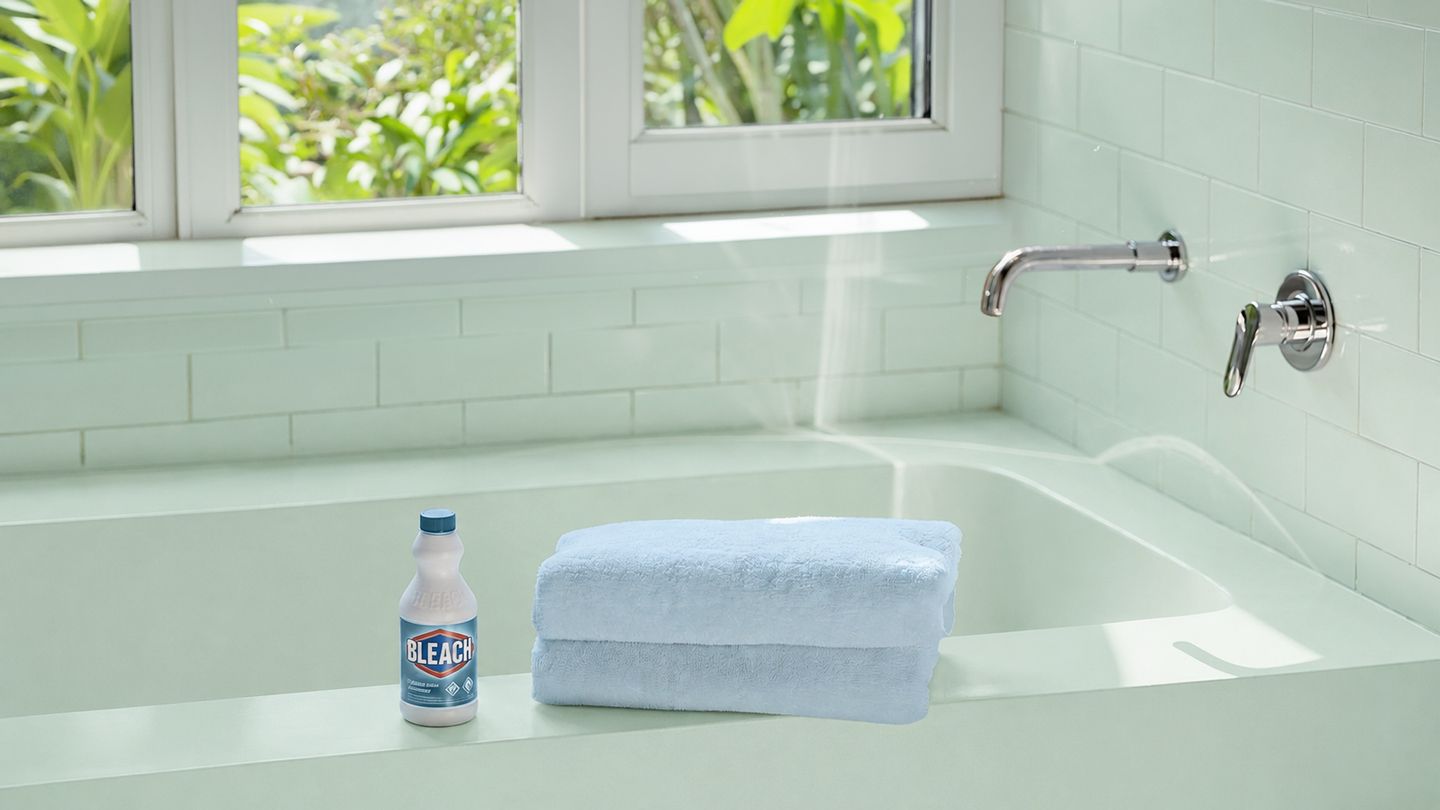
While it sounds counterintuitive at first, a bleach bath is a common nonprescription option for treating eczema . (If it sounds scary, too, you might think of it as comparable to a soak in a chlorinated swimming pool.) But does this at-home remedy work for psoriasis as well? While eczema and psoriasis are both chronic skin conditions, psoriasis isn’t driven by the same skin-barrier and bacterial colonization problems that often come up in eczema, meaning bleach baths may not have the same therapeutic effect. Eczema is often worsened by a bacterial infection, and a bleach bath helps reduce bacteria on the skin, alleviating itching, rash, and scaling.e60dc2a1-f33c-4a05-9b50-8e3e8e59762927b06294-c065-45c1-9689-103bd8210ee9e60dc2a1-f33c-4a05-9b50-8e3e8e59762929af2094-c8a0-4f8b-9462-d5532eb3ea00 A bleach bath involves filling a standard tub with water and half a cup of household bleach and soaking for 10 minutes before getting out and patting dry.e60dc2a1-f33c-4a05-9b50-8e3e8e597629cb3204be-ca94-4acd-a677-116ddd4ec512 Though a bleach bath may not be as effective for psoriasis, that doesn’t mean it’s not worth discussing with your dermatologist. But bleach baths aren’t a standard psoriasis treatment backed by research, and they shouldn’t replace treatments prescribed by your doctor.
Important Safety Caveats Important Safety Caveats A properly diluted bleach bath is generally considered safe for many people to try when used following medical guidance. But people living with psoriasis need to tread carefully, Garshick says. “The biggest concerns are skin irritation, dryness, and burning, all of which can worsen an already compromised skin barrier,” she warns. Bleach baths can be drying, and excessive dryness is a known trigger of psoriasis, Lam warns.e60dc2a1-f33c-4a05-9b50-8e3e8e597629328fe155-d051-4513-bf5d-8baf6b0249a4 Bleach can also be irritating to psoriatic skin, especially if you have raw, open lesions during a flare-up. That matters because irritation or trauma to the skin can trigger the Koebner phenomenon , where skin trauma can cause plaques to spread to unaffected areas, Lam says.e60dc2a1-f33c-4a05-9b50-8e3e8e59762963131536-7ade-4515-bfa7-dc051e47fb17 If you have irritated, inflamed, or widespread unstable psoriasis, avoid bleach baths unless they’re specifically advised by your dermatologist, Garshick says. Hooper’s practical rule is simple: If it stings or burns, stop. “The big warning I would call out is if you try it and it stings or irritates your skin in the bath, get out of the bath,” Hooper says. “You’re using too strong of a concentration.” This is also why bleach should never be applied directly to psoriasis plaques. It should only be used in a very diluted bath, and only if your healthcare provider says it is appropriate for you, she says.
Read the full article here


Leave a comment
