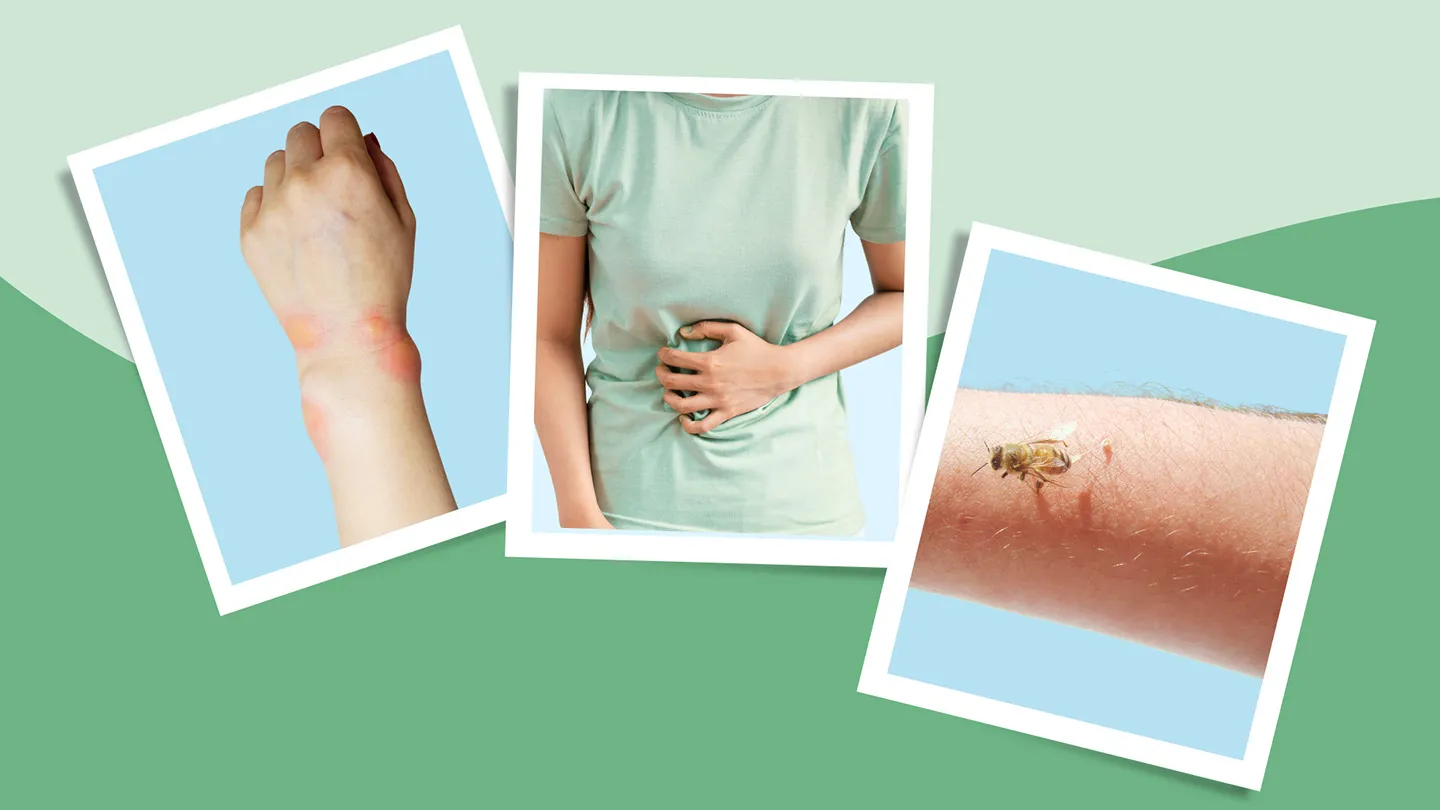
What Does a Bee Sting Look Like?
A bee sting can cause different reactions in different people depending on how your body’s immune system reacts to the bee venom. Symptoms typically include:
- Sharp, burning pain
- Skin discoloration
- Swelling
- Itchiness
In most cases, symptoms are mild and often improve within hours of a sting, at which point redness, pain, and swelling subside. People who have a stronger reaction may experience symptoms that get worse over the next few days and last up to a week.
“Signs that the sting requires additional medical attention from a physician are spreading redness, pain, fever, or streaking redness away from the site of the sting (such as up the arm or leg),” says Francesca Corley, MD, a pediatrician at Huntington Health, an affiliate of Cedars-Sinai, in Pasadena, California.
Bee Stings vs. Other Flying Insect Stings and Bites
Wasps are often mistaken for bees, but they look and behave differently. Wasps tend to be more aggressive than bees, and they may even attack without provocation. And while bees are fuzzy, wasps generally tend to have smoother, skinnier bodies.
With the exception of a honeybee sting, where the stinger will be visible in the wound, bee stings and wasp stings may not look different. Like species of bees that do not leave stingers, wasps have smooth stingers and can inflict multiple wounds.
One key way to tell if you’ve been stung by a bee or wasp versus bitten by a flying insect like a mosquito: The bite site “may be more painless or result in a more delayed progression of redness, pain, or itching,” says Dr. Corley.
Read the full article here