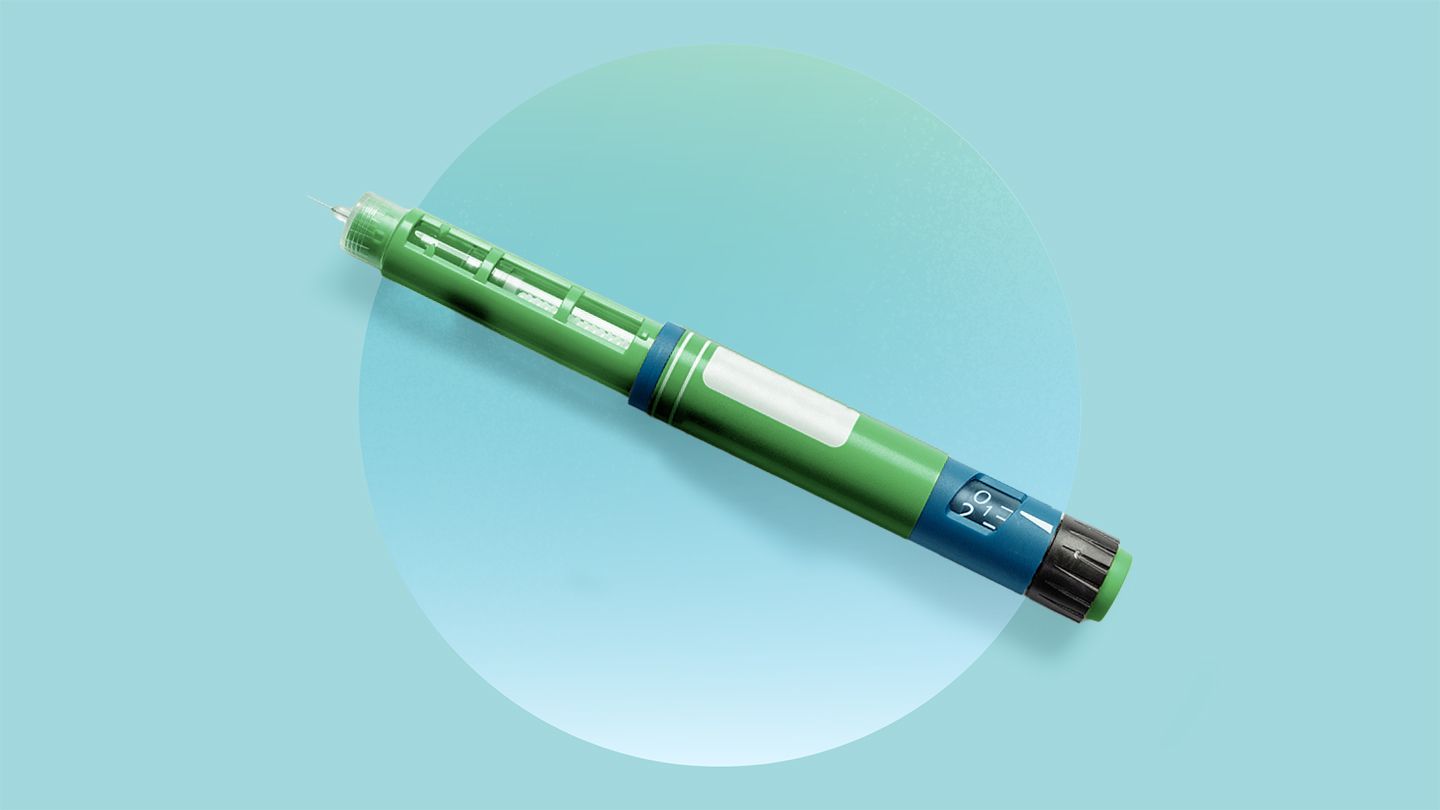
Recent Developments in Insulin Pen Technology
We asked Bzowyckyj, Isaacs, and Joshua D. Miller, MD, a clinical associate professor of medicine for Stony Brook Medicine in Hauppauge, New York, about the latest developments in insulin pen technology, which include:
- Disposable pens in concentrations of 200 units per mL and 300 units per mL
- The ability to administer partial units for more highly customized doses
- Memory or smart functions that allow users to keep track of when they took insulin
- A dose calculator that allows people to more accurately determine how much insulin they need in a given situation
- The ability to integrate CGM data into a pen
Here’s a closer look at these developments.
Concentrated Insulin
“We’ve seen tremendous improvements in using pens to dose concentrated insulin,” says Dr. Miller. “The pharmaceutical industry has gotten better at packaging those insulins in a safer way to be able to dose the amount of insulin that the patient needs.”
Patients who require higher doses of insulin than the traditional U-100 concentration because they have obesity or have insulin resistance only had U-500 insulin to turn to until recently. U-500 insulin also was previously only available as a vial — now it’s available as a pen, further facilitating dose calculation. “At 5 times the concentration of traditional insulin, it’s very dangerous in an inappropriate amount and without accurate dosing,” Miller says.
Newer pens on the market within the past few years contain varying concentrations of long-lasting (basal) insulin, such as a Tresiba FlexTouch pen with 3 mL of U-200 insulin degludec ($78.20 per pen retail, or $0.13 per unit); and a Toujeo Max SoloStar pen with 3 mL of U-300 insulin glargine ($347.01 per pen, or $0.58 per unit) — prices according to GoodRx. “As a result of the wider availability of some of the concentrated long-lasting insulins, like U-200, patients are able to absorb the insulin in a much more predictable way, and their basal insulin requirements are met more reasonably, accurately, and effectively,” says Miller.
Partial Units
The ability to give half-unit doses is another exciting development, according to Bzowyckyj. Those who are especially sensitive to insulin (such as children and older adults) and who use low amounts may be more prone to dosing errors. Half-unit functionality, such as that available in the Humalog Junior KwikPen ($82.18 retail per pen, or $0.27 per unit, according to GoodRx), makes it easier to deliver just the right amount of insulin.
Memory Functions
“For me, the most exciting new development is the dose memory functionality, which keeps track of the doses and times of insulin doses that a person self-administered recently,” Bzowyckyj says. “Oftentimes, it is easy for people to forget whether or not they administered their medications, especially with how hectic our lives can get. With traditional tablets and capsules, people can just check their pillbox to see if today’s space is empty, but unfortunately, that is not an option with insulin. The dose memory feature is a great way to prevent a person from double-dosing their insulin.”
One example is MiniMed’s InPen, which is compatible with Humalog and Novolog insulin cartridges. Prices vary by pharmacy, but the InPen for Humalog has a retail price of $973.97, and the Novolog version costs $1,037.10, according to GoodRx.
Smart caps, such as units from Bigfoot Unity, connect to disposable insulin pens and can record doses and integrate with CGMs. Versions for long-acting and rapid-acting insulin are available. Similarly, smart buttons are available that can attach to prefilled insulin pens. These connect to an app via Bluetooth to record dosing information.
Dose Calculators
Isaacs’s patients use the InPen, which she prefers to other pens. For instance, with the InPen, “there is a dosing calculator embedded in it, which makes calculations much easier,” she says. “The calculator makes it much easier to add the insulin needed for a given amount of carbohydrates and a certain glucose level. It may also subtract active insulin from a previous dose that is still working in the body through an advanced calculation.” That last function is one that Miller points out as being especially useful for avoiding dosing errors.
CGM Integration
Despite these developments, some insulin users aren’t even aware that smart pens exist, according to Isaacs. Miller doesn’t see growing awareness necessarily translating into wider adoption of smart pens. Instead, he predicts that insulin users who are interested in technological improvement are more likely to move over to pump therapy rather than smart pens. “The patients I have who don’t want to go on a pump tell me that they want to stay on a [traditional] pen because the pens are simple. The pens are easier to use, and the patient doesn’t have to think about numbers and data. They just dial the dosage, they take it, and they are done.”
He also sees affordability as another barrier to wider adoption. “Outside of rebate programs and coupons, company certificates, and the like, I have not heard of robust insurance coverage from the managed-care and insurance companies to cover electronic pens over the cost of a traditional insulin pen.”
Weekly Injections Available Soon
The U.S. Food and Drug Administration has approved a new once-a-week insulin injection. The Awiqli FlexTouch pen, expected to be available in the United States in the second half of 2026, comes filled with 1.5 mL or 3 mL of concentrated U-700 insulin icodec-abae. It enables adults with type 2 diabetes to take injections once a week instead of daily. However, it’s important to take the dose on the same day each week and to take extra precautions because the insulin is so concentrated.
Read the full article here