


Immunotherapy Immunotherapy Is Changing the Game While chemotherapy — a cancer-targeting drug treatment — was once the go-to treatment for metastatic skin cancer, newer approaches have proven to be more effective in most cases. Now, chemo is only very rarely used, and it is not typically used for cutaneous melanoma patients. Immunotherapy has changed the way oncologists battle advanced melanoma, allowing them to harness the power of the body’s own immune system to fight disease. A type of immunotherapy called checkpoint blockade therapy — or checkpoint inhibitor therapy — is significantly extending the lives of many people with stage 2, stage 3, and stage 4 melanomas. The U.S. Food and Drug Administration (FDA) has approved multiple such drugs in this category since 2011.e60dc2a1-f33c-4a05-9b50-8e3e8e59762928d526e5-71ef-4b1e-aea9-2b53dbeeb476 Two drugs approved in 2014, pembrolizumab (Keytruda) and nivolumab (Opdivo), have become frontline treatments (either alone or in combination with other drugs) for metastatic melanoma. Both work by blocking the action of a molecule called PD-1 (programmed death-1), which normally keeps the immune system’s T cells in check. By blocking PD-1, the T cells are free to attack the cancer. In 2024, the Annals of Oncology published a 10-year follow-up study to landmark research that sought to evaluate pembrolizumab’s ability to treat advanced melanoma. The results showed that the drug improved survival rates more effectively than another form of immunotherapy, ipilimumab (Yervoy).e60dc2a1-f33c-4a05-9b50-8e3e8e597629a5b02692-226f-4791-bb0e-826e5db433ca For some patients, combining different checkpoint blockade therapies may further increase survival rates and benefits, despite considerable side effects. A study of advanced melanoma patients treated with both nivolumab (Opdivo) and ipilimumab (Yervoy) found that after 10 years, the survival rate for the combined treatment was about six years, while the survival rate for taking nivolumab alone was about three years, and for ipilimumab alone it was about one and a half years.e60dc2a1-f33c-4a05-9b50-8e3e8e5976291d037730-3061-4cb6-9b95-20721a6a5681 While effective, this combination of drugs does have more side effects — related to activating the immune system and causing inflammation elsewhere in the body — than nivolumab alone. Some of these side effects can be reduced by adjusting the dosing schedule, without impacting its effectiveness.e60dc2a1-f33c-4a05-9b50-8e3e8e59762927216337-7a9b-4264-ab3c-7db3d543bc5d Another combination immunotherapy — nivolumab and relatlimab (Opdualag)— has shown improved rates of survival in patients with metastatic melanoma, compared with nivolumab alone. Importantly, this combination has a lower rate of side effects and thus may be more suitable for some patients.e60dc2a1-f33c-4a05-9b50-8e3e8e597629c4e79ba6-a193-49ac-be94-bdf938e707e0 A newer FDA-approved combination of vusolimogene oderparepvec-wtpg (Tudriqev) and nivolumab treats a specific type of aggressive melanoma: unresectable advanced cutaneous melanoma with disease progression that includes a programmed death receptor-1 (PD-1)-blocking antibody-based regimen. Anti-PD-1 refractory melanoma crucially doesn’t respond to immunotherapy, which is where Tudriqev comes in. It’s a genetically modified oncolytic viral therapy, which uses viruses to attack and kill cancer cells. In a clinical trial, 1 in 4 patients responded to the combination.e60dc2a1-f33c-4a05-9b50-8e3e8e59762918599a90-8e02-4589-9ef9-320b3fd11313
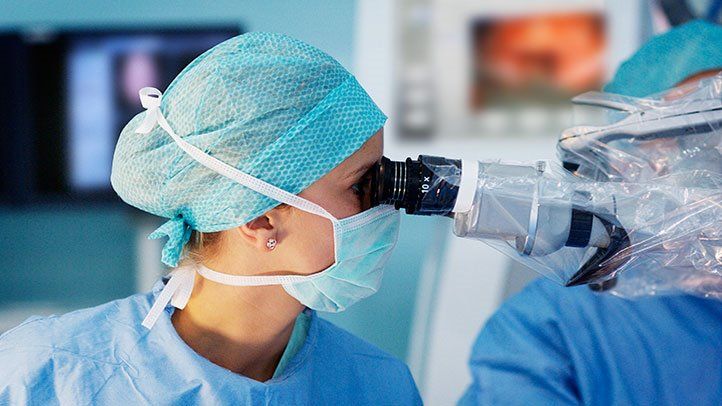
Surgery Surgical Procedures for Treating Melanoma For most patients, the first step in treating melanoma is usually cutting out the tumor. In some cases, doctors will suggest other subsequent or concurrent surgical procedures. Tumor Excision Doctors also remove an area of healthy-looking tissue around the cancer, called the “safety margin.” The margin will vary depending on the stage and size of the melanoma, but it is typically 2 centimeters or less. A pathologist looks at this tissue under a microscope to make sure there are no stray cancer cells invading through the margin.e60dc2a1-f33c-4a05-9b50-8e3e8e5976292fce1740-675c-412b-aaf8-311742673a2d Mohs Micrographic Surgery Some doctors who are looking to minimize the loss of healthy tissue even more may turn to Mohs micrographic surgery , a method that is more commonly used to treat other types of skin cancer and is not the current standard of care for treating melanoma. During this procedure, a Mohs surgeon will remove the tumor, one thin layer of skin at a time, scrutinizing each section under a microscope for cancer cells before excising the next. The surgery is over as soon as a sample is cancer-free. The development of sophisticated new stains that highlight melanoma cells in tissue samples helps ensure that Mohs surgeons don’t miss anything concerning. However, not all treatment sites are able to perform these stains, which is why Mohs is not yet classified as standard of care.e60dc2a1-f33c-4a05-9b50-8e3e8e5976290a8c3f24-99de-4a4f-9642-38b6c7d51a64 Full Lymph Node Dissection If cancer cells have spread from the tumor to nearby lymph nodes — clusters of bean-shaped structures located throughout the body that contain white blood cells — a surgeon may choose to remove the lymph nodes in question. This procedure is called a full lymph node dissection.e60dc2a1-f33c-4a05-9b50-8e3e8e59762978ecfee6-c4eb-42f2-a6e7-2ede8c989153 Combination of Immunotherapy and Surgery Recent research suggests that a combination of surgery and immunotherapy — drug cocktails that help the immune system recognize and attack cancer cells — may lead to the best outcomes for some patients. Which treatment to administer first is an area of ongoing research. One study from 2022, for example, found that for people with high-risk resectable melanoma, immunotherapy followed by surgery may be more beneficial than surgery followed by immunotherapy.e60dc2a1-f33c-4a05-9b50-8e3e8e5976296de47cac-e567-467a-92a0-ec7c6bb76859
Targeted Drugs Targeted Drugs Exploit Mutations in Some Melanomas Targeted melanoma drugs work by blocking mutations (DNA defects) in melanoma cells, which then shrink tumors or slow their growth. About half of all melanomas have mutations (DNA defects) in the BRAF gene that cause out-of-control cellular growth. The FDA has approved three oral combination therapies targeting this mutation, called BRAF and MEK inhibitors. They work by binding to defective proteins that promote cancer growth and then deactivating them, thereby slowing disease progression and helping some patients live longer. In 2013, the FDA approved a combination therapy of BRAF inhibitor dabrafenib (Tafinlar) and MEK inhibitor trametinib (Mekinist). This combination showed prolonged progression-free survival in patients with the BRAF gene mutation and was superior to using BRAF inhibition alone.e60dc2a1-f33c-4a05-9b50-8e3e8e597629a32bd42b-fdef-4316-a617-58af69a7ace1 Since then, this combination of drugs has become a frontline treatment option for metastatic melanoma with the BRAF mutation. Subsequently, additional combinations of BRAF and MEK inhibitors, including vemurafenib (Zelboraf) with cobimetinib (Cotellic) — and encorafenib (Braftovi) with binimetinib (Mektovi) — were found to be effective and were approved by the FDA in 2015 and 2018, respectively. While all BRAF-MEK inhibitors produce similar results, they differ in their side effects. The choice of drug combination is largely guided by this factor, according to the Melanoma Research Alliance.e60dc2a1-f33c-4a05-9b50-8e3e8e5976298e0b3813-2ab9-4552-83af-a033ba611982 The FDA has also now approved combination BRAF-MEK inhibition for the treatment of BRAF-mutated melanoma following surgery.e60dc2a1-f33c-4a05-9b50-8e3e8e597629a132081d-ca2e-42e5-984a-07120841b7ad
After receiving a diagnosis of melanoma , the most dangerous type of skin cancer, you’ll begin considering treatment options. Several treatments are available, and the best option for a given case depends in large part on how advanced the cancer is. The treatment process typically begins (and for the most fortunate patients, ends) with surgical removal (excision) of the tumor. This procedure generally takes place at the doctor’s office, under local anesthesia. Melanoma caught early is highly curable, with a five-year survival rate of 99 percent for cases that are still in the localized stage, according to the American Cancer Society.e60dc2a1-f33c-4a05-9b50-8e3e8e5976297170a686-8fdb-45a2-9980-e7eb70486e01 Visiting a dermatologist for regular skin checks is a smart preventive measure to avoid aggressive melanomas and skin issues. But if cancer cells have spread to the lymph nodes or beyond, excision surgery alone is not sufficient to eradicate the cancer. Until recent years, this advanced form of melanoma, called metastatic melanoma , carried a daunting prognosis. It remains a serious diagnosis, but advancements in immunotherapy and targeted therapy have offered tremendous evidence for hope. Now, some patients with the most severe cases are prolonging their lives by months or years with the help of recently approved treatments. According to the most recent data from the American Cancer Society, melanoma that has spread to distant regions of the body carries a 36 percent five-year survival rate. As therapies continue to evolve, those numbers may continue to increase.
Read the full article here

Leave a comment
