Before any actual donation begins, contributors must show valid ID, answer questions related to their health, and complete a check of their temperature, pulse, blood pressure, and hemoglobin level (usually requiring a quick finger prick).
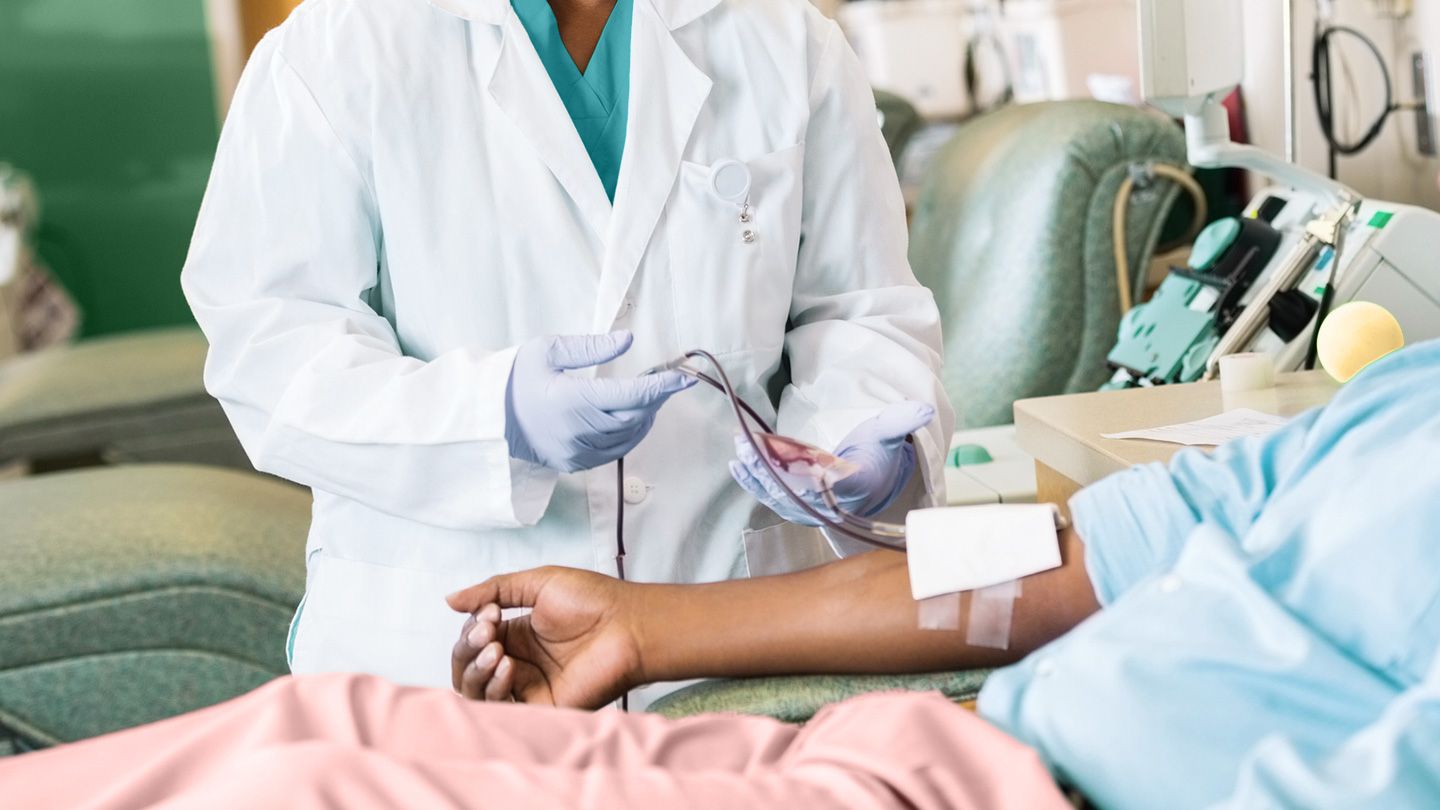
During the blood draw, patients recline in a comfortable chair or bed. An area on the arm is cleaned and a new sterile needle is inserted into a vein.
Procedures vary depending on whether you’re giving whole blood or a specific blood product.
Whole Blood
This is the most flexible type of donation. It can be transfused in its original form, or used to help multiple people when separated into its specific components of red cells, plasma, and platelets. The actual blood draw lasts only 8 to 10 minutes.
Power Reds
This type of donation collects two units of red blood cells while returning plasma, platelets, and saline back to your body. These red cells are heavily relied upon for trauma patients, emergency surgeries, newborns, and people with severe blood loss or anemia. The process takes about 45 minutes.
Plasma
Plasma is the liquid part of your blood that carries proteins, hormones, nutrients, and other compounds. Donations are used in a number of ways, including the treatment of burns, shock, and trauma; cancer treatments, and the development of medications. The process involves collecting the plasma while returning red cells and platelets along with saline back to the body. It takes about 45 minutes.
Platelets
Platelets are tiny cell fragments in your blood that help form clots and heal wounds. Their primary job is to stop the bleeding if you’re injured. The process of removing the platelets and returning the rest of the blood back to the body takes about two hours.
Read the full article here