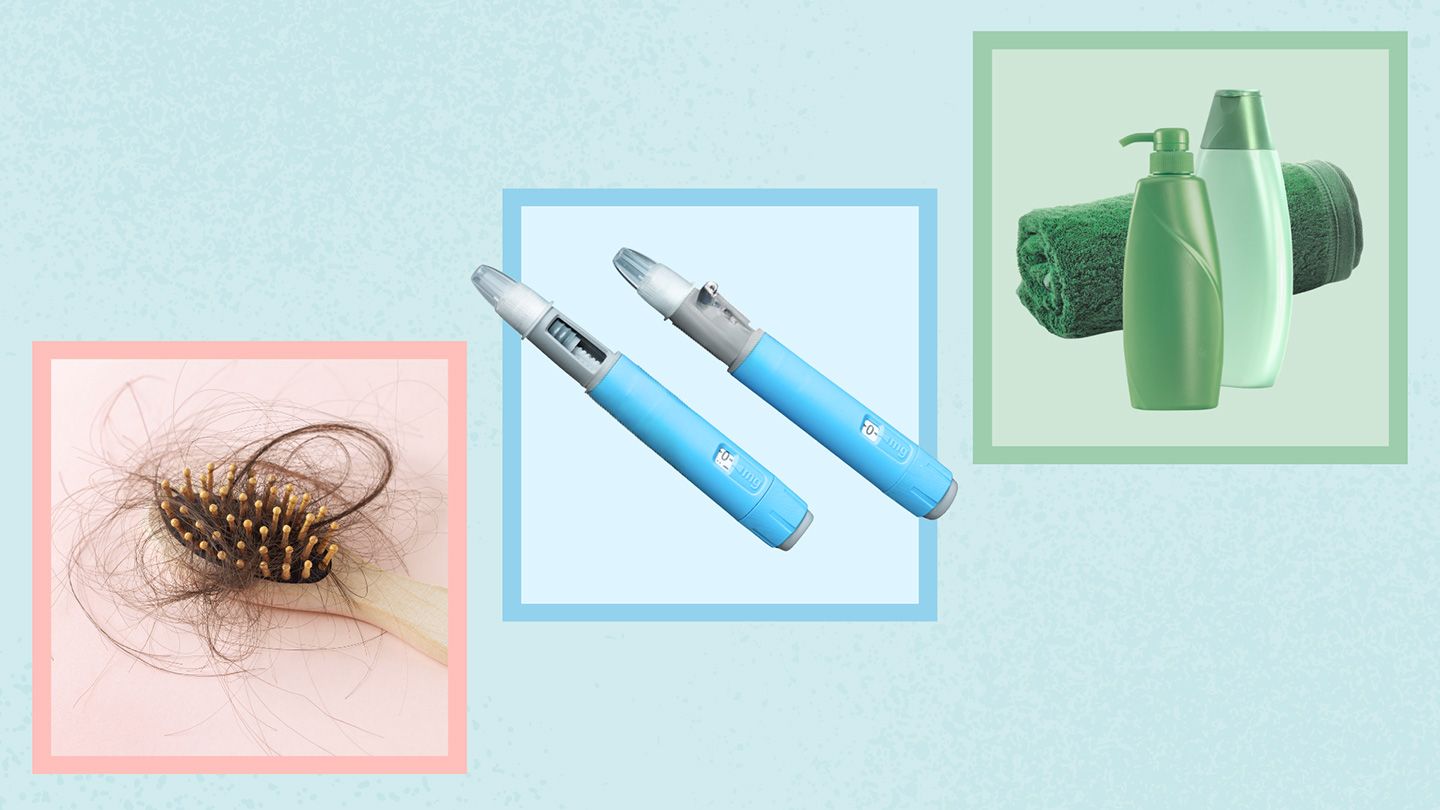
When people on GLP-1s lose hair, the cause is likely to be the stress that rapid or significant weight loss can put on the body, explains Reema Dbouk, MD, an internist in Atlanta and a spokesperson for the Obesity Society.
“Hair follicles are very sensitive to changes in nutrition, metabolism, and overall health,” says Dr. Dbouk, and this can “temporarily shift resources away from hair growth.”
The medical term for this is telogen effluvium, explains Paradi Mirmirani, MD, a San Francisco–based dermatologist who specializes in hair disorders and a fellow of the American Academy of Dermatology.
Telogen effluvium is a type of hair loss that “results from a premature entry into the telogen, or resting phase, of the hair,” says Dr. Mirmirani. It may be triggered by multiple factors, such as emotional stressors, medications, nutritional deficiencies, rapid weight loss, surgery, or a major illness.
Along with telogen effluvium you can also have hair loss related to genetics, hormones, or inflammation, says Kseniya Kobets, MD, the director of cosmetic dermatology at Montefiore Einstein Advanced Care in Elmsford, New York.
Hair loss from GLP-1s can be different for everyone, Dbouk says: “Some people notice mild thinning, while others experience more dramatic shedding.”
Read the full article here