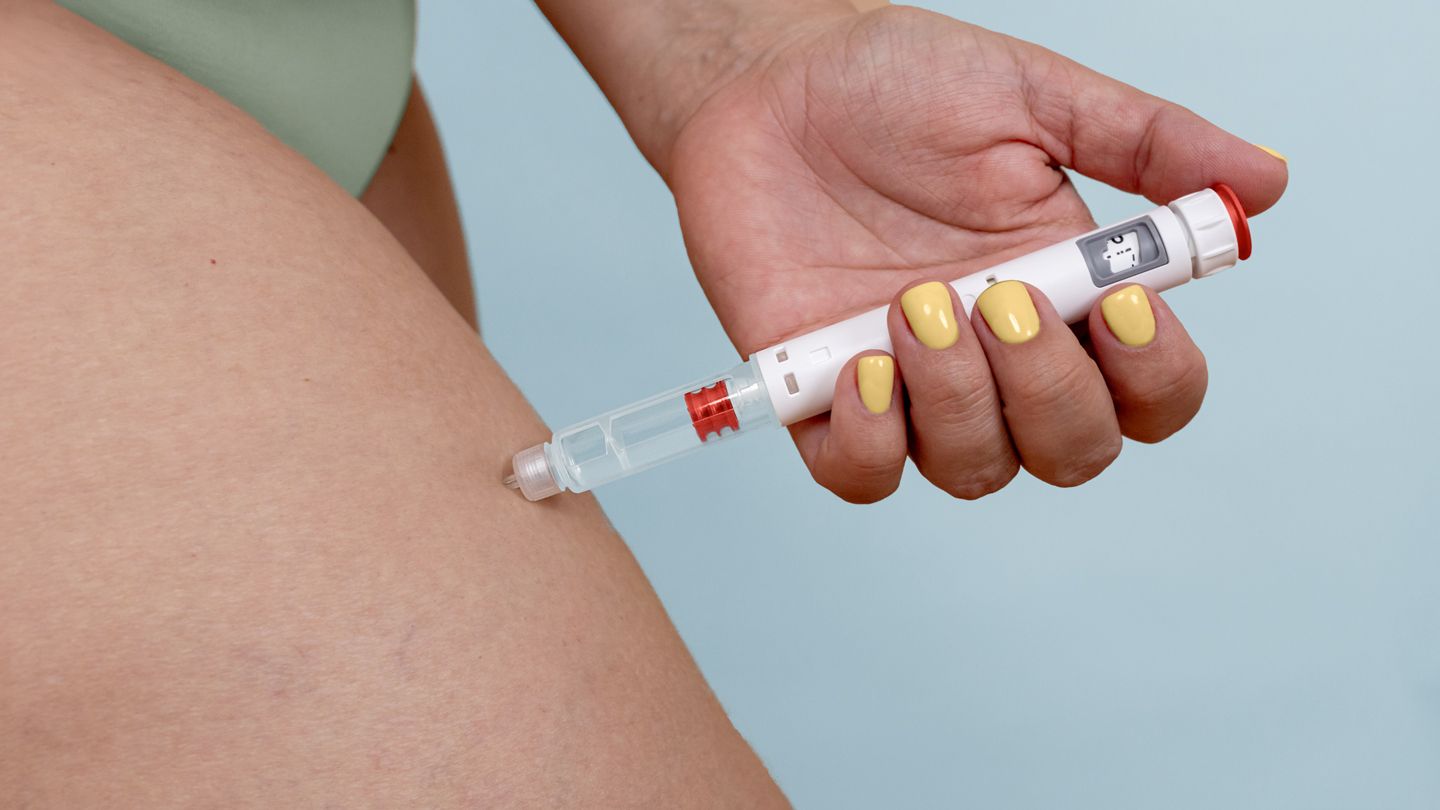
Many people living with rheumatoid arthritis (RA) rely on long-term medications to manage joint pain, stiffness, and inflammation. A number of these treatments are given as subcutaneous injections, meaning they go just under the skin, and are designed to be used safely at home.
Several commonly prescribed RA drugs can be self-injected at home, often using either a prefilled syringe or an auto-injector pen, including some biologic DMARDs (like TNF inhibitors) as well as injectable methotrexate.
If you’re a little leery about self-injections, it’s understandable. Even if the process is relatively straightforward, it does involve a needle, and handling and injecting expensive medications may give you pause.
“The biggest concern I hear from patients is fear of the unknown,” says Victoria Ruffing, RN, BC-rheumatology, the director of nursing and patient education at the Johns Hopkins Arthritis Center in Baltimore.
The good news is that proper training and following simple strategies takes the unknown out of the equation. With a little practice and a few deep breaths, most people find self-injections a manageable part of RA treatment. The following tips can give you the confidence you need.
1. Understand That Subcutaneous Injections Are Given Just Under the Skin
First off, these aren’t the scary needles you may remember from childhood, or even from your latest vaccination shot. The needles used for RA medications are short and thin, and most people report only mild discomfort.
“Most people have only experienced shots or vaccines like flu shots, which go into the muscle and can be painful. Once they see how small the needle is and understand that this goes into fatty tissue under the skin, a lot of that fear goes away,” says Ruffing.
2. Get Hands-On Training Before You Start
Before giving injections at home, patients are typically trained by a healthcare professional, often a nurse. That training usually includes practicing with a demonstration device before using the real medication, says Ruffing.
This can help you get used to how the injector feels in your hand and how much pressure is needed. Thoroughly reviewing the process with a professional will build confidence with technique early on, which is key in helping you feel more comfortable continuing injections over time. If you feel unsure at any point, it’s appropriate to ask for additional instruction.
Self-injections are probably easier than you think they will be. “People often do their first injection with a nurse, and it’s not uncommon for them to say afterward, ‘Oh, that was it?’ It’s usually much less scary than what they’ve built up in their mind,” says Ruffing.
You may also want a spouse, partner, or family member to learn how to give the injections. They can provide assurance, support, or even give you the injection.
3. Choose the Device That Works for Your Hands
RA medications may come as auto-injector pens or as syringes that require pushing a plunger. For people with hand pain, stiffness, or limited grip strength, auto-injectors are often easier to use.
“With RA, sometimes people’s hands just don’t allow that fine motor skill of pushing a plunger,” Ruffing says. “The auto-injector devices are usually better for them.”
Studies comparing injection devices show that many people prefer auto-injectors, even when pain levels are similar, because pens are easier to hold, have hidden needles, and provide clear signals, such as clicks or windows, that let users know the full dose was delivered. If one device feels difficult to manage, talk to your healthcare team; switching formats is sometimes possible.
4. Follow Instructions to Successfully Inject Your Medication
First, clean the area you’ve selected with an alcohol swab and allow it to dry. Some people use prepackaged alcohol wipes, while others use a cotton ball and rubbing alcohol. Either is fine, Ruffing says. Be sure to review this technique with your medical team.
Once you take the medication out of the refrigerator, follow the manufacturer’s instructions. Typically, that means letting it sit at room temperature for about 30 minutes before injecting. “Something very cold going into the skin can be uncomfortable,” says Ruffing.
Good news: Most RA injections are now citrate-free, which means they don’t sting nearly as much as they did a decade or so ago, says Ruffing. “The ‘burning’ sensation is much less — many people don’t find the injection uncomfortable as it goes in,” she says.
You can also reduce discomfort by numbing the area, she says. Ice the site for about five minutes before injecting, then clean the skin and proceed.
Inject the medication as you’ve been instructed by your healthcare team.
Some providers recommend icing the injection site for five minutes to reduce lingering irritation or pain.
5. Rotate Injection Sites to Protect Your Skin
Change the spot where you inject to reduce bruising, tenderness, and skin irritation, says Ruffing. Your healthcare provider will show you which areas are appropriate, such as the thighs or abdomen, depending on the medication.
“Don’t use the same spot every time,” Ruffing says. “A different site should be used each time, at least an inch away from the previous injection.”
Avoid areas that are already bruised, tender, red, or irritated. Mild redness or swelling can happen occasionally, but persistent or worsening reactions should be reported to your healthcare team.
6. Keep Track of Your Doses
Because many RA injections are taken weekly or every other week, it’s easy to forget when your last dose was.
“I suggest marking your calendar or setting reminders on your phone,” Ruffing says.
Even if you think you’ll remember, it’s easy to start second-guessing yourself. Use reminders, logs, or medication apps to keep track of your injection schedule. The best system is one you’ll actually use consistently.
7. Be Aware of Potential Issues With Injections
“If you don’t hear the click, it usually means it’s not set on the skin properly,” says Ruffing.
Another common issue is pulling the injector away too quickly. “Once you push the button, you can’t control the speed; if you pull it away too fast, the medication can spray out instead of going into the body,” she says.
It’s important to review how to self-inject with your healthcare team. If injections continue to feel difficult, Ruffing recommends calling your doctor’s office and asking to review your technique with a nurse rather than risking wasted medication.
8. Know What to Do if Medication Storage Is Disrupted
Many injectable medications need to be refrigerated. Unexpected events such as power outages, flooding, or natural disasters can interfere with refrigeration.
“If some type of natural disaster happens and your medication isn’t kept cold, call your doctor right away — often the manufacturer can replace the medication,” says Ruffing.
If you have advanced warning of a potential event, check in with your care team as soon as possible so they can help you plan.
9. Dispose of Used Pens and Needles Safely
Used needles and auto-injectors should be placed in a sharps disposal container immediately after use to reduce the risk of accidental needle sticks, says Ruffing. Keep containers out of reach of children and pets, and do not overfill them.
When the container is about three-quarters full, follow your local guidelines for disposal. Depending on where you live, options may include drop-off sites at pharmacies or hospitals, household hazardous waste programs, mail-back services, or special pickup services. Your local health department or waste service can help identify what’s available in your area.
10. Call Your Healthcare Team When Needed
Ruffing encourages you to contact your doctor if you:
- Are having repeated trouble with injections
- Miss a dose and aren’t sure what to do
- Notice unusual or worsening reactions
- Feel anxious or overwhelmed about continuing injections
“We’d much rather help early than have someone struggling at home,” she says.
The Takeaway
- With proper healthcare support and oversight, many RA medications can be safely self-injected at home with training and practice.
- Simple steps such as choosing the right device, following a routine, and rotating injection sites as determined by your healthcare team can help make injections more comfortable and manageable.
- Injection problems, mild skin reactions, ongoing issues, or missed doses should be discussed with your healthcare team.
- These medications require careful handling; it’s important to store them properly, dispose of them safely, and know when to call for help.
Read the full article here