“If you’re selling cars and you can’t shake people’s hands without showing them something they wouldn’t want to touch, it could adversely affect your sales performance,” says Steven R. Feldman, MD, a professor of dermatology at the Wake Forest University School of Medicine in Winston-Salem, North Carolina.
Unfortunately, many work environments are full of triggers that can cause symptoms to flare up. Low humidity in overly air-conditioned or heated rooms, frequently washing your hands or using hand sanitizer, being around disinfectants or cleaning agents, friction from scratchy uniforms or protective gear, colleagues doused in perfume, and stress are common workplace instigators. “Even seemingly minor exposures can add up over the course of a workday,” says Peter Lio, MD, a clinical assistant professor of dermatology at the Northwestern University Feinberg School of Medicine and the founder of the Chicago Integrative Eczema Center.
Here are seven expert-recommended tips to prevent flares and soothe atopic dermatitis symptoms so that they don’t get in the way of your work.
1. Stay on Top of Your Treatment Plan
Whether you’re using a topical treatment or an oral medication for more extensive atopic dermatitis, it’s essential to use it exactly as you’re instructed. If in the rush to get to work on time, you sometimes forget (which can be easy to do since flares don’t happen on a regular schedule), set an alarm.
“Prescription or over-the-counter anti-inflammatory treatments should be used proactively as directed, rather than waiting for severe flares. Managing itch early often prevents escalation,” Dr. Lio says.
2. Apply Moisturizer Regularly
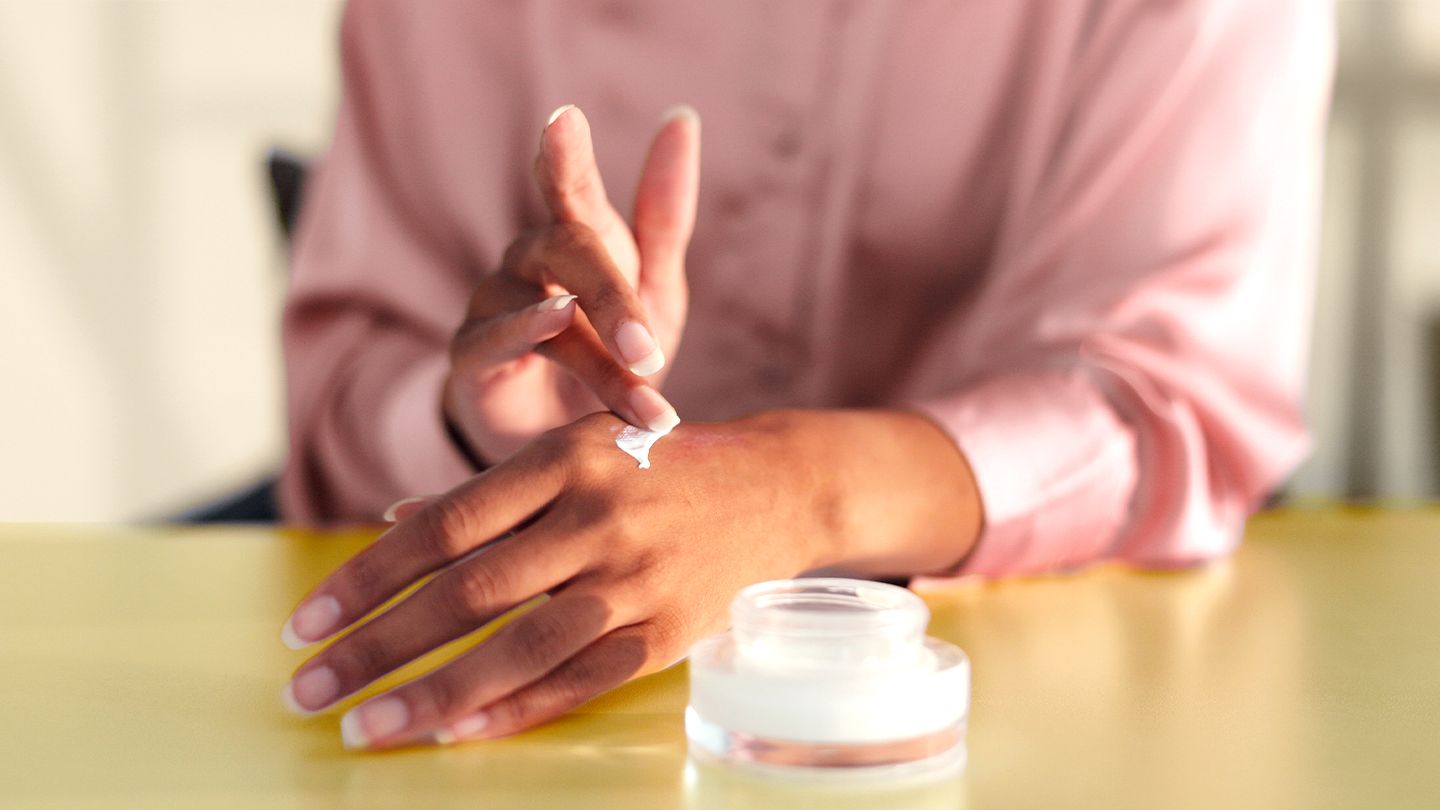
In particular, Lio recommends reaching for a special class of moisturizer called skin protectants. These creams create a water-impermeable barrier and hydrate the skin’s outermost layer to reduce irritation.
Lio says to look for products with these ingredients:
Keep your moisturizer nearby while you work so you can easily reapply throughout the day. “For active symptoms, frequent use of moisturizers is key, ideally applied before itching starts,” Lio says.
3. Come Up With a Handwashing Strategy
- Feldman recommends asking your boss or the office manager to switch to fragrance-free soaps for handwashing. Alternatively, Lio suggests bringing a pocket-sized bottle of soap with you.
- Wash with lukewarm (not hot) water.
- Instead of using hand dryers, which dry skin, consider bringing a hand towel from home, suggests National Eczema Society.
- Always apply moisturizer after washing to keep the skin from drying out, Lio says.
4. Control the Temperature as Much as You Can
Uncomfortable temperatures are one of the most notorious eczema triggers. Unfortunately, this is also an extremely common workplace trigger since employees don’t usually have control of the thermostat.
The National Eczema Society recommends asking to move your workstation to a more comfortable part of the office, like next to a window you can open, or getting a desk fan. Wearing breathable fabrics like cotton (which don’t trap moisture or heat like polyester and synthetic fibers) and dressing in layers you can easily add or remove can also help. If you wear a uniform that irritates your skin, consider adding a thin cotton or silk layer underneath to create a barrier.
Additionally, Lio recommends keeping a small humidifier nearby, since low humidity in heated or air-conditioned spaces can dry out your skin.
5. Minimize Stress
6. Create a Cooling Game Plan
Once symptoms strike, a quick way to get relief is to cool down your skin, since the cold temporarily disrupts the itch signals in the nerves.
Lio suggests coming up with a personal cooling strategy: Maybe you find a cooler area you can step into, keep an ice pack in the office freezer, or set yourself up in front of a fan. Topicals with menthol (like Biofreeze) or camphor (like Vicks VapoRub) can also create a helpful cooling effect.
7. Talk to Your Boss
Don’t shy away from telling your manager or HR team about your condition if you need accommodations like a softer fabric for your uniform or a different seating assignment. Skin diseases are one of the leading causes of disability worldwide, and those with atopic dermatitis may need to call in sick more often or need other adjustments to be successful at work.
If atopic dermatitis substantially interferes with your work, your condition may qualify for protection under the Americans With Disabilities Act. This requires employers with 15 or more employees to provide reasonable accommodations to employees so that they can have the same opportunities to thrive as other colleagues. Accommodations are tailored to each individual and may include a hybrid work arrangement that lets you work at home some of the time, flexible time off to allow for medical appointments, or restrictions on working outside when temperatures are too hot.
Lio says that it can be helpful to frame atopic dermatitis as a medical condition that can fluctuate and may require small, reasonable adjustments. He suggests keeping the explanation brief and focused on solutions. “You don’t need to disclose details beyond what’s relevant to accommodations,” he says. Dermatologists sometimes write letters for patients explaining why a certain request is necessary, so ask your provider for one if you think it would be helpful.
“Take the approach of a hero, not a victim,” Johnson adds. Focusing the conversation on wanting to be able to do a good job can be a smart way to convince your boss to help you out.
The Takeaway
- Many workplaces have atopic dermatitis triggers, including uncomfortable temperatures, scratchy uniforms, and frequent handwashing, but you can usually create a plan to reduce their impact on your skin.
- Minimize flares by staying on top of dermatologist-prescribed treatments, thoroughly moisturizing before work and throughout the work day, and finding ways to minimize stress.
- Prepare for possible workplace flare-ups by bringing your own handwashing supplies, managing your temperature by layering your outfit or bringing a fan, and developing a cooling strategy (possibly keeping an ice pack or menthol-based ointment on hand).
- If atopic dermatitis is affecting your job performance, ask your manager or human resources department for reasonable accommodations, which are legally allowed under the Americans With Disabilities Act. Your dermatologist can write a letter to outline what would be helpful and why it’s necessary.
Read the full article here