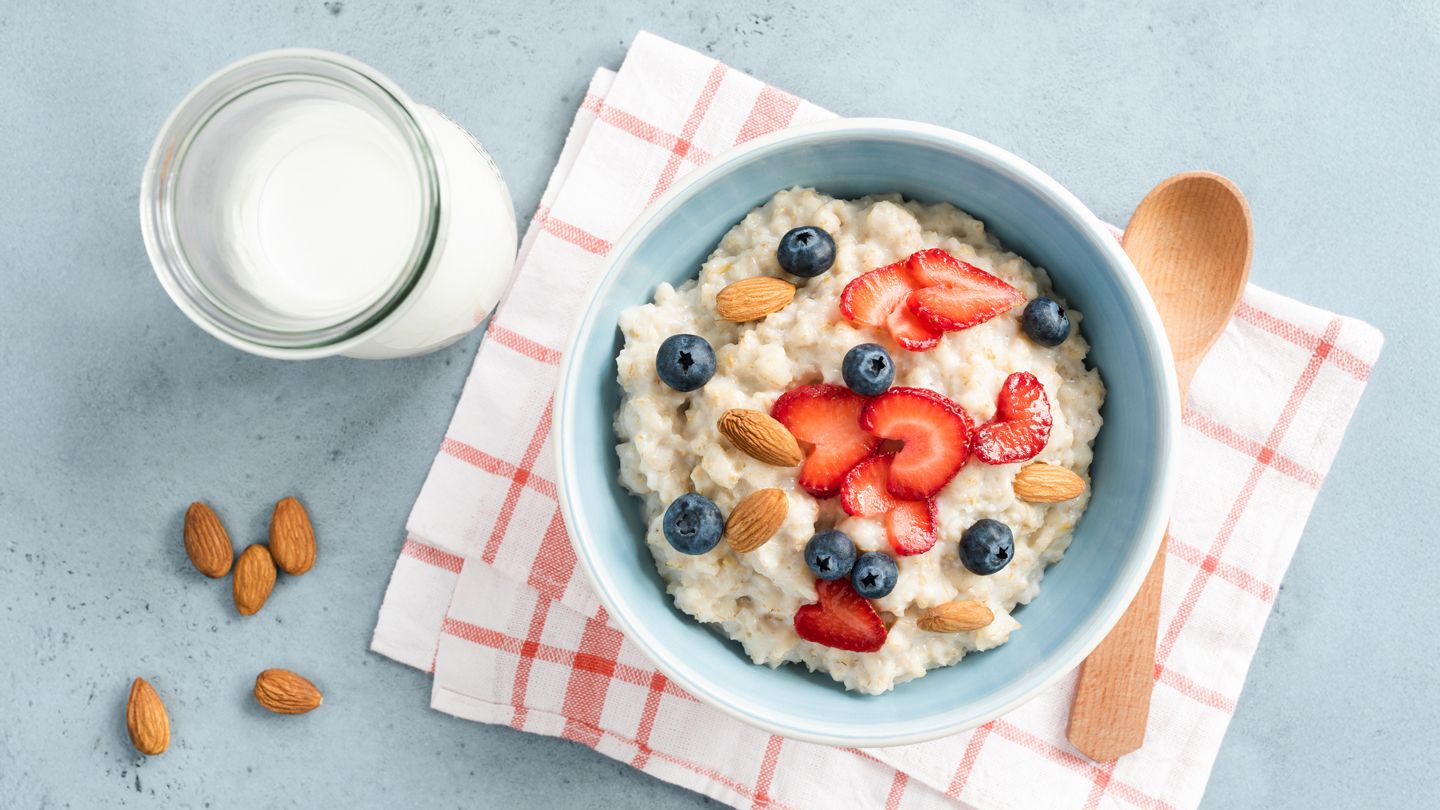
“Oatmeal can be a great choice as a nutrient-dense, high-fiber whole grain, but you’re mostly just getting carbohydrates with this choice,” says Vanessa Imus, RDN, the owner of Integrated Nutrition for Weight Loss in Bothell, Washington. “Adding protein can help boost the protein in this morning meal to make it a more balanced breakfast option. This will help you stay full longer, keep blood sugar balanced, and more easily meet your daily protein needs.”
Here’s how registered dietitians recommend adding more protein to your bowl, whether you want a little bit more — or a lot.
1. Cook Oats With Milk
As far as protein upgrades go, this one is the easiest. Preparing your oats with milk instead of water boosts the protein content and adds bone-strengthening calcium and immunity-boosting vitamins A and D.
2. Stir in Egg Whites
While it may sound odd at first, pairing egg whites with oatmeal will give it a creamy consistency. Each egg white added provides an extra 3.5 grams of protein to your oatmeal. The trick to make this pairing tasty is to add in the egg whites at just the right time.
If you’re preparing them in a sauce pan, stir them in towards the end of cooking for a fluffier oatmeal, says Imus. If you’re concerned about the flavor, the odds are you won’t even notice it’s there: “It doesn’t change the flavor of the oatmeal,” she says.
If you’re preparing your oatmeal in the microwave, stir them in after cooking and microwave them for another 30 seconds.
3. Toss in Nuts and Seeds
Nuts and seeds are tiny, tasty ways to add plant-based protein to your breakfast. “A couple tablespoons of almonds or walnuts or chia, flax, or hempseeds can add 3 to 6 g of protein, along with healthy fats, fiber, and a satisfying crunch,” says Bannan.
Oats are a whole grain, like farro, quinoa, or brown rice, and taste great with a savory crunch. If you don’t already know what your preferred nuts and seeds may be, experiment with new options and stick with the ones you enjoy the most.
4. Add Tofu
If you’ve never considered tofu a breakfast protein, it’s more versatile than you may realize. You can stir silken, soft tofu into a sweeter oatmeal bowl or use tofu crumbles or cubes in savory oatmeal.
About 3 ounces (oz) of silken tofu will add an extra 4 g of protein to your bowl, while the same amount of extra firm tofu packs in 6 g of protein.
5. Mix in Cottage Cheese
Cottage cheese can take your bowl of oats up a protein notch — or a few. “A half cup of cottage cheese offers 12 to 14 g of protein,” says Bannan. Much of the protein in cottage cheese is casein, which is slower to digest, making this a powerful appetite-lowering addition.
Bannan says to add cottage cheese by swirling it into cooked oats or as a dollop on top, and that it naturally pairs with other healthy and tasty additions, such as fruit, spices, and honey or maple syrup.
6. Stir in Protein Powder
But if you’re making a concerted effort to substantially increase your protein intake, be aware that even body builders and athletes may meet or exceed daily protein recommendations without supplementation. The new recommended daily allowance for protein, as stated in the dietary guidelines released by the United States Department of Agriculture, is 1.2 to 1.6 g/kg per day for adults aged 18 and older. So if your body weight is 70 kg — about 155 pounds — you should aim for 56 g of protein a day. They also say to prioritize protein at every meal.
When choosing a protein powder, Bannan recommends scanning the labels and buying one made with minimal ingredients, has little added sugar, and is third-party tested. (Look for designations like NSF or Informed Choice, she says.) Options she likes include whey, pea, soy, or hemp protein powders.
“Stir it in after cooking and add a splash of extra liquid, since protein powder thickens oatmeal.”
7. Swirl in Nut Butter
Whichever nut butters you prefer — almond, cashew, hazelnut, or sunflower seed butter — they all add a bit of decadence to a warm bowl.
“Nut and seed butters are one of my favorites because they melt beautifully into warm oats and add 7 to 8 g of protein per 2 tablespoons, along with healthy fats and great fiber,” says Bannan.
The protein content among the different types of nut and seed butter will vary, but 2 tablespoons of almond butter contains about 7 g of protein. Likewise, sunflower seed butter has about 6 g of protein. Cashew butter is lower in protein, with 4 g per 2 tablespoons. Nut butters frequently contain added sugar, so look at the nutrition label on your preferred brand. If the number of grams of sugar is higher than you expected, try a brand that’s made with just nuts and salt, Bannan says.
8. Experiment With Powdered Peanut Butter
If you’re a fan of nut butters — but want to cut down on calories and fat — powdered peanut butter may be the protein add-in for you. These products contain peanuts, pressed of their oil, that are then ground into a powder. Each tablespoon of powdered peanut butter provides 3 g of protein and 30 calories. Peanut butter itself has three times as many calories.
“Powdered peanut butter is a great way to get the natural deliciousness of peanut butter at a lower calorie cost compared to regular peanut butter from a jar,” says Imus. Stir in a spoonful of powdered peanut butter to warm oats to get a nutty flavor throughout each bite.
9. Make Overnight Oats
For those mornings when you need to get out of the house in a hurry, overnight oats are your friend. As the name suggests, this style of oatmeal is typically prepared the day before by combining oats with milk. When the mixture sits overnight in the refrigerator, the oats develop a plump, creamy oatmeal texture. But there are other ways to make them higher in protein, too.
“A great way to boost your protein is to make overnight oats using high-protein Greek yogurt,” says Imus. Overnight oatmeal recipes differ, so the amount of protein you add will depend on how much Greek yogurt you’re using in the recipe. If yours contains about ¼ cup of plain Greek yogurt per serving, you’ll mix in an extra 6 g.
If you add milk too for a thinner consistency, a third-cup of reduced-fat cow’s milk will add nearly 3 more grams.
The Takeaway
- Oatmeal contains fiber that can support heart health and blood sugar control, but it’s relatively low in protein, with about 5 g per cooked cup.
- Adding protein to oatmeal can help keep you fuller for longer and provide a source of sustained energy to help you get through the day.
- If you’re looking to up your protein intake, registered dietitians recommend stirring protein boosts into warm oatmeal, such as milk, tofu, egg whites, nuts and seeds, protein powder, and cottage cheese.
Read the full article here