1. Dress in Breathable Fabrics and Layers
Wearing layers of clothing at work can serve various purposes when managing hyperhidrosis. First, it allows you to remove or add layers as needed to stay comfortable, regardless of the temperature in different environments.
Second, certain layering strategies — such as wearing an undershirt under your work shirt to help absorb some sweat — can help minimize the appearance of sweating, Gupta says. You might also consider underarm or dress shields, which are absorbent pads that can be sewn into your clothing to block sweat stains.
The types of clothing that are best for layering can vary depending on your tastes and the details of your workplace but may include light and breathable jackets, cardigans, zip-up sweaters, blazers, scarves, or shawls. Natural fabrics like cotton, silk, and wool will allow your skin to breathe more.
2. Don’t Cause Unnecessary Stress for Yourself
Stress is a common hyperhidrosis trigger and can be inescapable at work — but taking certain steps can help you avoid adding unnecessary stress to your day.
For example, leave plenty of time to travel to work so you don’t have to worry about being late. When possible, try to stay out of workplace drama or any other situations at work that might make you nervous. And don’t put extra performance pressure on yourself, if you can help it.
You can’t avoid all stress at work, Gupta notes — especially if your job involves being put on the spot, such as when you’re giving a talk or attending a meeting. But be sure to take steps to control what you can.
3. Keep an Extra Set of Clothes Handy
Keeping an extra set of clothes at the office can be a lifesaver when your outfit gets unusually sweaty — especially if you work in an environment where professional attire is required or expected.
An increased episode of sweating at work can come unexpectedly, Gupta says, so it’s a good idea to always have a backup ready. But if you know you’ll be in a situation that makes sweating especially likely — such as a presentation, or a meeting in a stuffy conference room — bring a change of clothes that day.
Another thing to keep in mind, says Gupta, is that certain colors of clothing don’t show sweat as much, such as darker and patterned fabrics.
4. Try Meditating Throughout the Day
“Sometimes with excessive sweating, you get anxious about it, and that drives your heart rate up and fuels the process,” Gupta says.
Practicing meditation and other mindfulness techniques can help disrupt this process, giving both your mind and your body a chance to cool down. Research has found that as little as five minutes of mindfulness meditation per day can have positive effects on stress and anxiety.
If you can, consider taking short breaks — at your desk or anywhere you can escape for a moment — and listen to a guided meditation or relaxation exercise, or just sit and focus on deep breathing.
5. Keep Cool When You Can
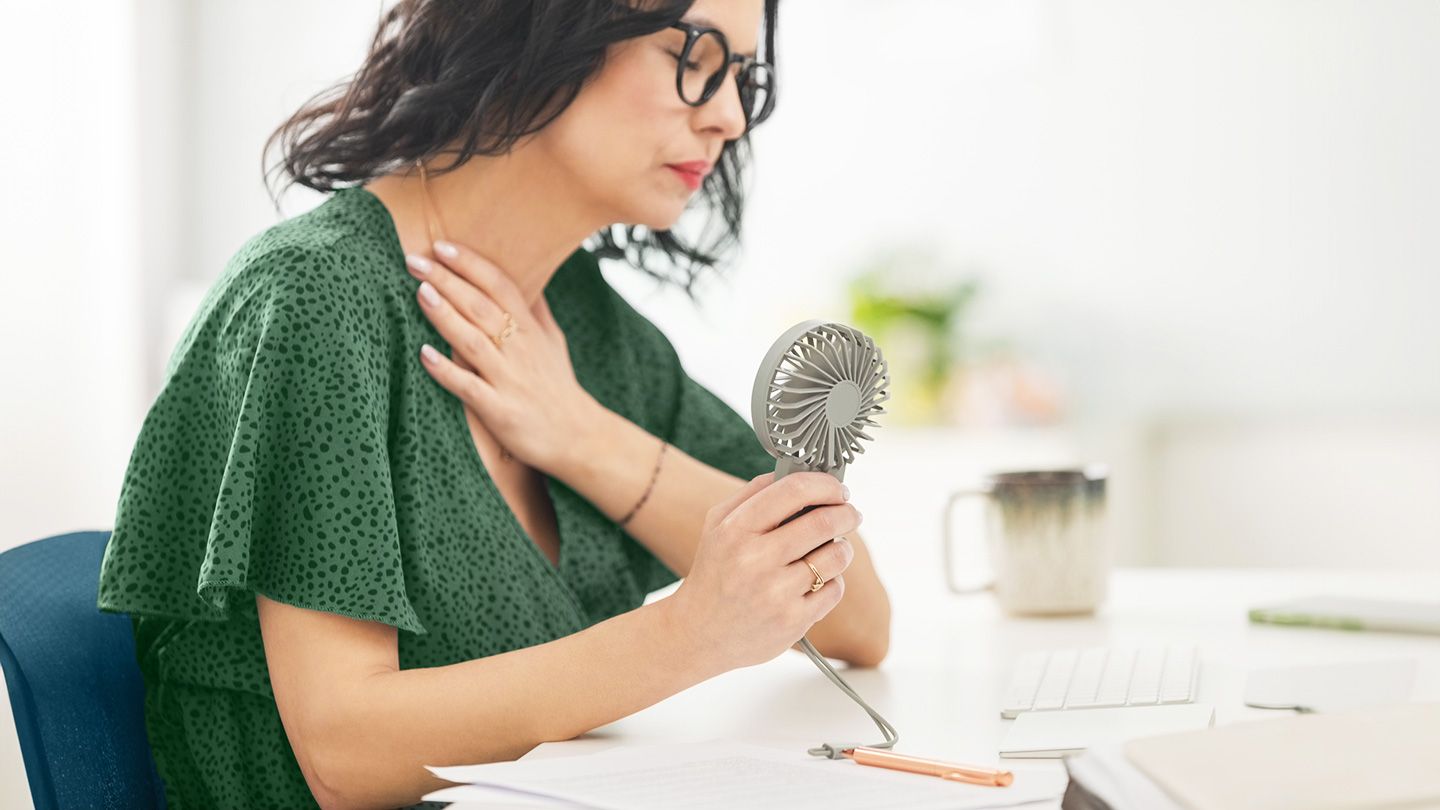
Not everyone has control over their workplace temperature, but there may be steps you can take to stay cool, such as keeping a fan going at your desk.
If you work in a shared space that’s stuffy or unventilated, consider asking your coworkers if they’d like a cooler temperature or more air movement — and talk to your supervisor about ways to make it happen.
6. Pay Attention to Your Diet
There isn’t much data to support broad dietary recommendations to reduce sweating, Gupta says, but if you believe eating a certain food contributes to your sweating, it’s best to avoid it at work.
This is where keeping a food and symptom journal can be helpful, allowing you to spot any patterns that emerge over time.
For example, some people find that eating spicy foods contributes to increased sweating. Other triggers can include fatty, sugary, and salty foods, as well as beverages with caffeine or alcohol.
7. Keep Supplies for Sweat Reduction and Cleanup
Keep a variety of different-sized towels at work for various tasks — such as for wiping your forehead, drying off your torso underneath your shirt, or putting on a chair when you sit down.
You may also want to bring deodorant or antiperspirant if you find that reapplying it throughout the day helps. The most effective deodorants for hyperhidrosis are aluminum-based. But Gupta warns that many antiperspirants work best when they’re applied to clean, dry skin, so if you’re already sweating, don’t assume that more applications will help.
8. Try Out Fixes for Social Interactions
Social situations at work — like greeting important clients or difficult customers, or giving a presentation or training — can be some of the biggest causes of stress-related sweating.
Changing how you approach some of these interactions may be helpful. For example, ask if you can give a presentation sitting around a table with your audience, rather than standing in front of the room.
If your job involves handshakes and you know that your hands are problem areas for sweat, consider offering a friendly nod and smile or a fist bump instead. “Try to alter your greeting so that you’re in the most comfortable situation,” Gupta suggests. If you can’t avoid a handshake without appearing rude, try keeping a small towel in your pocket to make sure your hand is as dry as possible.
Each of these strategies may not seem like they’d make a big difference on their own, but they can add up to help you stay dry — and confident — at work.
The Takeaway
- The workplace comes with unique stressors, from performance expectations to meeting client and customer needs, that can make managing excessive sweating difficult.
- Layering your clothing, minimizing stress, avoiding trigger foods in your diet, and keeping your office as cool as possible are all effective ways to help control hyperhidrosis at work.
- Medical treatment for hyperhidrosis can help you manage symptoms, so talk to your doctor about your options.
Read the full article here