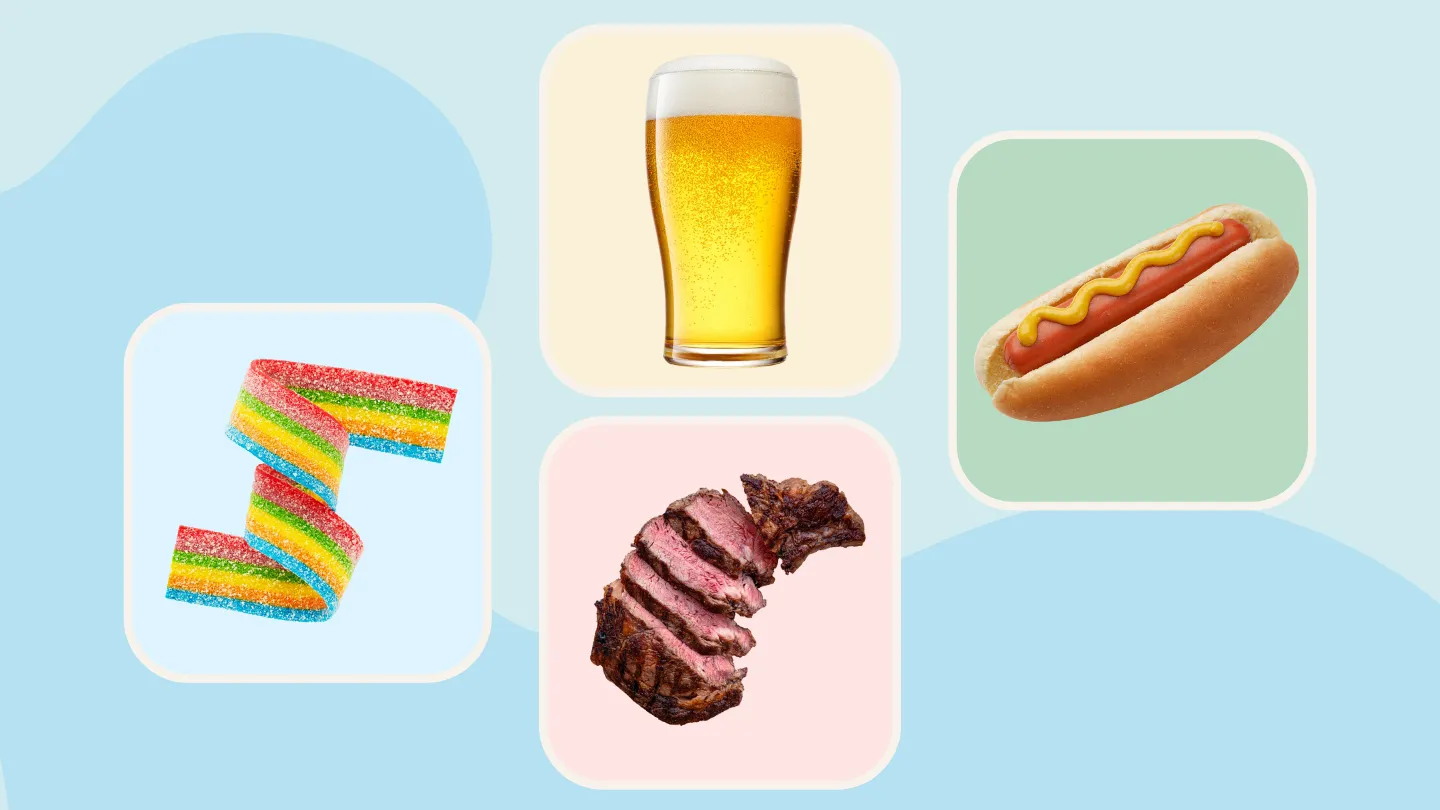
“The exact mechanisms by which our diet impacts the development of colorectal cancer continues to be the focus of laboratory and clinical research,” says Jeremy Kortmansky, MD, the clinical director of the division of GI medical oncology for Yale Cancer Center and Smilow Cancer Hospital. “However, it is well established that foods that cause inflammation lead to recruitment of pro-inflammatory cytokines (a type of protein), which are associated with colorectal cancer.”
Dietary choices that promote inflammation can also affect the gut microbiome — a collection of microbes in your gastrointestinal tract, says Dr. Kortmansky. Unhealthy gut microorganisms create an environment in the colon where cancer can thrive, but a healthy gut may have a protective effect.
Here are the five worst foods for colon health, according to experts, and what you can eat instead to lower your risk for colon cancer.
1. Beef
Beef and other red meats, such as veal, lamb, and pork, are considered some of the highest-risk foods for developing colorectal cancer. In fact, studies have shown that with each increase of 100 grams (g) [3.5 ounces (oz)] of red meat per day, colorectal cancer risk goes up by as much as 16 percent.Red meat contains a compound called heme iron, which can increase the formation of cancer-causing N-nitroso compounds.
2. Hot Dogs and Other Processed Meats
In 2015, the International Agency for Research on Cancer labeled processed meat as carcinogenic to humans. “I eat processed meats very rarely,” says Kortmansky. “These foods lead to changes in metabolites and the microbiome within the gut.”
Beyond their effect on gut microbes, processed meats also contain preservative chemicals like nitrates and nitrites, which can expose your colon to N-nitroso compounds and increase your risk of cancer growth there.
But added chemicals aren’t the only source of risk. Meats that have been salted, cured, fermented, or smoked can also increase the potential for cancer, says Dr. Kamath. Any processed meat may increase colorectal cancer risk by up to 22 percent for each 50 g (1.8 oz) eaten per day.
3. Charred Steak
The way you cook red meat can also affect cancer risk.“Cooking red meat at very high temperatures (like on a barbecue) leads to the formation of heterocyclic amines (HCAs) and polycyclic aromatic hydrocarbons (PAHs), chemicals which can damage DNA and lead to tumor development,” says Kortmansky.
Research has shown this connection in animals, but more research on humans is needed.
The way you cook your meat has an impact, but the meat itself is still 90 percent of the problem, says Kamath, who recommends avoiding red and processed meats no matter how they’re cooked.
4. Candy
The sugar in candy and other sweet treats can create excellent conditions for cancer growth. “Candy has a very high caloric burden, but it doesn’t really keep you full for very long,” says Kamath. “And so I find a lot of times the problem is that, because you don’t feel full at all from it, you’re just going to go on to eat the normal amount that you would have had otherwise.”
Sweet foods aren’t the only empty-calorie culprits: High-sugar drinks like juice and soda are, too. “Sugary drinks are associated with excess calories that lead to obesity,” says Kortmansky, and research shows that people who have higher amounts of body fat with obesity are at higher risk of developing cancer.
5. Alcohol
Even though alcoholic beverages are not food, it’s important enough that both our experts wanted to include alcohol in this list. “Alcohol is associated with an increased risk of several cancers, including colorectal cancer,” says Kortmansky.
For every alcoholic drink you consume per day, your risk of colorectal cancer goes up by 6 percent, and this number can go up to 52 percent when you have four drinks per day. When you drink alcohol, it changes your gut microbiome, suppresses protective enzymes, and makes it easier for cancer cells to grow, Kortmansky adds.
As your body digests alcohol, it produces acetaldehyde, which is a type 1 carcinogen, meaning studies have shown it can cause cancer in humans. Acetaldehyde can damage DNA, which sometimes leads to mutations, says Kamath. “We’re learning there really isn’t any safe amount of alcohol. Every drink you have has some negative impact,” he says.
What to Eat Instead
The Mediterranean diet also includes leafy green vegetables and cooking with olive oil versus animal fat or other vegetable oils, says Kamath. “When you have this good diet, you also then have an enrichment of better bacteria as well,” says Kamath.
The following foods may lower your risk of colon cancer:
- Cruciferous vegetables like broccoli, Brussels sprouts, cabbage, and cauliflower
- Fiber, which you can get from whole grains, fruits, and vegetables
- Dairy products like milk, cheese, and yogurt
If you need help figuring out the best diet to lower your colon cancer risk, your healthcare provider can connect you with a dietitian to create an optimal nutrition plan with you.
The Takeaway
- Some types of food can increase your risk of developing colon cancer, especially when you consume them consistently over the long term.
- Colorectal cancer doctors recommend against too much beef, processed meat, sugar-sweetened foods and beverages, and alcoholic drinks.
- If you have questions about your personal risk of colorectal cancer, reach out to a healthcare provider, who can help you make safe nutrition choices and lower your risk.
Read the full article here