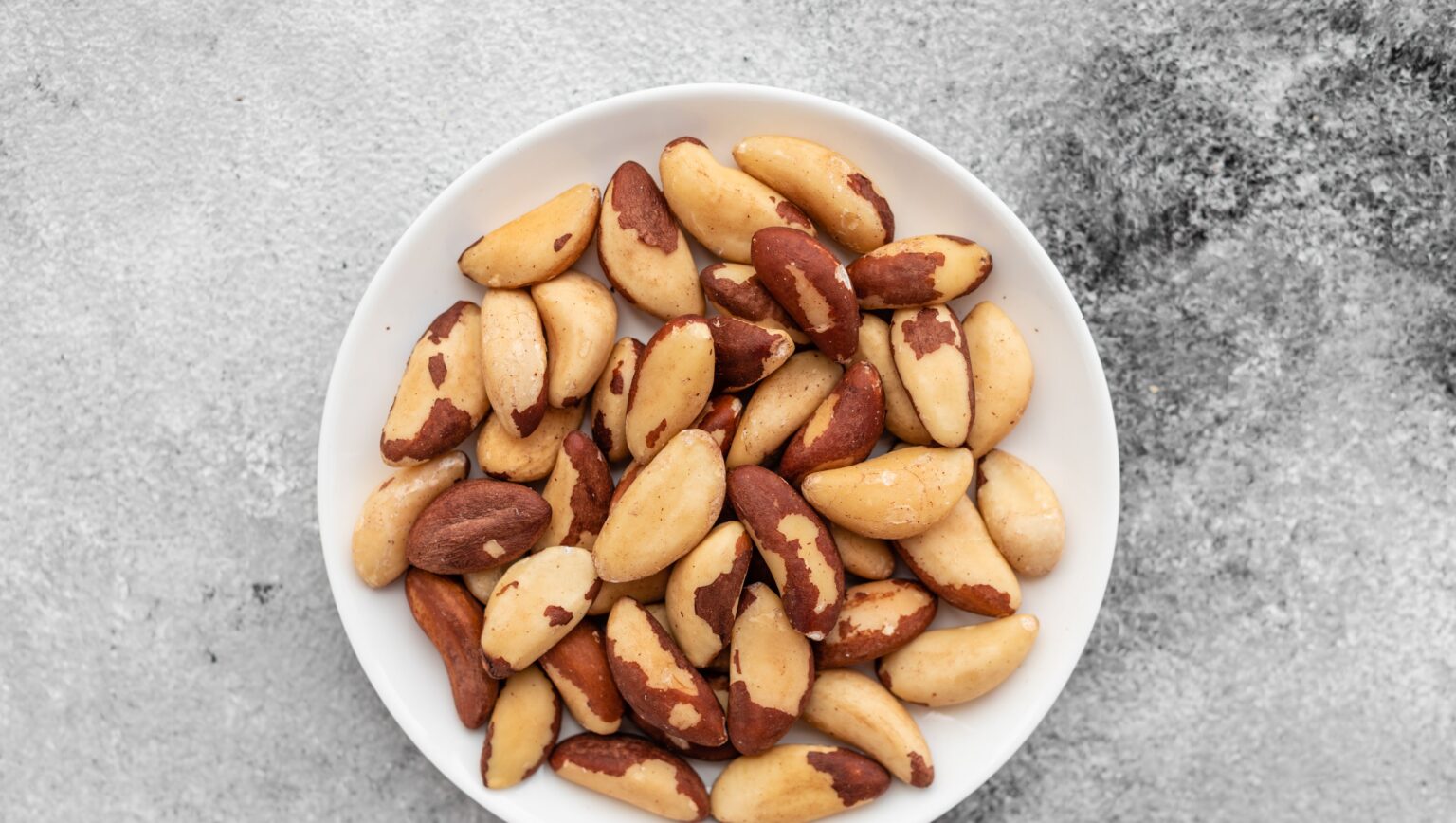
Brazil nuts are a good source of protein, dietary fiber, heart-healthy mono- and polyunsaturated fats, vitamins, and minerals.
They also contain a certain mineral — selenium — that can lead to negative health effects if consumed in large amounts.
Here, learn more about the benefits and side effects of Brazil nuts, plus how much you can eat per day.
Selenium Content in Brazil Nuts
Brazil nuts contain a high content of the trace mineral selenium. While your body needs selenium to survive, consuming too much can have negative health effects.
In small doses, selenium is an antioxidant that can support your immune system and help regulate your thyroid, among other bodily functions, explains the National Institutes of Health (NIH).
According to the U.S. Department of Agriculture (USDA), 1 ounce of Brazil nuts contains 544 micrograms (mcg) of selenium, and one kernel contains 96 mcg.
How Much Selenium Is Safe?
The NIH lists the recommended dietary allowance for selenium based on age range. These amounts are recommended to help maintain optimal health:
- Children, 7 Months to 3 Years 20 mcg
- Children, 4 Years to 8 Years 30 mcg
- Children, 9 Years to 13 Years 40 mcg
- Adults, 14 Years and Over 55 mcg
- Lactating and Pregnant People 60 to 70 mcg
How Much Selenium Is Toxic?
Eating just one Brazil nut puts you over the recommended daily intake of selenium per day. However, because it is from a natural food source, it’s highly unlikely this amount would cause a severe toxic reaction.
According to the NIH, there is a tolerable upper limit for selenium, or the highest possible amount you can consume with the lowest chance of side effects. Here are the limits based on age:
- Children, 1 to 3 Years 90 mcg
- Children, 4 to 8 Years 150 mcg
- Teens, 9 to 13 Years 280 mcg
- Adults, 14 Years and Older 400 mcg
Based on the USDA listing for Brazil nuts, eating as few as four each day could put you at risk of selenium toxicity.
Keep this in mind if you’re also eating other selenium-rich foods, like shellfish, beef, turkey, chicken, fortified cereals, beans, or whole-wheat products, or taking supplements with selenium, according to the Harvard T.H. Chan School of Public Health.
Symptoms of Selenium Toxicity
Selenium toxicity is also a condition known as selenosis. Research has found that an early indicator of the condition is a garlic odor on your breath. Other common symptoms include:
- Hair loss
- Discolored nails
- Gastrointestinal issues, such as nausea and diarrhea
- Shortness of breath
- Nervous system issues
In severe cases, symptoms can include difficulty breathing, lightheadedness, tremors, kidney or heart failure, and heart attacks, according to the NIH.
Allergic Reaction vs. Selenium Toxicity
Selenosis and tree nut allergies have some overlapping symptoms, but they are not the same.
Selonosis can happen as a result of eating too many Brazil nuts or other selenium-rich foods. A Brazil nut allergy happens if you are already allergic to nuts.
According to the American College of Allergy, Asthma & Immunology (ACAAI), some common symptoms of a tree nut allergy include:
- Abdominal pain, cramps, nausea, and vomiting
- Diarrhea
- Difficulty swallowing
- Itching of the mouth, throat, eyes, skin, or any other area
- Nasal congestion or a runny nose
- Nausea
- Shortness of breath
- Anaphylaxis, which is a potentially life-threatening reaction that can send your body into shock
While tree nut allergies are typically lifelong (less than 10 percent of people outgrow it, says the ACAAI), selonosis goes away after seeking proper treatment.
Brazil Nuts Contain Barium
Studies have found that Brazil nuts contain trace amounts of a metal called barium, which is absorbed by plants through the soil. The amount of barium in Brazil nuts varies depending on where they’re grown.
While current research suggests the amount of barium found in recommended servings of Brazil nuts is minimal and unlikely to cause harm, it’s still important to know the side effects that can occur from an accidental overdose, also known as barium intoxication.
According to the Centers for Disease Control and Prevention (CDC), signs and symptoms include nausea, salivation, vomiting, abdominal cramps, watery diarrhea, hypokalemia (a reduction in blood potassium levels that can cause a rapid heart rate), muscle weakness, and paralysis.
Bottom line: One Brazil nut is not likely to increase your barium consumption to the point of risk.
Nutrition Content of Brazil Nuts
Like most nuts, Brazil nuts are high in calories and fat. Six Brazil nuts contain 187 calories, 4.05 grams (g) of protein, 3.32 g of carbohydrates, and 19 g of fat — with 4.56 g from saturated fat, 6.78 g of monounsaturated fat, and 6.92 g of polyunsaturated fat, according to the USDA.
In general, it’s recommended that 20 to 35 percent of your daily caloric intake come from fat, according to PennState Extension, with no more than 10 percent coming from saturated fat, says the Dietary Guidelines for Americans.
Brazil nuts are also a good source of dietary fiber, with about 2.3 g of fiber per six kernels, according to the USDA. Fiber can help improve your digestion, lower your cholesterol, and decrease your risk of heart disease, says Mayo Clinic.
Other Vitamins and Minerals in Brazil Nuts
Beyond healthy fat and fiber, Brazil nuts are also rich in certain vitamins and minerals. One serving of Brazil nuts (six kernels) contains 6.24 mcg of folate, or vitamin B9, according to the USDA.
Folate can help lower blood pressure, support embryo development during pregnancy, and support brain health, says Cleveland Clinic.
One serving of Brazil nuts also contains 1.6 mcg of vitamin E, an important antioxidant for fighting disease and supporting skin health, says MedlinePlus.
Brazil nuts are also a rich source of magnesium, with 107 milligrams (mg) per serving, and phosphorus, with 206 mg per serving.
According to the NIH, magnesium can help with protein synthesis, blood glucose control, and muscle and nervous function. Phosphorus is beneficial for bones, teeth, and cell membranes, says the Harvard T.H. Chan School of Public Health.
Drug and Medication Interactions
If you take certain prescription medications, talk to your doctor before adding Brazil nuts to your diet. The selenium content can cause a negative interaction with medications like cisplatin, a strong chemotherapy drug.
Also talk to a medical professional before mixing herbal supplements of any kind with Brazil nuts or other supplements that contain selenium to make sure it’s right for you.
Read the full article here