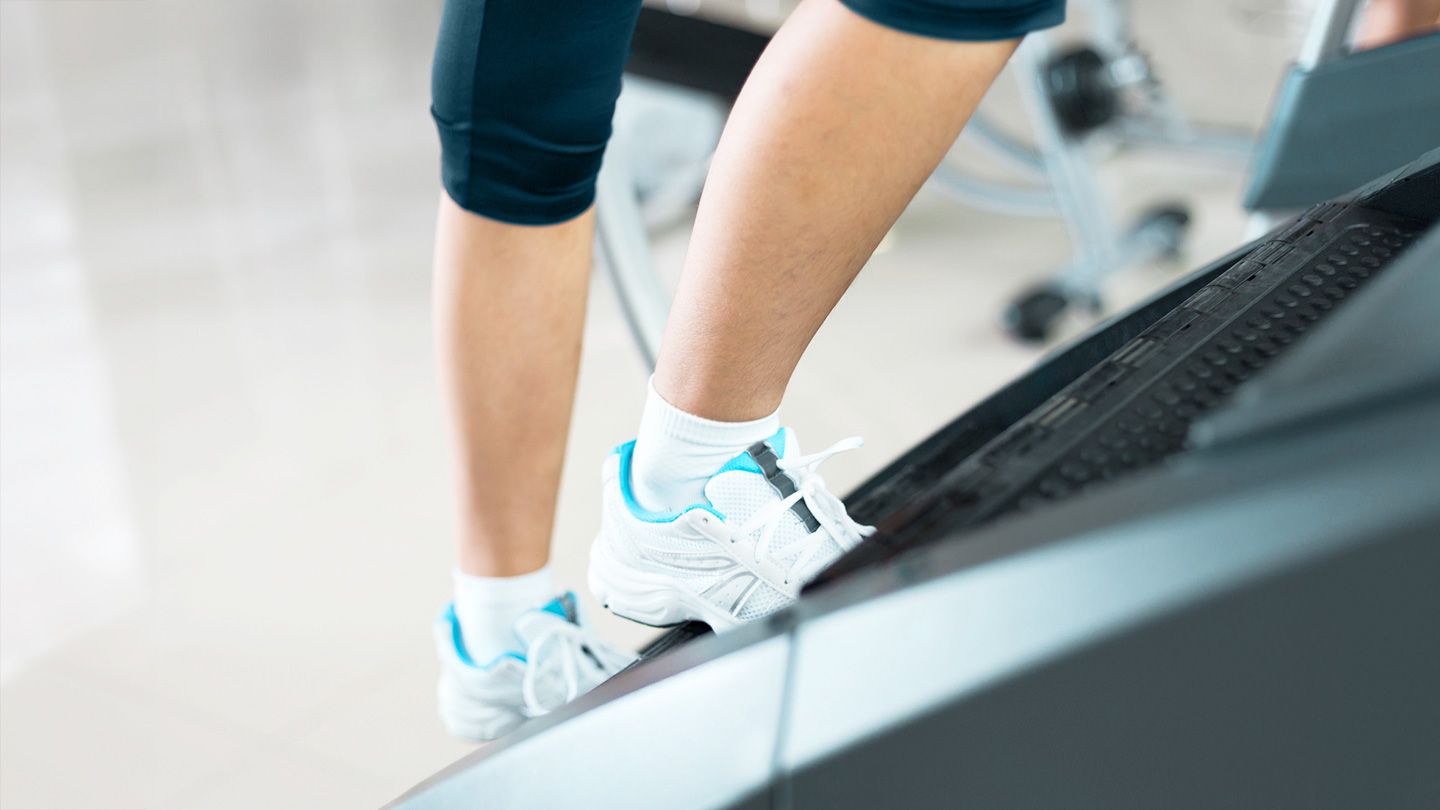
Both machines can provide low-impact cardio, but Seth Maynard, former director of the training center Switch Playground in New York City, says that a stair-stepper “is easier on the knees” and lower impact than a treadmill.
Lunger Lilly agrees. It’s a big part of why she created Bünda’s workouts with a stair-climber instead of an incline treadmill.
“The main reason why I love the StairMaster more than a treadmill is because the StairMaster, while it is really metabolic, is less impact on the joints,” she says.
When climbing stairs, you put weight on a bent leg, then straighten, whereas on a treadmill, you’re more likely to step onto a straightened knee, which puts more pressure through the joint.
Ezekh also points to the spike in heart rate that comes relatively soon after stepping on a stair machine. “The StairMaster provides an intense cardiovascular workout, increasing heart rate and improving endurance,” says Ezekh. “It’s ideal for those focusing on lower-body strength and looking for an intense cardiovascular workout.”
Unless you live somewhere hilly like San Francisco or Seattle, another stair-stepper benefit is that it’s going to better mimic an everyday movement pattern most people use more regularly — going up stairs — which makes the workout more functional than walking on an incline treadmill.
However, Ezekh notes that there are some cons: A stair-climber provides limited upper-body engagement. Also, the intensity of the machine may be too much for people new to exercise. If that’s the case, starting out on a mini stair-stepper may be a good option.
Read the full article here