


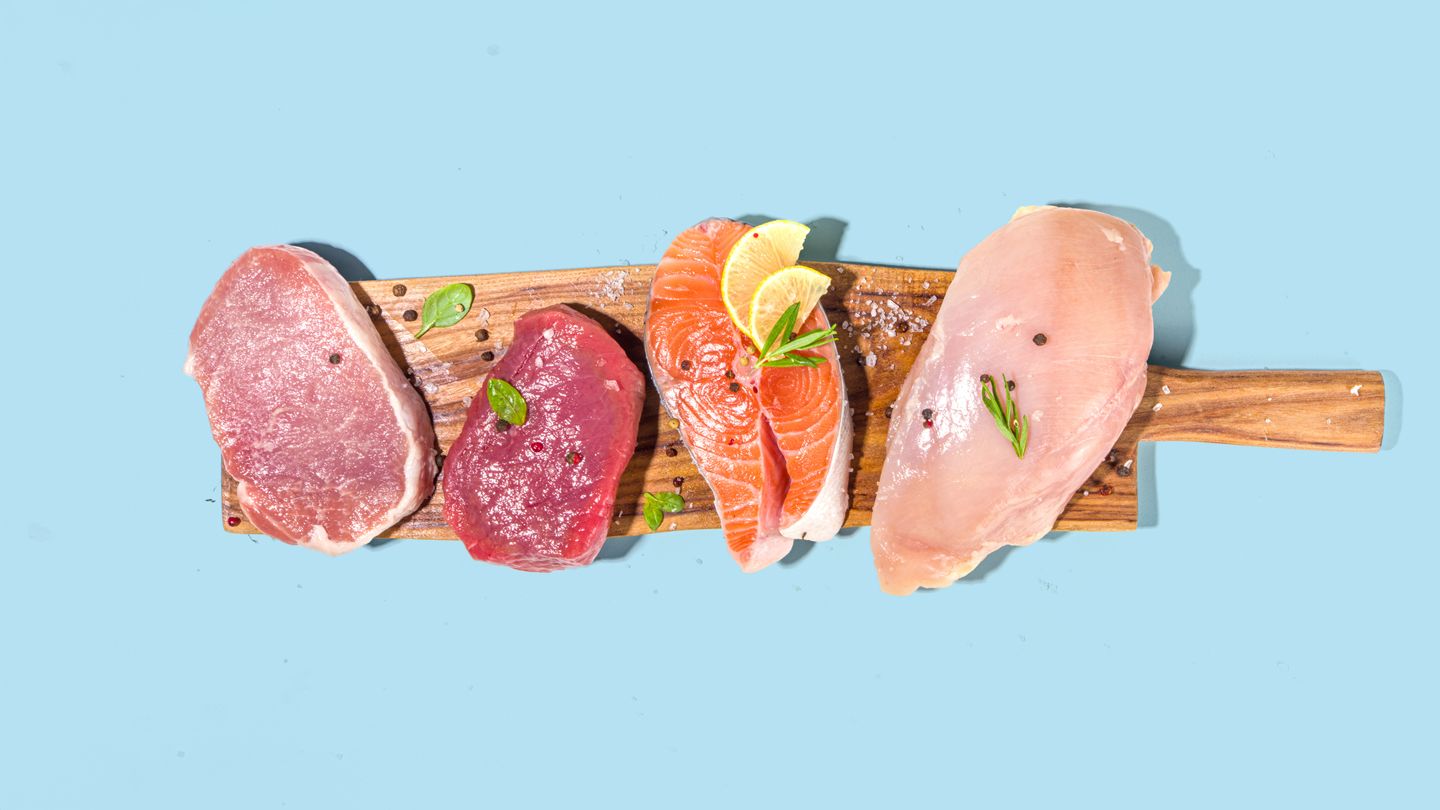
Protein is a macronutrient that supports a variety of key bodily processes, including muscle growth, immune health , and metabolism . While it’s also found in plant foods, animal sources like meat, poultry, and fish typically pack more digestible protein and provide your body with all nine of the essential amino acids it requires to function properly.e60dc2a1-f33c-4a05-9b50-8e3e8e5976290a30e1f6-f182-49f8-ad2e-ab4d5bd8df93e60dc2a1-f33c-4a05-9b50-8e3e8e5976292471b166-677d-489d-ad44-18df2e600555 Protein from animal sources provides an easy way to meet your daily protein needs, but they all vary in how much protein they contain. And with some animal proteins, there are other nutrition considerations, too.
Protein by Meat Type Protein by Meat Type Nutrition guidelines recommend that people eat a variety of animal and plant protein sources to cover a broader range of nutrients.e60dc2a1-f33c-4a05-9b50-8e3e8e5976294d5aceb4-71bf-4af8-8b66-800dafbac075 As for protein, chicken takes the top spot, but most types of meat have roughly comparable amounts of protein. “For poultry, I typically recommend choosing lean cuts and removing the skin some of the time, which helps to decrease the saturated fat content,” says Lena Bakovic, RD , a registered dietitian at VNutrition in Palm Beach Gardens, Florida. Here’s how the protein content in different varieties of meat and some fish breaks down.
e60dc2a1-f33c-4a05-9b50-8e3e8e59762923d29388-6a2b-4ae0-841a-f41bedfe475ae60dc2a1-f33c-4a05-9b50-8e3e8e5976292624055c-73c0-476f-aa04-d259c3f39b04e60dc2a1-f33c-4a05-9b50-8e3e8e597629c6a1b36e-8816-4102-9928-e5b32d49e245e60dc2a1-f33c-4a05-9b50-8e3e8e597629a56a4760-f19c-4774-bd58-90539a1f6d4fe60dc2a1-f33c-4a05-9b50-8e3e8e5976294f45c53f-cbf2-4667-9685-24ccd567142fe60dc2a1-f33c-4a05-9b50-8e3e8e597629b67ac699-e9f8-4a89-b37d-c02fcc61fa51e60dc2a1-f33c-4a05-9b50-8e3e8e597629dd2249e3-9a5c-4189-b086-84a784cb2001e60dc2a1-f33c-4a05-9b50-8e3e8e597629b405633e-21de-46cf-abc6-f1e7f7d4f032e60dc2a1-f33c-4a05-9b50-8e3e8e597629062792db-6832-4b5d-9504-890965727043e60dc2a1-f33c-4a05-9b50-8e3e8e597629707ba60c-9432-4a2e-a236-c4ccdd9ab625
How Much Protein Do You Need? Recommended Protein Intake The recommended amount of daily protein varies according to age, body size, activity level, and health goals. For most healthy adults, the recommended dietary allowance (RDA) — which is the necessary amount to prevent a nutrient deficiency — is 0.8 g of protein per kilogram (kg) of your body weight, or 0.36 g per pound.e60dc2a1-f33c-4a05-9b50-8e3e8e59762985e287ee-bc38-4198-a552-625c005ab4d4 This amount may be slightly higher for someone with more intense physical activity levels or other health circumstances.e60dc2a1-f33c-4a05-9b50-8e3e8e5976291e0ebe18-f991-405b-9549-1b0d4a290672 While recommendations for protein intake aren’t broken down by meal or snack, a 150-pound person with normal activity levels should be aiming for around 55 g of protein per day.e60dc2a1-f33c-4a05-9b50-8e3e8e5976298ab27dd3-e649-4dc9-be48-3c5a428a63e4e60dc2a1-f33c-4a05-9b50-8e3e8e5976298e046c45-e12a-4f15-95a8-ac1aa9c35c9b Incorporating lean cuts of animal protein into your daily diet can help you meet those goals while offering additional health benefits that plant protein doesn’t always provide, says Frédéric Leroy, PhD , a research expert on animal-sourced foods and professor of food science and biotechnology at Vrije Universiteit Brussel in Belgium.e60dc2a1-f33c-4a05-9b50-8e3e8e59762912553310-b40c-47a6-b5e8-efe96a48d415
Other Nutrition Facts About Animal Protein Other Nutrition Facts Red and many types of processed meat can contain high levels of saturated fat, which may increase cholesterol levels, leading to a higher risk for certain chronic diseases like heart disease and cancer . But not all health officials think saturated fat is as dangerous as once believed.e60dc2a1-f33c-4a05-9b50-8e3e8e597629f96e8f35-c9fb-45ef-9ffa-d729daa79694 To keep your meat intake as healthy as possible, try these expert tips. Limit red and processed meat. Dietary guidelines and health organizations often recommend eating red meat judiciously and avoiding processed varieties altogether, like hot dogs, bacon , and deli meats.e60dc2a1-f33c-4a05-9b50-8e3e8e5976296ff34308-63bf-476f-a9b1-8aa228a794be Leroy generally suggests focusing on “unprocessed or benignly processed versions” — which could include fresh cuts of protein or precut portions of fish or steak — while avoiding ultra-processed choices like deep-fried chicken nuggets. This can limit the intake of saturated fat, sodium , and other additives.e60dc2a1-f33c-4a05-9b50-8e3e8e597629085ebc16-8a3d-4ec8-8bb3-c5b88a804d93 Opt for lean cuts. Choosing lower-fat cuts of meat, especially red meat varieties, helps maintain the protein benefits while minimizing saturated fat intake, says Bakovic. “What I typically recommend for my clients specifically pertaining to red meat consumption is one to two 3 oz servings twice a week, if they desire,” she explains. Be mindful of cooking methods. Some research has suggested that grilling or charring meats at high temperatures can produce compounds that are potentially harmful to your health. To be safe, stick to baking, broiling, or roasting if possible.e60dc2a1-f33c-4a05-9b50-8e3e8e5976299f735097-8418-4bea-be57-c8c769d6afa1
The Takeaway Protein is an essential macronutrient that supports a healthy body. Consuming high-quality meats like chicken breast, salmon, and steak can be an efficient way to get the protein your body needs. Chicken breast ranks highest in protein content per serving, but most meat sources are relatively comparable. Most adults need a minimum of 0.8 g of protein per kg of body weight every day. For healthier intake, experts suggest choosing lean cuts, eating a variety of animal protein types, and avoiding processed meats whenever possible.
Read the full article here


Leave a comment
