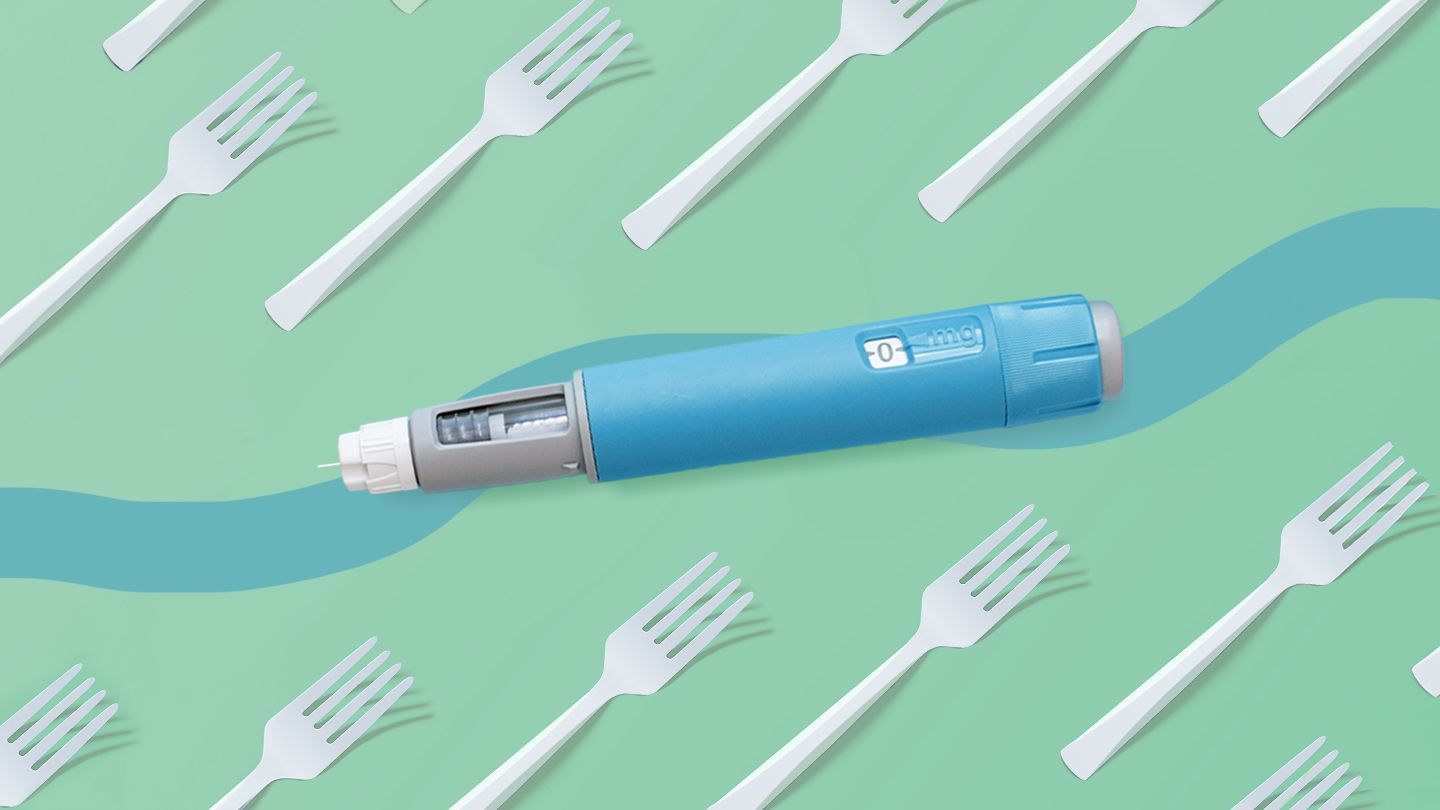
GLP-1s are not currently approved by the U.S. Food and Drug Administration (FDA) as a binge eating disorder treatment. They are, however, prescribed off-label as an anti-binge drug.
Binge eating disorder is a more serious condition than emotional eating. While emotional eating often ebbs and flows as a source of stress relief, binge eating involves rapid, large meals with a loss of control, often followed by episodes of intense shame. GLP-1 medication can’t help symptoms caused by all of these factors, but they may have an effect in certain patients by addressing some of the biological causes of hunger.
“For some people with binge-type eating disorders, these medications appear to mitigate some of the biological roots of disordered eating,” says Kim Dennis, MD, founder of the therapy practice SunCloud Health in Chicago and member of the National Association of Anorexia Nervosa and Associated Disorders’ Scientific Advisory Board.
One systematic review of five studies involving 182 participants found that GLP-1s were associated with significant reductions in Binge Eating Scale scores, suggesting an improvement in binge eating behaviors.
However, because of this medication’s limitations in terms of treating the emotional aspects of eating, it won’t address trauma or body image distortions, for example, if those issues are at the root of a person’s eating disorder, Dr. Dennis adds.
“Further evidence will be needed before we can see the complete picture, but they show promise as, at the minimum, an adjunct to current therapy,” says Esposito.
Read the full article here