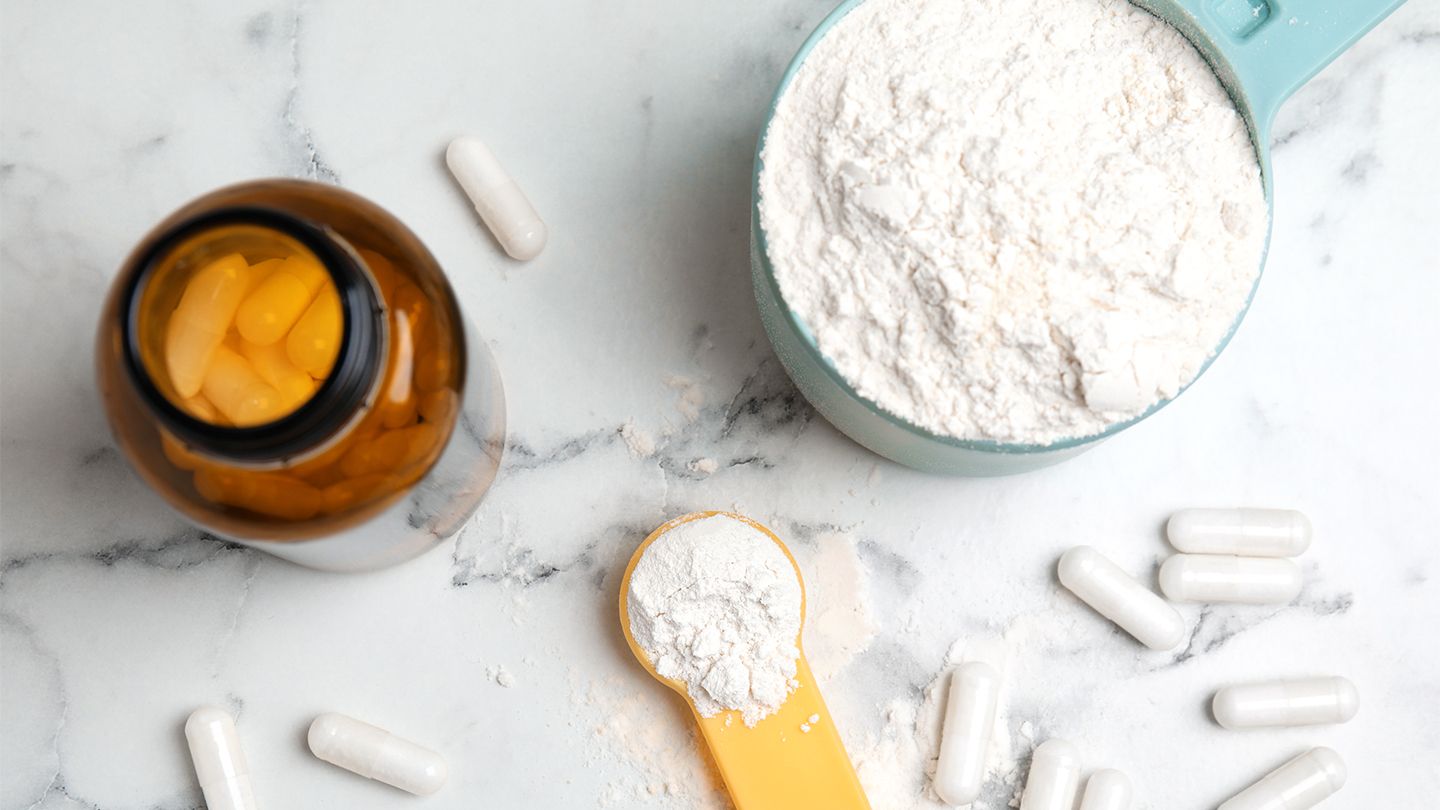
How Much Creatine Do I Need for Muscle Growth?
If you’re not lifting heavy weights, doing high-intensity workouts, or eating a mainly vegan or vegetarian diet, your body probably makes as much creatine as it needs. Your body is likely already making enough if you’re consuming a balanced diet that includes animal products, says Bates.
Protein sources like beef, chicken, pork, and fish help your body produce the creatine it needs. While the amount of creatine per serving varies depending on the source, 3 ounces of meat will generally have about 0.4 grams (g) of creatine, Bates says.
If you’re looking to creatine as a supplement for muscle growth, a common protocol is to have a loading period, during which you significantly increase your creatine intake for a few days or weeks. “This can prime your muscles to increase the amount of creatine that they hold,” Bates says.
According to Bates, a typical loading period might involve taking 5 g of creatine four times per day, for a daily total of 20 g of creatine. After the loading period, you decrease your creatine intake to a maintenance level of between 3 and 5 g per day.
Keep in mind that according to some research, a loading phase isn’t always necessary. It’s best to consult a healthcare professional about the right dose for you.
The amount of creatine that your body uses will also depend on how much muscle mass you have, says Bates. “In general, muscle can hold about 2 to 3 g of creatine per kilogram of muscle mass,” she says.
Research suggests that staying in the range of 3 to 5 g of creatine monohydrate per day for maintenance is safe. While higher levels have been tested under acute conditions without adverse effects, research on its safety for people with specific health conditions is ongoing.
If you’re interested in upping your creatine consumption, work with your doctor or dietitian to make sure the dose is right for your goals and health history.
Read the full article here