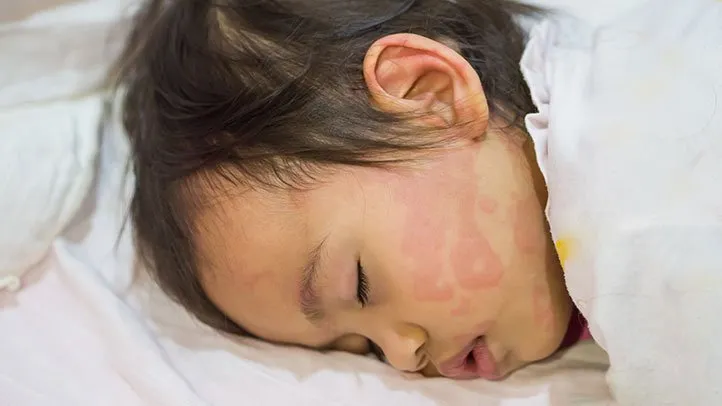
Can You Treat Hives at Home?
If your child has hives that aren’t accompanied by the above symptoms, it’s okay to treat them at home. The main goal will be to help your child feel better, as hives can be extremely itchy and uncomfortable. The hives themselves will usually go away on their own and won’t pose further risk to the child in the absence of those other symptoms. Here are some home remedies you might try.
Take Over-the-Counter Antihistamines
To help quell the itch and provide some relief, the best defense is an over-the-counter antihistamine like diphenhydramine (Benadryl) or cetirizine (Zyrtec). That should block or prevent the release of a chemical called histamine that’s largely responsible for the reaction itself and the itching that accompanies it. Dosage of antihistamines is based on weight and age, so follow label instructions, Rossi notes.
Try to Prevent Scratching
Scratching is a natural response, Dr. Elmariah says, but it can cause hives to break, putting your child at risk of infection. To prevent this from happening, you can dress your child in clothes that cover the hives so they’re less likely to scratch the itch. Another itch-buster is cold therapy. Place a cool washcloth or cold pack on the hives to help reduce the itchiness (unless their hives are triggered by cold temperatures).
Do Proper Bath Care
To further relieve itching, the American Academy of Dermatology recommends bathing your child in lukewarm water and colloidal oatmeal, limiting the bath to the recommended time on the package. But avoid bubble baths and scented lotion. After bathing, moisturize your child’s skin with a gentle cream or lotion. You might also want to dress your child in loose-fitting clothes and adjust the temperature in your house, as heat and cold, in some cases, can aggravate hives.
As you’re trying these remedies, take notes. These will come in handy if your child develops hives again. Write down what time you noticed the hives, what activities your child was doing, and what your child was eating over the previous day, which may help you identify a trigger, Rossi says. You should also note how you treated the hives, how your child responded to that treatment, and how long the hives lasted. If you think you’ve pinpointed a potential trigger, make sure your child isn’t exposed to that trigger again.
Read the full article here