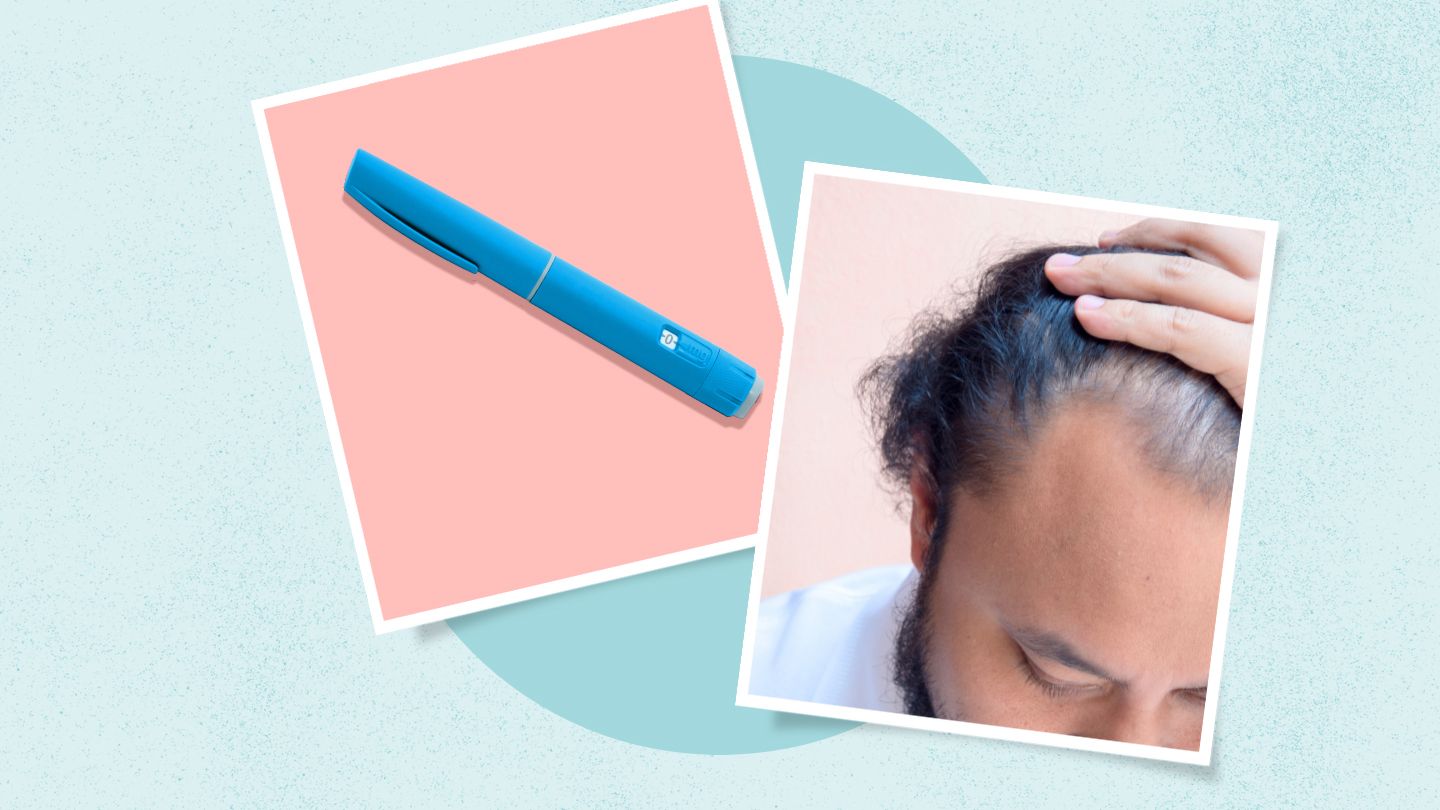
The increased risk appeared as early as six months after starting the medication and was more noticeable at 12 months, researchers found.
“This study found that people taking GLP-1 medications had a higher chance of developing nonscarring hair loss,” says Adam Friedman, MD, a study coauthor and chair of the dermatology department at George Washington University in Washington, DC. Nonscarring hair loss means the follicles remain intact and hair regrowth is possible.
“Hair shedding and thinning can happen in some people on these medications, and it’s something patients and doctors should be aware of,” Dr. Friedman says.
People on GLP-1s for a Year Were 76 Percent More Likely to Have Temporary Hair Loss
Researchers analyzed electronic health records from over half a million adults between ages 18 and 89. People were matched on factors including age, sex, race, BMI, and diabetes status to create comparable groups of GLP-1 users and nonusers.
At six months, people taking GLP-1 drugs were:
- 26 percent more likely to develop nonscarring hair loss, an umbrella term for types of hair loss where the follicles are still intact and regrowth is possible
- 62 percent more likely to develop pattern hair thinning, such as thinning at the crown or widening of the part in women, or a receding hairline in men. This kind of thinning tends to progress over time but is treatable.
By 12 months, they were:
- 40 percent more likely to develop nonscarring hair loss
- 64 percent more likely to develop pattern thinning
- 76 percent more likely to experience stress-related shedding, a temporary increase in hair shedding that often shows up a few months after a physical stressor — such as illness, surgery, childbirth, or rapid weight loss
The study did not find an increased risk of alopecia areata, an autoimmune form of hair loss. “That’s reassuring because it suggests this isn’t an immune system problem,” Friedman says.
Because the study was observational, it cannot prove the medications directly cause hair loss. But its size and matched comparison design make the findings more reliable than earlier isolated reports of GLP-1s and hair loss, says Friedman.
Why Could Taking a GLP-1 Impact Hair?
“Hair thinning was reported as a side effect in some clinical trials of GLP-1 drugs,” says Anthony Rossi, MD, a dermatologist and skin cancer surgeon at Memorial Sloan Kettering Cancer Center in New York City, who was not involved in the study.
Most likely, telogen effluvium — or temporary [hair] shedding — is caused by rapid weight loss in people taking GLP-1s, Dr. Rossi says.
That’s because when the body experiences physical stress, including losing weight quickly, more hairs can shift into a resting phase and fall out a few months later — typically two to three months after the event, Rossi explains. Rapid weight loss is one of the most common triggers of telogen effluvium, he adds.
But Friedman says the findings suggest thinning hair for people taking GLP-1s may not be only about weight loss.
“Other possible contributors include hormonal shifts, changes in insulin signaling, metabolic stress, and possibly effects on the hair follicle itself,” he says. That means the drugs may alter hormone levels and the systems that control how the body uses energy and nutrients, which help regulate the hair growth cycle and could shift more hairs into a shedding phase.
“Some people may not actually be developing brand new hair loss, but rather the medication may reveal or accelerate underlying pattern hair thinning that was already going to happen,” Friedman says.
Is GLP-1 Related Hair Loss Permanent?
In most cases, the types of hair loss linked in the study were nonscarring, meaning they are reversible, Friedman says.
“If the hair loss is shedding, it is usually temporary and improves once the body adjusts, weight stabilizes, and nutrition is optimized,” he says.
If the medication brings out pattern thinning (androgenetic alopecia), that can be progressive, but it’s treatable with standard hair growth therapies, Friedman says.
Not Eating Enough Can Cause Hair Loss
Hair growth requires adequate calories, protein, and micronutrients. If someone drastically limits caloric intake or routinely goes 24 hours without eating, the body shifts energy toward essential biological processes and away from nonessential ones, Rossi says. “Hair is not essential for survival,” he adds.
“To synthesize sex hormones. which are related to hair growth, you need cholesterol and good nutrition,” says Rossi. “If the body isn’t taking in enough fats and nutrients, it won’t produce those hormones appropriately.”
What to Do if You Notice Hair Loss on a GLP-1
“If you notice hair loss, don’t panic, and don’t stop taking the GLP-1 on your own without discussing it with your provider first,” Friedman says.
While stopping the medication may help in some cases, that decision should always be weighed against the important metabolic and heart health benefits these drugs provide, he says.
Friedman recommends seeing a dermatologist to figure out what type of hair loss you are experiencing.
It’s likely that your dermatologist will evaluate your thyroid levels, hormone balance, and overall nutritional status, Rossi says.
Getting the right nutrition is vital when your overall food intake is limited by a GLP-1. Work with your doctor and even a nutritionist or dietitian to ensure you’re getting enough protein and nutrients.
“Hair loss may also warrant a conversation with your prescribing doctor about how quickly you’re losing weight,” Friedman says.
Treatment Options for Hair Loss
If you are experiencing pattern thinning, you may want to consider treatment, Friedman says.
Options include topical or oral minoxidil, antihormonal therapies such as spironolactone (for women), or 5-alpha reductase inhibitors such as finasteride or dutasteride.
“Bottom line: Hair loss can happen, but it’s usually manageable,” Friedman says. “And for many patients, the overall health benefits of GLP-1 medications are quite significant. By collaborating with your board-certified dermatologist, this common adverse effect can be mitigated — you have options.”
Read the full article here