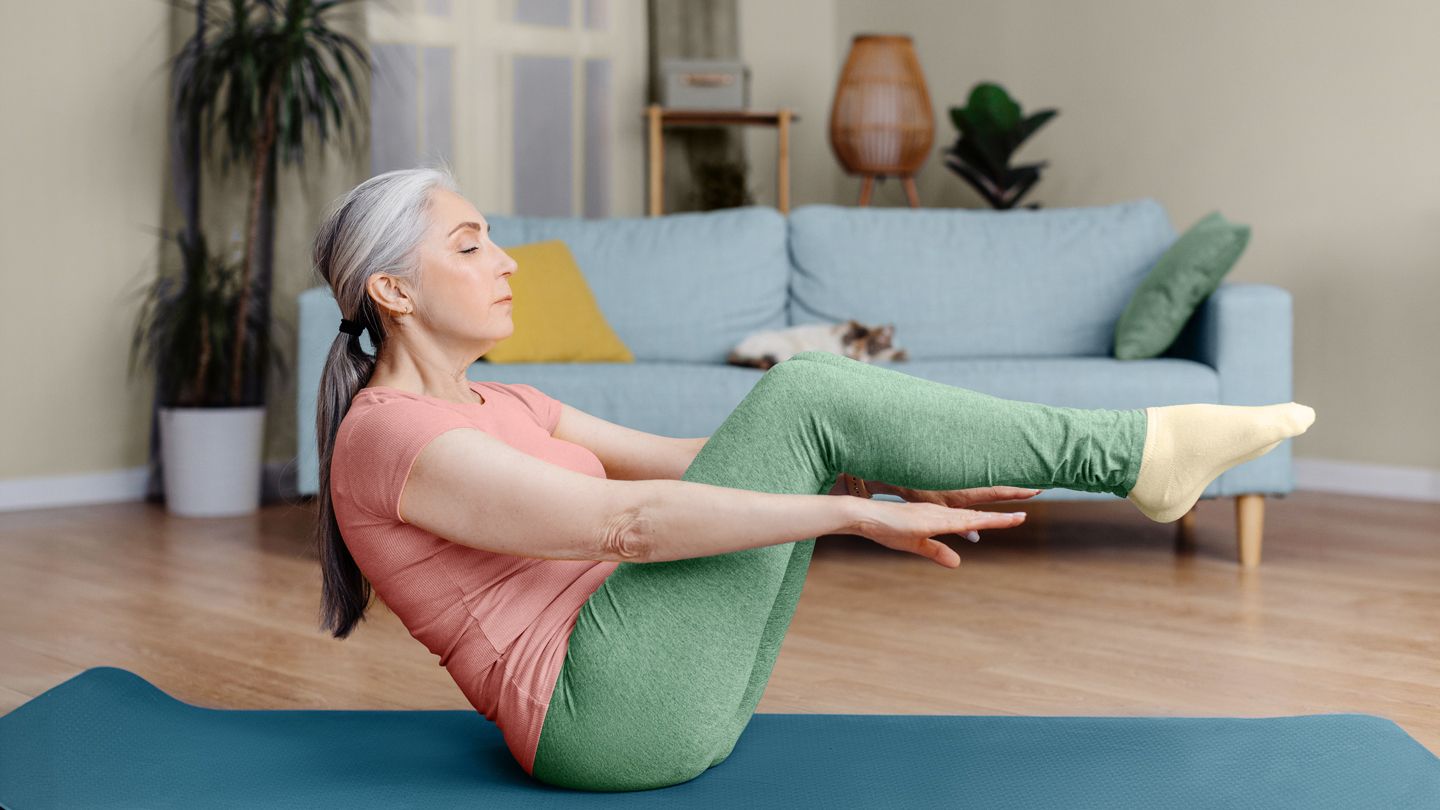
While the idea of falling because of MS symptoms can be scary, there are simple, reliable ways to reduce falls: with exercise, environment, and equipment.
“The most consistent wins come from targeted strength and balance training, gait training, and smart use of assistive devices,” says Dr. Nawaz Khan.
For Hopkins, an effective program focuses on five key areas:
- Strength
- Balance
- Proprioception, or the body’s sense of where it is in space
- Reaction time
- Flexibility
Strength and Balance Exercises
Physical therapists and fitness trainers can help you improve your balance and strength, making falls less likely to occur.
They may use a number of methods, including:
- Balance Training Exercises like tai chi or specific balance exercises can improve your balance when standing and walking.
- Functional Training Many falls happen during “sit-to-stand” movements or when turning around quickly. A PT can help you learn to make these transitions more safely.
- Strength Building Core exercises and lower-body resistance training can help with balance and staying upright.
- Stretching Managing spasticity through daily range-of-motion routines.
Hopkins suggests balance training with dynamic and varying terrain and environments, as well as focusing on “real-world” tasks. She also suggests practicing transitions, such as getting up, sitting down, changing direction.
Nawaz Khan notes that incorporating exercises into your routine is key.
“I recommend linking exercises to an existing habit, like after morning coffee or after brushing teeth, and using a simple checklist,” he says. “If fatigue is a major driver, we build pacing, cooling strategies, and rest breaks into the plan so it feels doable.”
Nawaz Khan points out that activity should be matched with your day-to-day symptoms and energy levels. “The rule is challenge without chaos, meaning you should feel worked but not unstable,” he says.
It’s also important to plan for your lifestyle. “Home programs should be focused on fitting into the person’s life vs. the other way around,” says Hopkins. They can also be simple. “Talk to a physical therapist and work on adding one simple strength or balance exercise,” Hopkins adds.
Home Modifications
There are several simple home modifications you can make to reduce the risk of falls, and many don’t require major renovations or a big investment. “Clear one risky area within the home and take baby steps. Don’t overwhelm yourself with too many changes at once,” says Hopkins.
An occupational therapist can help you identify opportunities for simple changes in your own home. These can include:
- Removing throw rugs, clutter, and electrical cords from high-traffic areas of your home
- Increasing the brightness of lighting in hallways, and using motion-sensor night-lights for bathroom trips
- Installing grab bars in the shower and near the toilet, and using nonslip mats on the floor and in the shower
Hopkins suggests using tape to mark step edges or room transitions to help avoid trips and stumbles. Some simple furniture rearrangement can also help improve the flow of movement from one room to the next.
“Decluttering walkways, securing cords, and using a stable chair for dressing are simple wins,” says Nawaz Khan.
“Keeping frequently used items at waist height reduces risky reaching or step-stool use,” Nawaz Khan adds. “Even changing footwear to supportive, nonslip shoes indoors can help.”
Assistive Devices
Physical and occupational therapists can help you identify whether an assistive device might be helpful, as well as how to use it.
Assistive devices can include:
- Mobility aids, like a cane, walker, or trekking poles
- AFOs (ankle-foot orthoses), or specialized braces that help manage foot drop by keeping the foot elevated during a stride
- Smart footwear, like shoes with firm soles and adequate heel support instead of floppy slippers or high heels
It’s important to be proactive about assistive devices: Don’t wait for a fall to occur before you consider them.
“I frame aids as tools that protect independence, not a sign of failure,” says Nawaz Khan. “The goal is to prevent a fall that could take away months of mobility.”
Assistive devices can also reduce fatigue, pain, and fear so you can do more safely, Nawaz Khan points out.
“Using an aid is not a failure, but a tool and avenue to move more, live more, fall less, and stay safe,” says Hopkins.
Read the full article here