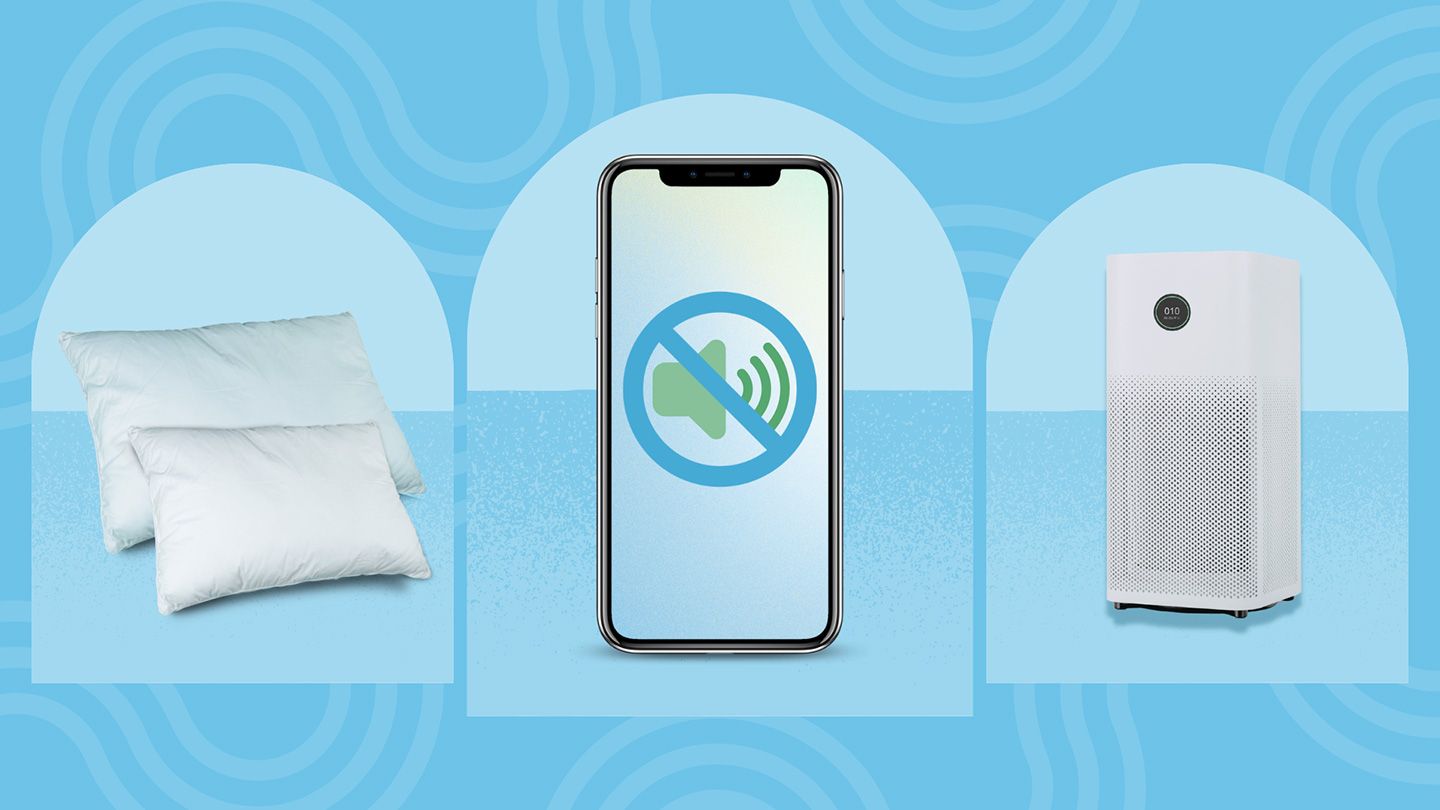
Good sleep can be elusive, even when you’re making efforts to prioritize it. Maybe you already follow a nightly wind-down routine and keep a consistent sleep schedule. But there may be a different piece of the shut-eye puzzle you’ve overlooked: the bedroom itself.
“Your bedroom plays a key role in optimizing your sleep,” says Angela Holliday-Bell, MD, a certified clinical sleep health specialist based in Homewood, Illinois. “It helps set the tone for how easily you fall asleep and how well you stay asleep.”
Dr. Holliday-Bell adds that keeping your snooze space dark, quiet, cool, and comfortable helps reinforce your body’s natural circadian rhythm, which is the internal clock that tells you when to sleep and wake up. Improving that timing can also set you up for a better night’s sleep.
With that in mind, here are seven ways to improve the functionality of your bedroom, so you can enjoy deeper, more restorative sleep.
1. Make It (Really) Dark
It’s a great system, but exposure to light at night can gum up the works. That’s why Holliday-Bell recommends creating a pitch-black space to regularly sleep in.
“You can accomplish this using blackout curtains or blinds,” she says. “I also love a good blackout sleep mask to ensure there’s no additional light exposure while you’re asleep.”
Even small amounts of light can suppress melatonin production, says Jocelyn Cheng, MD, a spokesperson for the American Academy of Sleep Medicine and the senior director of clinical research neuroscience at Eisai Inc. in Nutley, New Jersey. So beyond blackout curtains, “I recommend covering or turning away those little LED lights from alarm clocks and electronics,” she says.
Ideally, she suggests dimming the lights at least a half hour before bedtime, to give your brain time to wind down (and pump up the melatonin) before sleep.
2. Stow Your Electronics
Our glowing screens undoubtedly contribute to the light pollution in our bedrooms, but our phones, tablets, and laptops may interfere with that space in other ways, too.
“The most notable effect on sleep comes from viewing stimulating content such as social media before bed,” Holliday-Bell says. Meaning, navigating the drama from your social feed could be revving you up rather than winding you down.
To help you break away from that cycle, Holliday-Bell often suggests her clients set the “do not disturb” function on their phones to start automatically at least an hour before bed, which can help limit distracting notifications and the temptation to look at stimulating content.
If you need more than that to keep your phone out of your hands at night, Dr. Cheng recommends turning off your electronics completely at least a half hour before bedtime and keeping them out of your bedroom entirely — or at least not within reach.
“If you use your phone as an alarm, keep it across the room so you’re not tempted to check it during the night,” she suggests.
3. Keep It Cool
The ideal temperature for sleep may be cooler than most people keep their thermostat. Sleep experts suggest that temps between 60 and 67 degrees F help promote deeper, more restful sleep.
“A cooler room supports your body’s natural temperature drop and helps you fall asleep faster and stay asleep longer,” Cheng says.
If that sounds a little chillier than you’d normally find comfortable while watching TV or eating dinner, try some trial and error on that temperature range to find your personal sweet spot. If you don’t have full control over your heating and air conditioning, a fan or open window can work well to cool things down, Dr. Cheng says.
Breathable bedding is important too. “Lightweight cotton sheets and cotton blankets allow heat and moisture to escape, helping prevent overheating overnight,” Holliday-Bell says. Bamboo and silk work well, too.
If your partner prefers a different temperature, a cooling mattress pad can help you both stay comfortable, Cheng says.
4. Choose the Right Pillows and Mattress
Ideally, your pillows should keep your head and neck aligned with your spine in a neutral position, while your mattress should support spinal alignment while relieving pressure. “For most people, a medium to medium-firm feel works well,” Cheng says.
For this reason, she recommends testing a mattress before you buy it, if possible. And she suggests looking for pillows made to match your preferred sleep position (back, side, or stomach), as the height and firmness may differ a bit.
If your partner flips around a lot at night, Cheng says a larger mattress or one designed to reduce motion transfer can make a huge difference.
“You can also get two twin XL mattresses and put them together with a mattress connector — it makes a king-sized bed,” says Shelby Harris, PsyD, a White Plains, New York–based clinical psychologist who’s board-certified in behavioral sleep medicine. Consider separate blankets, too, Holliday-Bell says.
5. Minimize Disturbances
Another common sleep disruption is having pets in your bed, says Cheng. “If they’re interrupting your sleep, consider a pet bed right next to yours, so you still get the companionship without the constant movement,” she suggests. “The key is making your bedroom as quiet and relaxing as possible, which sometimes means setting some boundaries.”
6. Improve the Air Quality
Poor air quality doesn’t just impact your lungs, it can also chip away at the quality of your sleep. Ultrafine particulate matter and other indoor pollutants in your bedroom like mold may impact sleep quality and how long you stay down for the night.
Poor air quality can worsen congestion, asthma, and allergy symptoms, causing more nighttime wakeups, says Cheng. She suggests running an air purifier with a HEPA filter (which meets strict standards for removing airborne dust, pollen, mold, and bacteria) and washing your bedding regularly in hot water to rid it of dust minutes and other irritants.
“If you’re sensitive to allergens, hypoallergenic pillow and mattress covers can also make a big difference,” she notes.
Holliday-Bell also suggests keeping pets out of the bedroom entirely if allergies are an issue for you.
7. Clear Away the Clutter
She suggests keeping surfaces clear, using storage solutions like under-bed containers or closet organizers, and establishing a quick nightly routine of putting things away before bed.
“A clean, organized bedroom signals to your brain that this is a place for rest, not work or stress,” she says.
The Takeaway
- Your bedroom environment is essential for quality shut-eye, since it plays a significant role in both how easily you drift off and how deeply and long you stay asleep.
- Sleep experts recommend keeping the space dark, cool, quiet, and free of electronics or clutter to support melatonin production and reinforce your natural circadian rhythm.
- Improving elements like lighting, temperature, bedding, air quality, and noise control can help reduce disruptions and promote deeper, more restorative sleep.
Read the full article here