If you want to lessen your Parkinson’s symptoms through physical activity, include aerobic exercise, strengthening, balance training, and stretching for flexibility.
Aerobic Activity
- Recumbent bikes
- Seated steppers
- Treadmills
- Arm bikes
- Seated weight machines
- Recreational equipment
You could also ask your physical therapist about dancing for exercise or using a special treadmill that supports your body weight to build balance and speed.
Functional Exercises
- Sit-to-Stand Practicing getting in and out of a chair
- Stepping in Formation Using box steps, figure 8s, or simple dance sequences
- Seated Movement Patterns Adding in handling an object with your hands
- Poles and Rolling Walkers Moving to the beat of a metronome or music
- Walking as a Character Marching like a soldier or a king, for example
- Managing Obstacles Walking into a corner or closet, or turning around, stepping over thresholds, and climbing stairs
- Voice, Music, and Hand Gestures Accentuating whole-body movements
Resistance Training
Seated or Lying Movement
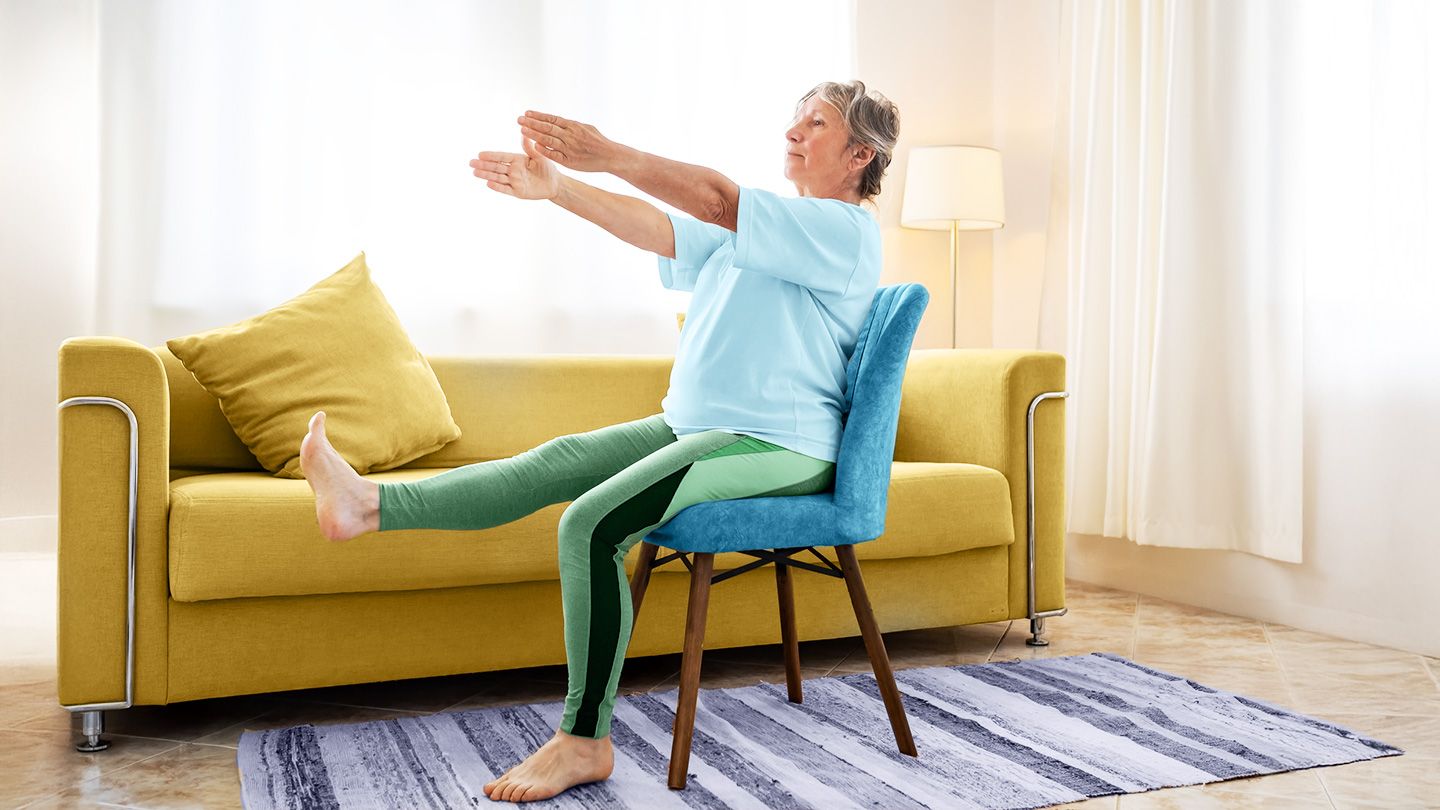
For people with advanced Parkinson’s, exercising while seated (like chair yoga) or lying down can help you get stronger, says Hawks. Seated or lying activities could include the following:
- Shoulder Blade Squeeze Sit on the edge of a chair, stretch your arms to each side, then pull your arms backward, squeezing your shoulder blades together.
- Bridge Lying on your back with your knees bent and feet flat on the floor, squeeze your buttock muscles and raise your hips.
- Back Extension Lying on your stomach, lift your upper body and support your weight on your forearms.
Aquatic Therapy
When you exercise in water, you don’t feel the pull of gravity as much, which can lessen joint strain, balance problems, and the fear of falling. Water activities offer both resistance and aerobic benefits — just walking around in water takes some effort.
Action Observation
Some research shows that people with Parkinson’s can benefit from simply watching others exercise — a therapy called action observation, says Lyne. Experts think that this works because your brain has mirror neurons: brain cells that like to copy what you see.
By watching other people do a movement first, you may be able to do it better when you try. “In kind, people with Parkinson’s may respond to virtual reality programs for daily life events such as walking, interacting with others, or looking for objects,” says Lyne.
LSVT BIG
Fine Motor Training
Besides walking and balance, it’s also important to strengthen smaller muscles, like the ones you use to button up a shirt or use a knife and fork. Exercises for fine motor skills can include the following:
- Touching your thumb to each fingertip on the same hand
- Squeezing a stress ball or putty
- Turning over coins on a table with your thumb and pointer finger
- Buttoning and unbuttoning a shirt several times
- Writing, doodling, and drawing
Read the full article here