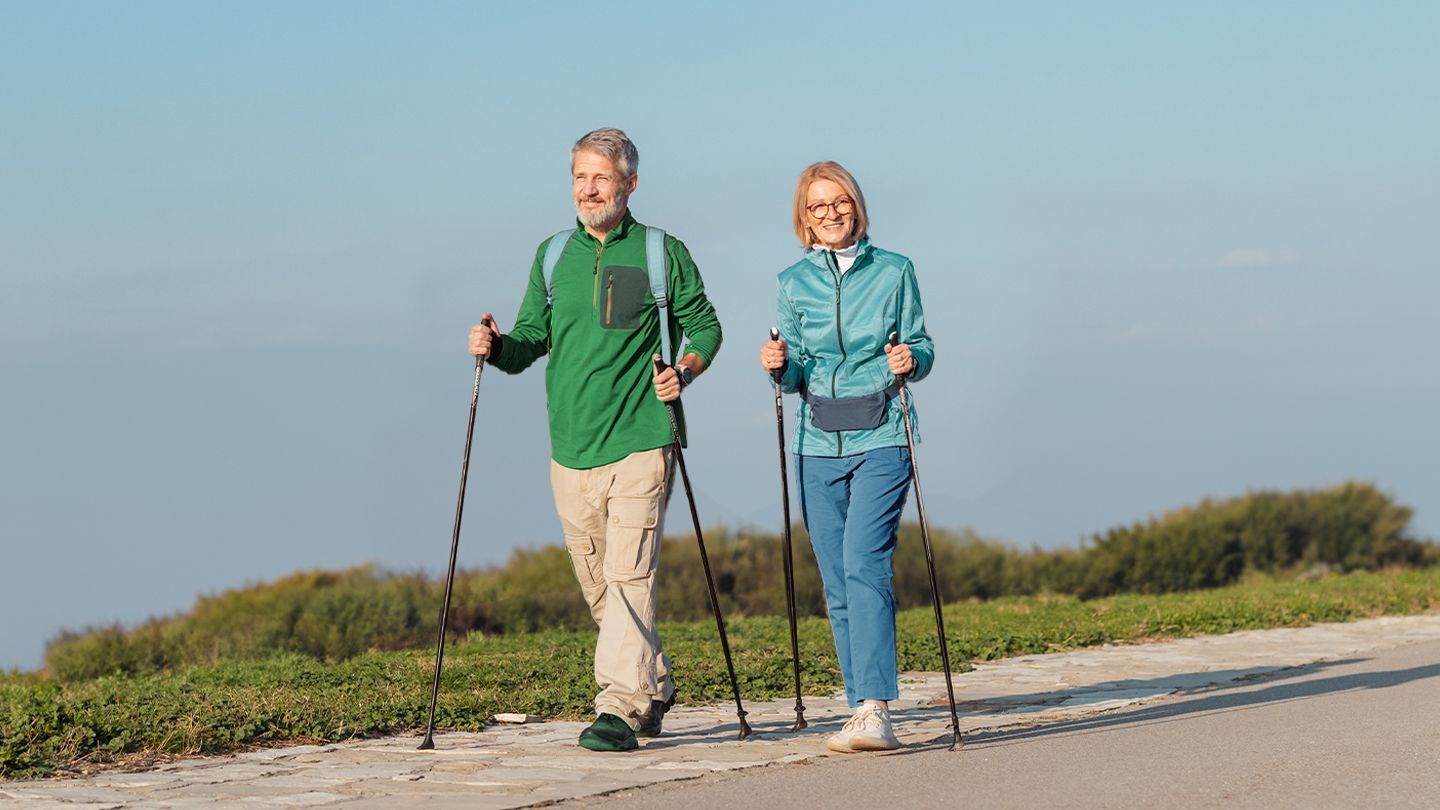
While there’s limited research on this niche workout, sports medicine experts generally agree that Nordic walking offers multiple potential health benefits. Here are a few.
Strengthens Muscles
Research confirms this: An older study found that muscle activation during Nordic walking is greater than conventional walking, especially when trekking uphill. Another smaller study found that Nordic walking elicited significantly greater upper-body muscle activation than regular walking.
Boosts Calorie Burn
When you engage more muscle groups with Nordic walking, you spend more calories. At the same pace, Nordic walking burns more energy and works your heart and lungs harder than regular walking, says Dr. McCarty. This may explain why an older study of 22 adults found that Nordic walking burned about 20 percent more calories than regular walking.
“Nordic walking is a step up in intensity without being high-impact,” McCarty says.
May Relieve Chronic Pain and Fatigue
A review of 14 studies found that Nordic walking eased symptoms in people with fibromyalgia, a chronic condition that causes widespread pain, fatigue, and sleep problems. Nordic walking may help reduce chronic pain and fatigue by combining strength and aerobic training, which can improve muscular strength, boost circulation, and reduce pain sensitivity signals. Exercise in general also prompts the release of natural “feel-good” chemicals in the body that relieve these symptoms.
May Support Heart Health
Nordic walking could support heart health in ways that certain high-intensity interval training (HIIT) or moderate- to vigorous-intensity continuous training (MICT) activities may not.
In one study, 130 people with coronary artery disease completed a 12-week exercise program of twice-weekly workouts: either a 45-minute HIIT session utilizing dance-based movement or cardio equipment, a 60-minute MICT session on cardio equipment, or a 60-minute Nordic walk.
Researchers found that those who participated in the Nordic walking routine experienced a greater boost in functional capacity — a predictor of heart health that measures the ability to perform daily tasks — than people who did the HIIT or MICT programs.
These heart health benefits may stem partly from the continuous, full-body muscle engagement that Nordic walking demands compared with other forms of aerobic exercise. The more muscle groups that are involved, the harder the cardiovascular system must work to sustain the activity, McCarty explains.
Improves Mood
While more research on the mental health benefits of Nordic walking is needed, findings suggest that it may improve mood and depression.
“Like other aerobic exercises, Nordic walking supports mood, stress reduction, and overall well-being,” McCarty says. Research on exercise in general shows that movement triggers the release of feel-good chemicals that can promote relaxation and enhance mental health.
Read the full article here