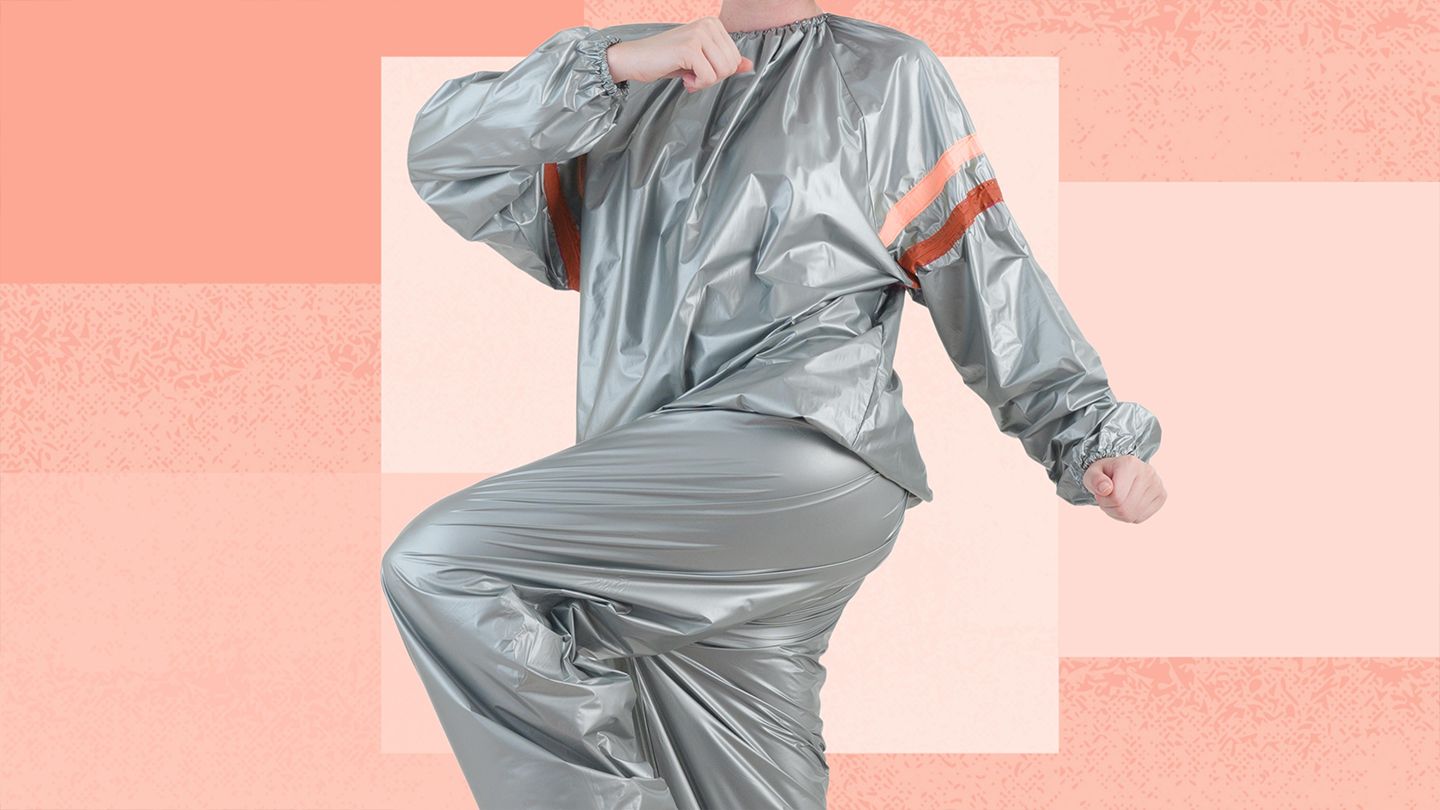
Who Should Try a Sauna Suit (and Who Should Avoid It)?
In another ACE study for which Dalleck was a coauthor, results showed that sauna suits had benefits for exercisers who were overweight and obese.
Blood glucose levels, resting metabolic rate, fat oxidation, body weight, and body-fat percentage all improved after an eight-week program during which participants performed exercises in sauna attire, compared with regular exercise attire.
However, more recent research has shown that while the use of a sauna suit increased fat burn for up to an hour after a workout, the additional calorie burn (23 calories, in this particular study) might not benefit long-term weight loss.
There is little research on whether these suits are safe for certain high-risk populations, Dalleck says. In particular, people with heart disease and diabetes have inherent difficulties with thermoregulation, he says. Individuals with these conditions should consult their physicians before using a sauna suit during exercise to determine whether it’s safe.
Additionally, if you have any other health issues that may interfere with your ability to exercise safely or to increase exercise intensity, or if you have difficulty maintaining healthy hydration and blood pressure levels, consult your physician before attempting this trend.
Otherwise, healthy exercisers should be fine to take a suit out for a spin for light or moderate workouts.
However, no one should use a sauna suit for prolonged or high-intensity workouts due to the risk of dehydration.
“If individuals follow good hydration practices, then the risk of dehydration is really nonexistent,” Dalleck says. Before exercising, Dalleck recommends drinking 0.17 to 0.24 ounces of water per 2.2 pounds of body weight.
During exercise, it’s best to drink the amount of liquid you lose. A good estimate is 8 to 16 ounces of water per hour (drinks with electrolytes are also recommended for prolonged, strenuous workouts).
He encourages individuals who try the suits to hydrate before, during, and after exercise to ensure that their bodies have adequate fluid. Good hydration habits and avoiding extreme workouts in the suits make it easier for your body to tolerate the magnitude of sweat loss, he says.
Read the full article here