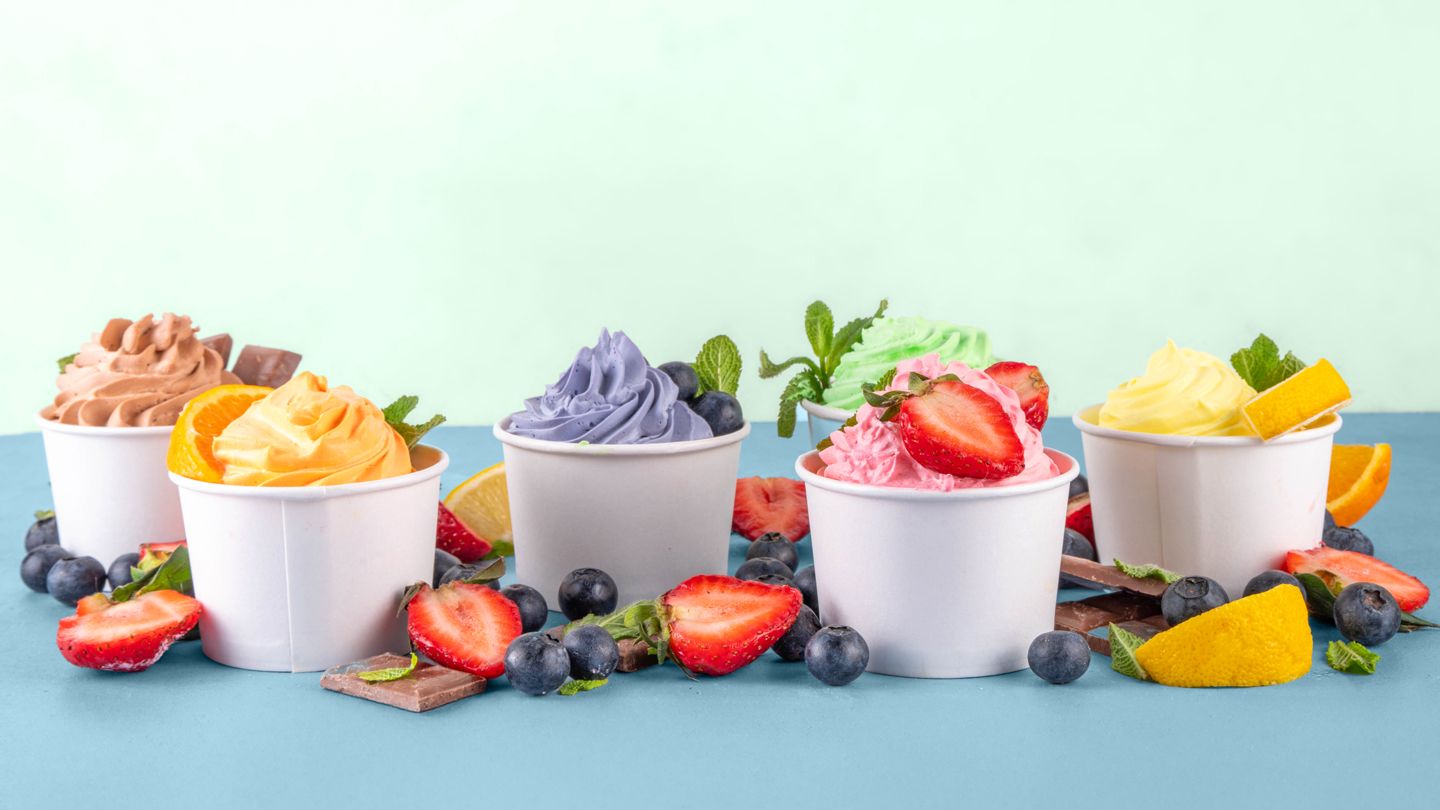
“With so many choices in the area of frozen desserts, the lines have blurred between ice cream and frozen yogurt,” says Julie Stefanski, RDN, a registered dietitian-nutritionist in Baltimore and a spokesperson for the Academy of Nutrition and Dietetics.
But there are some general differences between the two.
Ice Cream
Ice cream typically contains milk or cream (or a combo of the two), sweeteners, and flavorings. For a dessert to be called “ice cream,” the U.S. Department of Agriculture requires it to contain at least 10 percent milk fat, either from milk or cream.
Commercially produced ice creams also may contain stabilizers to prevent ice crystals from forming and emulsifiers to keep the fat and water from separating during the freezing process, all to provide a smooth, creamy texture.
Frozen Yogurt
Like ice cream, frozen yogurt typically contains sweeteners and flavorings, as well as stabilizers and emulsifiers.
The freezing process and the addition of sweeteners often kills the live cultures, although pints from the supermarket are more likely to retain them than servings from a fro-yo shop.
Traditionally, frozen yogurt is lower in fat than ice cream (since it’s made from milk, not cream), Stefanski says. But recently, manufacturers have been making whole-milk frozen yogurt, and they sometimes include cream.
Nutrition Facts: Ice Cream vs. Frozen Yogurt
The exact nutritional makeup of ice cream and frozen yogurt varies by brand and flavor. Here’s a general idea of how they compare:
Read the full article here