1. Get Up Frequently During Your Trip
“Movement is key to preventing blood clots during prolonged travel,” says Maragret Green, MD, a physician with the Travel Medicine Clinic at University of Washington Medical Center in Seattle. “I recommend people get up and walk around every one to two hours, if possible.”
Even small movement breaks can make a difference. For example, Haley Perlus, PhD, a sport and performance psychologist based in Canada, suggests choosing the farthest lavatory when you get up to go to the bathroom to add more steps.
If you’re unable to walk around, Dr. Green says seated exercises, like ankle circles and pointing and flexing your toes, will also work. “These get our muscles moving and help prevent blood from pooling.”
2. Find Creative Ways to Add Movement
Since traveling is often a sedentary activity in a small space, Dr. Perlus suggests finding creative ways to use more energy. When she’s driving or flying, she brings tennis balls to hold under her armpits. “The name of the game is to keep the balls in your armpits, because if you get tired and you slouch, those balls fall down,” she says.
You can also make the most of your time and space between stops.
“I bypass any moving walkways, escalators, or elevators in favor of walking. Taking every opportunity to move and be active while traveling is so helpful when I’m trying to adjust to time changes, not go stir-crazy waiting at the gate, and keep an overall healthy lifestyle,” she explains.
Once she reaches her destination, Perlus keeps her sneakers handy. It’s okay to take a break from your usual workouts while on vacation (and it can be a good thing to mix up your routine if you do typically follow a rigorous exercise schedule). But do make time for some movement, she says. “I try to find ways to integrate physical activity every day of a trip.”
Getting in a bit of exercise any way you can isn’t just good for your physical health — it can also help keep your digestive system regular.
3. Focus on Balanced Meals and Snacks
“Any disruption in routine, and especially when disruption in food is involved, can lead to constipation, bloating, and/or irregularity,” says Rupp.
“Traveling can be stressful. People will sometimes find that the stress can either suppress their appetite, or lead to overeating for comfort.” she explains. “Try to get balanced meals and snacks with protein, fiber, and healthy fats. These help stabilize energy and blood sugar levels and may help you avoid overeating later because you’re starving.”
How do you find this balance on the go? Rupp suggests creating simple combinations that are usually easily available, like pairing carbohydrates and protein. Examples can include:
- Cheese and crackers
- Fruit and nut butter
- Trail mix with dried fruit
- Instant oatmeal and berries
4. Fuel Your Body Consistently
“Traveling can definitely disrupt your routine and can lead to irregular eating,” says Rupp. “This can often lead to skipping meals, having much longer gaps between meals than you ordinarily would, and you may not have the ability to have full, balanced meals.”
Instead of putting pressure on yourself to follow a perfect diet, she suggests consistency over perfection. “Try not to go more than three to four hours between eating,” she says. “Don’t rely on airport timing or time zones — listen to your body.”
“Remember, the goal isn’t perfection, the goal is to give your body what it needs to support energy, digestion, and enjoyment,” she says.
5. Plan Ahead to Prioritize Fiber
When you’re traveling, “you may be relying on more convenience foods to get you through,” says Rupp. “This can lead to less fiber intake, more sodium intake, and more refined carbs with minimal balance.”
When prioritizing fiber on the go, look for foods that travel well, like oats, fruit, and granola bars. “If you have time and are thinking of an airport meal, try to get some veggies in if possible, or whole-grain breads if you are looking at sandwiches,” Rupp says.
If you have a sensitive gut, air or car travel is not the time to experiment too much with brand-new foods. “Try to pack things that you know your body is familiar with,” says Rupp.
6. Drink Plenty of Water
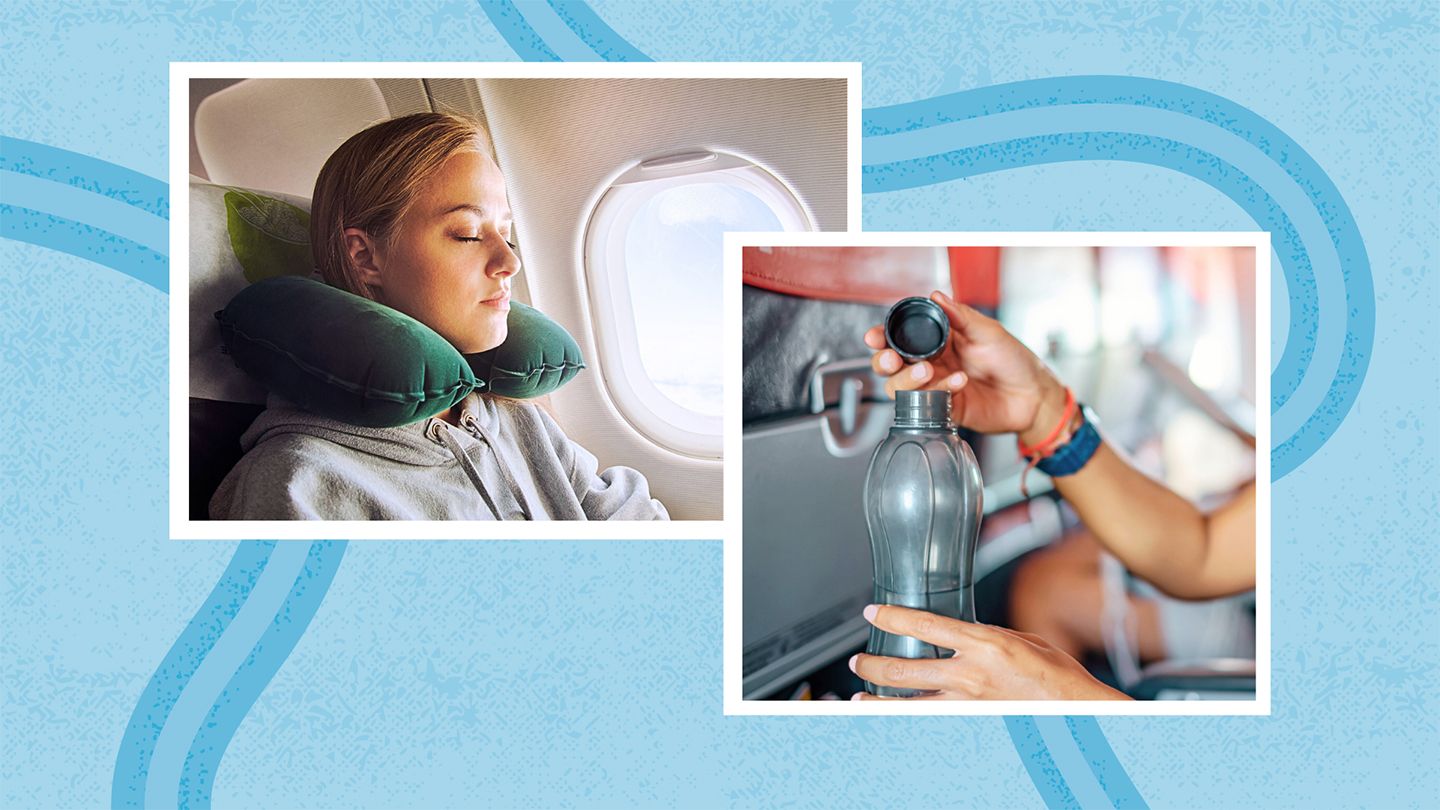
“Think about bringing an empty water bottle from home that you can fill at the airport so you’re not paying a lot of money for a bottle of water,” Rupp suggests. “Carry that around with you and sip on it regularly.”
7. Adjust Your Sleep Schedule Before You Go
When traveling to a much different time zone, it can actually be helpful to start shifting your sleep schedule to match your destination the week before you travel. “We often have more control over our sleep environment at home than when we are traveling, and this can be helpful if you will not have any adjustment time built into your itinerary,” Green says.
“Once you have arrived, try to minimize long daytime naps,” she says. “If you are feeling very sleepy during the day, first try to get some fresh air, exercise, and get into some bright light.”
8. Balance Activity With Rest
Sometimes you’re traveling to take a relaxing break, while other trips may be more stressful than your normal day-to-day life. Regardless of the reason for your travel, Perlus recommends incorporating cycles of activity and rest throughout each day.
“That’s the best way to create and maintain energy,” she says. Instead of constantly going or constantly resting, both of which can lead to fatigue, she suggests following a cycle of stress-recover, stress-recover. For example, try breaking up a day of lounging on the sand with a walk on the beach every hour, or adding rest periods to a long day of sightseeing on foot.
If you’re feeling stressed while traveling, “do what you can to get rest, and [make] opportunities to take part in some self-care,” recommends Rupp. “Get yourself an eye mask and a comfy neck pillow for the flight. Bring a book you enjoy, or plan to watch a movie that makes you happy.”
The Takeaway
- Traveling brings you out of your typical routine, which can lead to issues like dehydration, jet lag, and digestive upset.
- If you’re stuck in a seated position for an extended period of time, like in a car or on a plane, try to get up and walk around every one to two hours, or do seated exercises like ankle rolls.
- Try to pack balanced meals or snacks for your trip, and focus on getting consistent nutrition and plenty of fiber throughout each day.
- Packing a refillable water bottle can help make it easier to stay hydrated while on the go.
Read the full article here