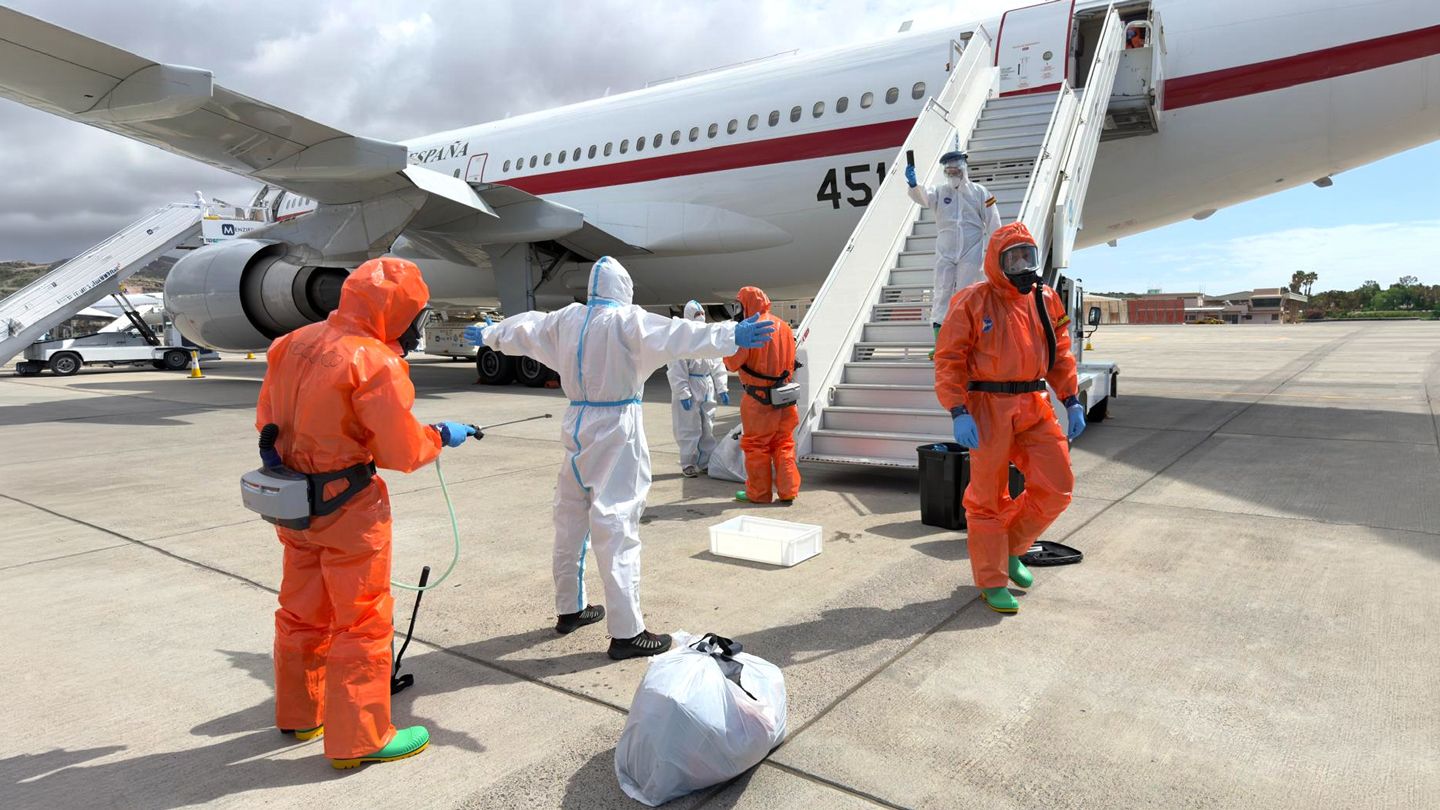
This flare-up has gained worldwide attention, as it is the first time a hantavirus outbreak has happened aboard a ship. Typically, hantavirus occurs in rural habitats inhabited by mice and rats, where rodents spread the virus to humans through feces, urine, and saliva.
Images of Hondius passengers headed by air to quarantine or other locations (as in the photograph above of a person in Spain in a hazmat suit being sprayed by disinfectant) have stoked fears that hantavirus could be a danger to the general public and spark a larger outbreak.
While health officials are still investigating the situation and trying to understand the person-to-person transmission pathways, infectious disease specialists say the threat to the public at large appears to be very low.
“This is something to pay attention to, but not something that should cause alarm,” says Robert H. Hopkins, Jr., MD, the medical director of the National Foundation for Infectious Diseases. “Hantaviruses can cause severe illness, but they are not a common cause of human disease.”
The Current Outbreak: What We Know So Far
The outbreak began shortly after 147 passengers and crew set sail from Ushuaia, Argentina, on April 1, 2026.
One adult male passenger — a 70-year-old Dutch ornithologist (a scientist who studies birds) who had spent the previous three months traveling in Argentina, Chile, and Uruguay — developed symptoms of fever, headache, stomach pain, and diarrhea on April 6 and died onboard on April 11. His 69-year-old wife showed signs soon afterward and died on April 26.
Argentinian authorities suspect the Dutch couple had inhaled hantavirus particles from the feces of long-tailed pygmy rice rats when visiting a landfill a few miles from Ushuaia, in search of a rare bird known as “Darwin’s caracara.”
A second adult female on board died on May 2.
All passengers have now been evacuated from the ship, which has been moored near Cape Verde off the coast of West Africa. Eighteen of those travelers are back in the United States and are being monitored at medical facilities.
The World Health Organization stresses that a coordinated international response is ongoing to follow the situation and update the risk to the global population, which at this time continues to be low.
Why the Hantavirus Behind the Current Outbreak Is Unique
Health authorities have confirmed that the Andes strain is the cause of this outbreak. Of the 24 species of hantavirus known to cause disease in humans, Andes is the only type that has been documented to spread from person to person as well as from rodent to person.
The spread of the Andes strain between people typically requires close, prolonged contact with a symptomatic person. This could include direct physical contact, prolonged time spent in close or enclosed spaces, and exposure to the infected person’s saliva, respiratory secretions, or other body fluids (for example, through kissing, sharing utensils, or handling contaminated bedding).
Compared with other types of hantavirus, the Andes strain replicates more efficiently in the body, allowing it to reach high levels. “This [replication] is most pronounced in the cells lining the lungs and salivary glands, which might also explain how the virus is transmitted via the airways or saliva,” says Peter Chin-Hong, MD, an infectious disease specialist and a professor of medicine at the University of California San Francisco School of Medicine.
Saliva, which can inactivate certain hantavirus strains, is less efficient at doing so with the Andes virus, Dr. Chin-Hong adds.
The current outbreak has been especially problematic because of the Andes strain’s long incubation period (the time between a person’s exposure to the virus and their initial symptoms).
“This allows infected individuals to travel long distances before symptoms appear and infection is suspected,” says Luis Escobar, PhD, an associate professor in the College of Natural Resources and Environment at Virginia Tech in Blacksburg, and a member of the Pandemic Prediction and Prevention Destination Area project.
Because symptoms can develop weeks after exposure, it becomes difficult for patients and clinicians to pinpoint the cause of the sickness.
Hantavirus vs. COVID-19: Why a Pandemic Is Unlikely
For Americans whose memories of COVID-19 are still fresh — especially those recalling the earliest days of the pandemic, in 2020, when coronavirus fatalities on cruise ships augured the global crisis to come — concerns about whether hantavirus could spark another pandemic may seem inevitable.
Here’s why these worries appear to be unfounded.
Hantavirus Is Less Contagious Than COVID-19
Compared with COVID-19, the Andes strain of the hantavirus is much harder to transmit among humans, according to Shauna Gunaratne, MD, MPH, an assistant professor of medicine in the division of infectious diseases at Columbia University Medical Center in New York City.
The fact that many people die shortly after they are infected means the virus has less chance to spread, says Dr. Gunaratne.
In the Americas, hantavirus infections can lead to hantavirus pulmonary syndrome, which has a high fatality rate of almost 40 percent.
People With Hantavirus Are Most Contagious When They Have Severe Symptoms
Compared with COVID-19, hantavirus does not appear to spread easily until an infected person shows severe symptoms.
“Epidemiologic data show that the window of transmission is fairly short — about a day — with peak transmission occurring on the day people develop a fever,” says Chin-Hong.
Because transmission mainly happens when people are obviously very sick, others know to steer clear.
Chin-Hong adds that when a person is symptomatic they can get very ill very quickly, requiring intensive medical care within hours, meaning they are less likely to be out and about spreading the virus.
Virus Is Mostly Contained to a Geographic Area
The Andes strain is almost exclusively found in specific rodent populations in specific regions of South America, primarily within Argentina and Chile, further limiting the possibility of this virus strain sparking a pandemic.
How to Recognize Hantavirus Symptoms
While the risk of hantavirus from the current cruise ship outbreak seems very low, the virus can lead to illness and death in other circumstances, such as when hantavirus pulmonary syndrome caused the death of the actor Gene Hackman’s wife, the pianist Betsy Arakawa, on their Santa Fe property last year.
Early symptoms of hantavirus pulmonary syndrome can include:
- Fatigue
- Fever
- Muscle aches, especially in the large muscle groups like the thighs, hips, back, and sometimes shoulders
About half of all patients also experience:
- Headaches
- Dizziness
- Chills
- Abdominal problems, like nausea, vomiting, diarrhea, and abdominal pain
Later signs that appear 4 to 10 days after early symptoms include:
- Coughing
- Shortness of breath
- Tightness in chest as lungs fill with fluid
How to Prevent Hantavirus Infection
Gunaratne and Chin-Hong note the following precautions to avoid hantavirus, whether you’re traveling or home.
- Steer clear of closed, poorly ventilated spaces with rodents, and other rodent-infested areas.
- Never sweep rodent droppings. This can stir up infected particles.
- Avoid close contact with someone who appears visibly ill.
- Check public health travel advisories.
“If you become sick after traveling, seek medical care and share detailed notes about where you traveled and any unusual exposures,” says Dr. Hopkins. “You are likely sick with something common, but your notes may give clues to help your doctor, nurse, or pharmacist detect unusual illnesses.”
Read the full article here