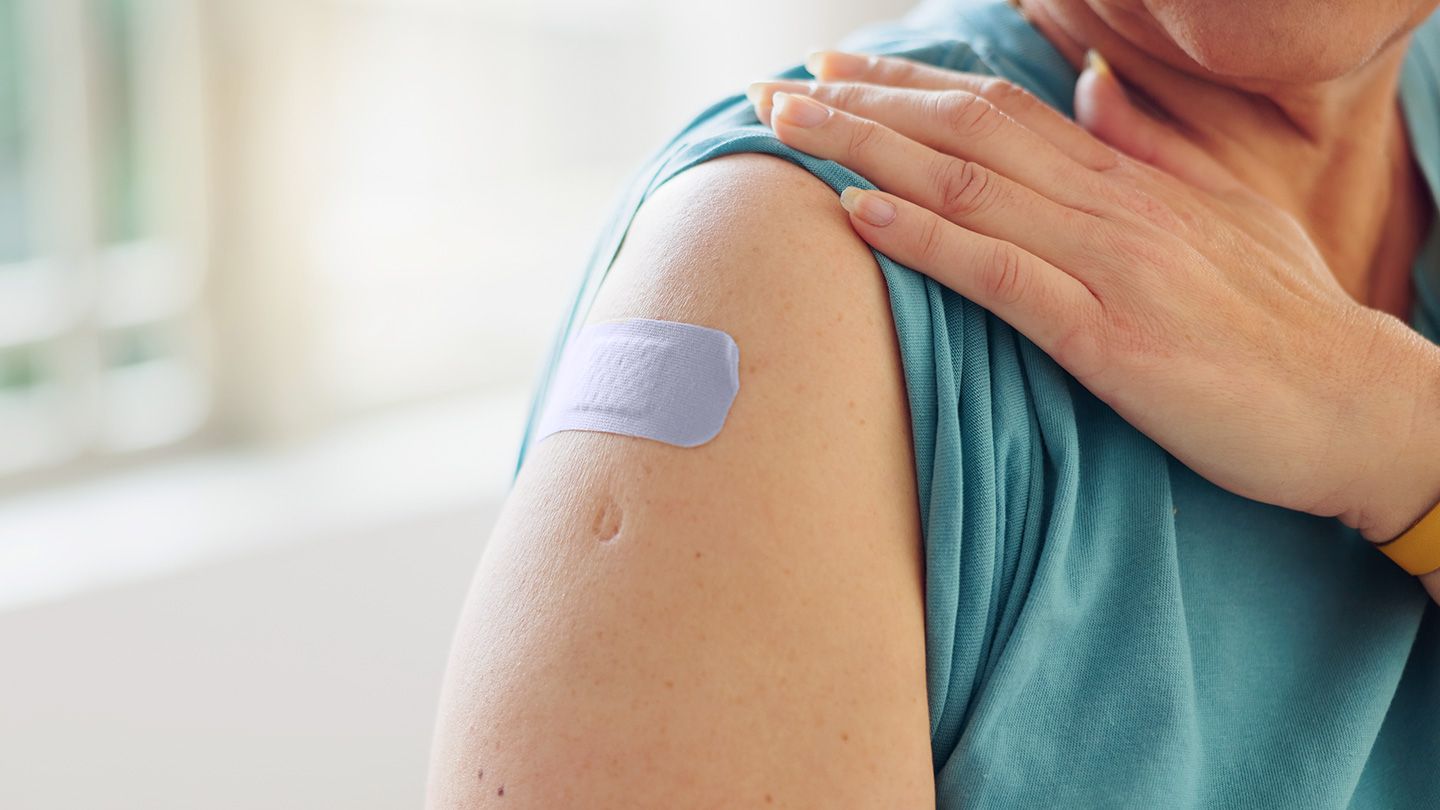
Vaccination is the most effective way to reduce your risk of developing shingles or its complications. Here’s a closer look at the benefits of getting the shingles vaccine.
1. It Significantly Lowers Your Risk of Getting Shingles
The key benefit of the shingles vaccine is its strong protection against infection, especially for people over 50.
“This vaccine is remarkable. Many vaccines don’t work as well in people age 65 and older as we would like. However, this vaccine does, even in people 70-plus or even 80-plus,” says William Schaffner, MD, a professor of infectious diseases at Vanderbilt University in Nashville, Tennessee, and a spokesperson for the Infectious Diseases Society of America.
The World Health Organization recommends the vaccine’s two-dose series for those age 50 and older, as well as younger adults who are immunocompromised because of disease or medication. That’s because the risk of shingles increases as the immune system naturally weakens with age.
2. It Provides Long-Lasting Protection, Up to a Decade and Perhaps Longer
“The studies are now going out beyond 10 years and showing there’s almost no diminution in protection. So far it’s 10 years and counting,” Dr. Schaffner says.
This longer-lasting protection sets it apart from vaccines like the seasonal influenza (flu) vaccine, which needs to be updated and given annually as immunity wanes and the virus changes, he says.
No boosters have been recommended for the shingles vaccine, but that may change as research on long-term efficacy continues.
3. Breakthrough Cases Are Milder and Shorter
It is possible to get shingles after getting vaccinated, but it is uncommon. And when shingles occurs after vaccination, symptoms are typically less severe than in those who didn’t get the vaccine, according to Jason Tetro, a microbiologist in Edmonton, Canada, and the author of The Germ Files and The Germ Code.
“If you do end up getting what is known as a breakthrough [infection] — in other words, your vaccine hasn’t given you enough protection — you will have a milder case and you will have fewer complications,” Tetro says.
This matters because shingles isn’t like getting chickenpox. “It’s an eruption of this virus causing blisters over a segment of the body, often on the trunk. It creates a kind of stripe, a body of blisters on a red base. That’s why it’s called shingles — it looks like a shingle on a roof,” Schaffner says. “Anyone who’s known someone with a moderately severe case of shingles doesn’t want to get it.”
4. It Significantly Reduces the Risk of Chronic Nerve Pain
PHN can happen if nerve fibers get damaged by the shingles virus, leaving them hypersensitive to pain signals. Symptoms include itching; a burning, sharp, or stabbing pain in the nerves and skin; and extreme sensitivity to light touch on affected parts of the body.
“This is like an electrical nerve pain. And the usual pain medicine like ibuprofen or even something stronger like morphine may not resolve it or significantly reduce it,” says Ankush Bansal, MD, a lifestyle medicine physician and hospitalist in Westlake, Florida.
The severity of PHN can vary, but in significant cases it can become disabling. “That pain can be debilitating,” he says. “And it can be something that lasts a long time, even lifelong, depending on the individual and how severe their shingles was and where it was.”
Because PHN can be difficult to treat once it develops, prevention through vaccination is valuable. Research suggests that the vaccine is about 91 percent effective in preventing PHN in people age 50 and older, and about 89 percent effective in those age 70 and older.
5. It Lowers the Risk of Serious Complications, Including Vision and Hearing Issues
Shingles complications can be serious, depending on where it develops in the body. When the virus affects certain nerve pathways, especially in the face, it can lead to complications that go beyond the skin.
“Just as the shingles can come out on the trunk, it can involve the face, and if it involves the eyes, it can actually scar the eyes and impair vision. And similar things have been recorded regarding deafness in the ear because the auditory nerve can be involved,” Schaffner says.
Keratitis, or inflammation of the cornea, usually develops within a month of getting shingles. It can lead to cornea numbness, scarring, and permanent eye damage, which can cause vision loss or blindness.
6. It May Help Protect Brain Health and Reduce Dementia Risk
Emerging research suggests a potential link between getting the shingles vaccine and a lower dementia risk.
A follow-up study suggested that the vaccine may even benefit those already diagnosed with dementia by slowing the progress of the disease.
“Different investigations in different locations by different investigators are all pointing in the same direction,” Schaffner says. “If you needed another reason to be vaccinated, I think that’s a pretty good reason.”
Consider it an evolving area of research, Bansal says. The Alzheimer’s Society in the United Kingdom is funding work exploring whether the shingles vaccine could be repurposed as a potential tool for dementia prevention or treatment.
7. It May Reduce the Risk of Heart Attack and Stroke
Promising research links the shingles vaccine to a lower risk of serious cardiovascular events like heart attack and stroke, Tetro says.
A shingles infection can trigger inflammation, blood vessel damage, and clot formation, all of which are tied to heart disease, Tetro says. But by preventing these issues via vaccination, you’re more likely to keep heart health risks at bay.
The Takeaway
- The shingles vaccine is recommended for people age 50 and older, as well as younger adults who are immunocompromised; it helps protect against shingles, a painful viral infection that can develop years after having chickenpox.
- The vaccine is 97 percent effective in preventing the disease, with extended benefits that include decreasing the risk of serious complications like chronic nerve pain, vision loss, and hearing problems.
- Research is also exploring how the vaccine may offer broader health benefits, including a potential link to lower risks of dementia and cardiovascular disease.
Read the full article here