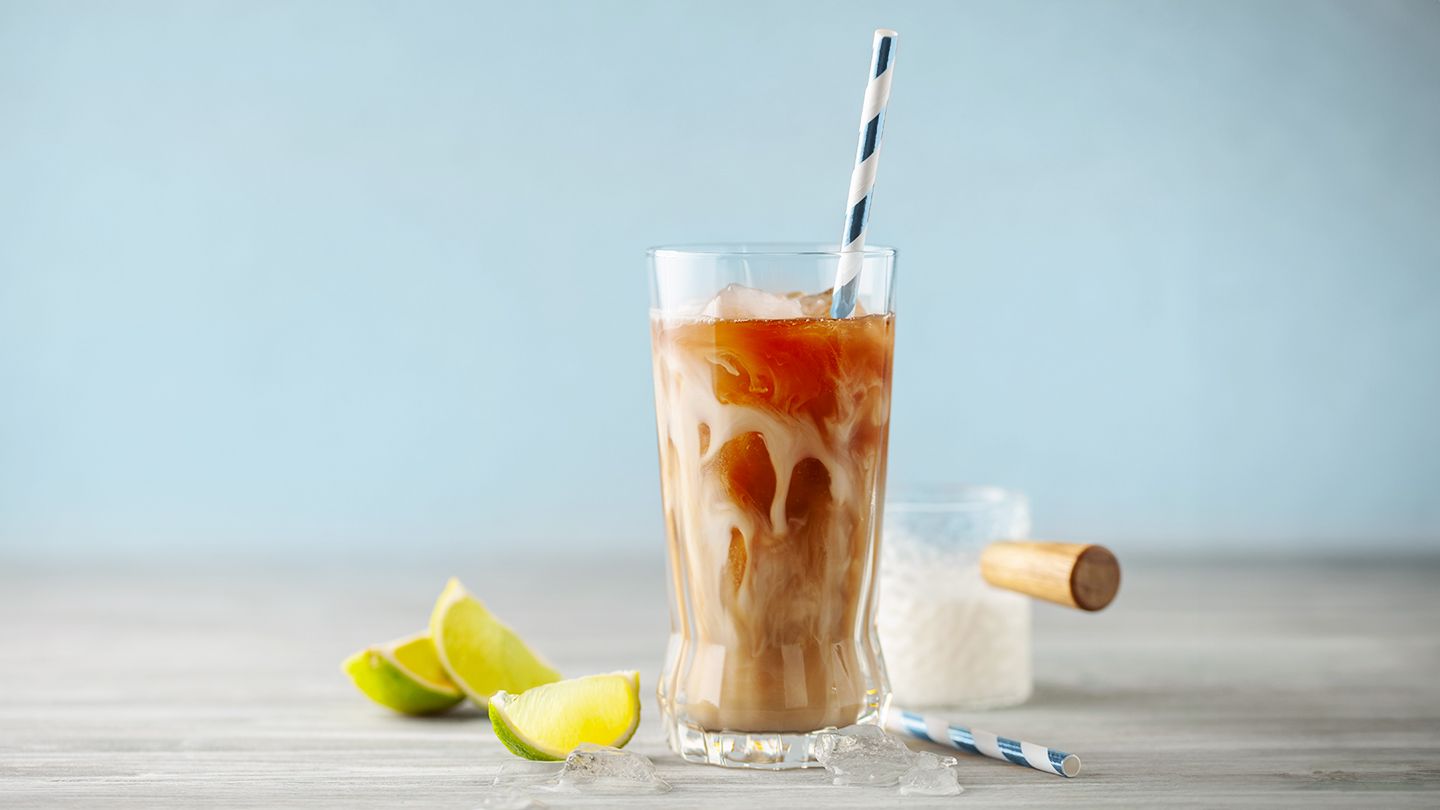
“It’s clear to see how dirty soda has emerged as a trend, but it doesn’t necessarily make sense from a nutrition and health perspective,” says Nicola Gillies, PhD, a registered dietitian and lecturer at the University of Auckland in New Zealand.
There’s one potential upside to a dirty soda, Dr. Gillies says: It is indeed a festive option for people trying to avoid or limit alcohol, whether they’re doing it for religious or health reasons.
“We know that reducing alcohol intake can have benefits for so many different aspects of our health,” Gillies says. “Avoiding or reducing alcohol can be challenging in social situations, though, and dirty sodas are a fun, appealing option that can help to fill this gap.”
But dirty sodas also pose several risks, especially if drinking them becomes a daily habit, says Connie Diekman, RD, a registered dietitian and former president of the Academy of Nutrition and Dietetics.
“In terms of health, they aren’t one of the better choices,” Diekman says. “Many can be high in calories, added sugars, and fat — calories without a lot of nutritional value.”
The amount of sugar in dirty soda can add up quickly. Just one 12-ounce (oz) serving of Dr Pepper or Mountain Dew, for instance, can contain more sugar (39 and 46 grams, respectively) than a person should get in an entire day, Gillies says.
Adding flavored syrups to sodas just adds more sugar and calories without providing any nutritional benefits, Gillies says.
And then there’s the fat. “Dirty sodas can also be relatively high in saturated fat, especially if they contain coconut cream or heavy cream,” Gillies says. “The sugar and fat content mean that dirty sodas are energy dense, and don’t contain any beneficial or protective nutrients — they’re what we would call empty energy.”
Over time, all those empty calories can cause a variety of health problems if dirty soda is part of your daily routine, Gillies says. “This can increase the risk of weight gain and longer-term conditions like diabetes and heart disease, especially if not balanced with other nutrient-dense foods in the diet,” Gillies says. “The risks really depend on the type of dirty soda, how much people are drinking, and what their overall diet looks like.”
Read the full article here