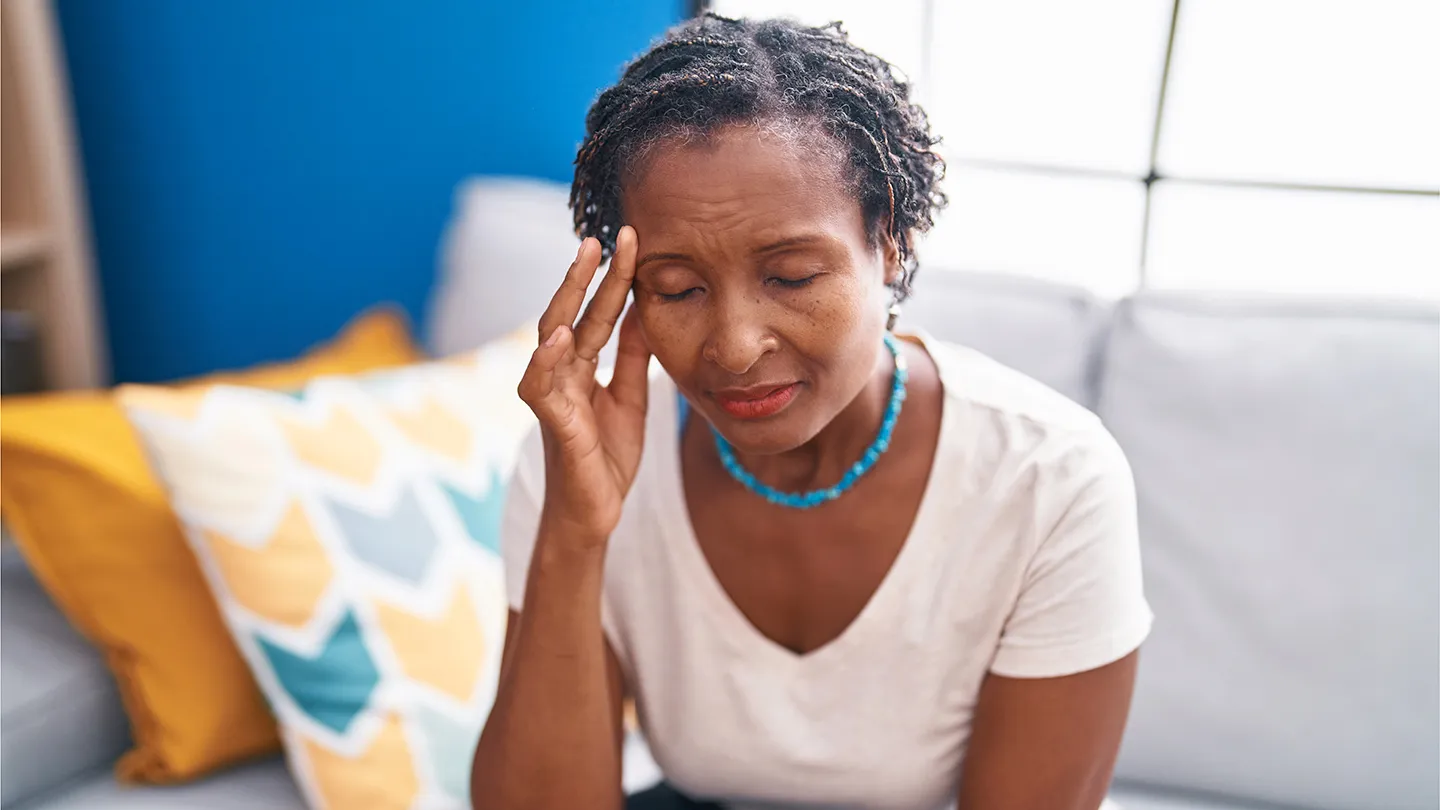
How Does Migraine Change After 60?
Migraine characteristics in older adults can differ from those in younger people.
It’s likely that a combination of factors contribute to migraine triggers, frequency, and symptoms, and those can change as you get older, explains Nina Riggins, MD, PhD, a headache specialist at VA Medical Center in Palo Alto, California.
Triggers
Stress and hormonal changes are two of the biggest migraine triggers in people ages 40 and younger.
For people in their fifties and sixties, pain, alcohol, and smoking are more likely to bring on an attack.
Symptoms
In addition to migraine symptoms being less severe, they can also be different in people who are older, says Dr. Riggins.
For example, migraine attacks may come without light or sound sensitivity, and there may be fewer cranial autonomic symptoms, such as nasal congestion, ear fullness, ptosis, and tearing of the eye, she says.
“There are also studies that show that migraine [attacks] in older adults have a tendency to be more bilateral (on both sides of the head),” Riggins says. Typically, migraine causes pain on one side of the head.
Read the full article here