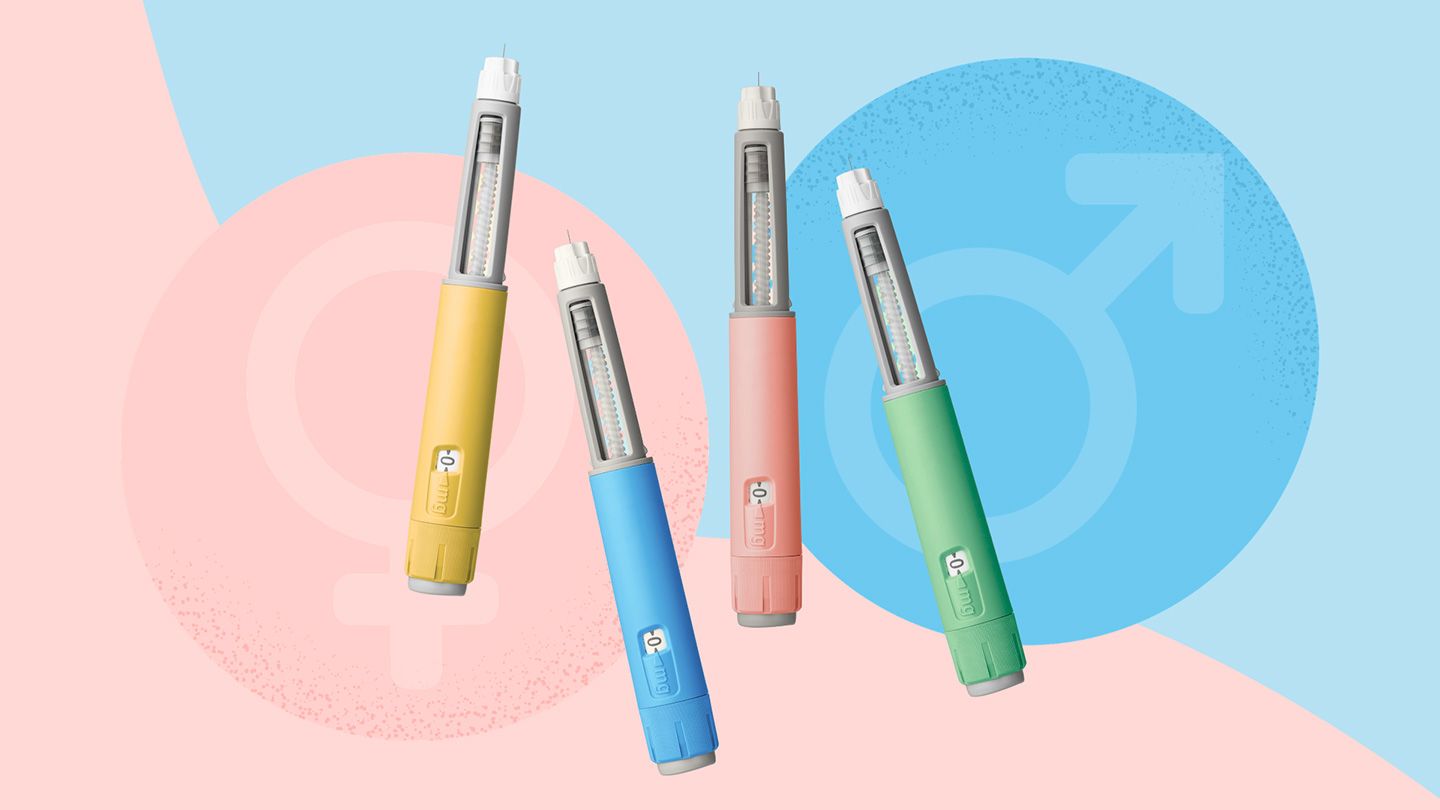
Because weight, insulin resistance, and sex hormones are closely connected, GLP-1s may influence reproductive health differently in women and men.
Here’s How Hormones May Interact With GLP-1s in Women
GLP-1s may help with PMOS (polyendocrine metabolic ovarian syndrome). This condition, formerly known as PCOS (polycystic ovary syndrome), is often tied to insulin resistance and higher levels of androgens (so-called male sex hormones like testosterone that female bodies typically produce at low levels).
In women, excess androgens can contribute to symptoms such as irregular periods, acne, unusual body-hair growth, ovulation problems, and fertility challenges. PMOS also tends to be associated with excess weight, although people at a healthy weight can also have the condition, says Marilyn Tan, MD, an endocrinologist at Stanford Medicine in California.
Because GLP-1 medications can improve blood sugar, appetite, insulin sensitivity, and weight, researchers are studying whether the drugs may also improve some of the metabolic and hormone patterns that drive PMOS.
So far evidence is promising but uneven. Some studies suggest that GLP-1 medications may improve menstrual regularity, androgen levels, ovulation, and pregnancy outcomes in some women with PMOS, but the evidence is not yet conclusive.
GLP-1s may boost female fertility. “For women with obesity and diabetes, weight loss and improved diabetes control can sometimes help normalize previously irregular menstrual periods and increase fertility,” says Dr. Tan.
Some women previously struggling to conceive have found the medications have raised their odds of pregnancy, hence the term “Ozempic babies.”
However, GLP-1s’ impact on fertility is considered a side effect; the medications aren’t a fertility treatment and won’t help many women.
Women who are trying to avoid pregnancy should know that oral birth control may be less reliable for women on GLP-1s. “When starting a GLP-1, and during subsequent dose increases, the absorption of oral birth control tablets is altered, and that can make birth control pills less effective,” says Dr. Holt.
People who could become pregnant should discuss contraception and pregnancy plans before and during GLP-1 treatment. GLP-1 medications are generally not recommended during pregnancy.
GLP-1s may help with postmenopausal weight gain. Estrogen — or more precisely, the lack of it during menopause, when the ovaries dramatically reduce their output — may impact how GLP-1s work.
First the good news: GLP-1s can help offset the “very real and very common” issue of postmenopausal weight gain, says Tan.
But some research suggests the loss of estrogen may make GLP-1s less effective. In an observational Mayo Clinic study, women using hormone therapy to boost estrogen levels after menopause lost about 35 percent more weight while taking tirzepatide (Zepbound) than similar women not using hormone therapy.
Because of the limitations of this type of study, the research can’t prove that hormone therapy directly caused the additional weight loss — but it supports the idea that estrogen may influence how some women respond to GLP-1s.
For Men, GLP-1s May Help Increase Low Testostone Levels
For men, the reproductive effects appear to be mostly indirect.
Obesity can contribute to lower testosterone, and weight loss may help some men if low testosterone is related to excess weight, says Tan.
A narrative research review found early evidence that GLP-1 medications may improve some sperm measures or testosterone levels in men with obesity or metabolic hypogonadism (a condition that impacts hormone production).
But experts say larger and longer studies are needed before these drugs can be considered a treatment for male infertility.
Read the full article here