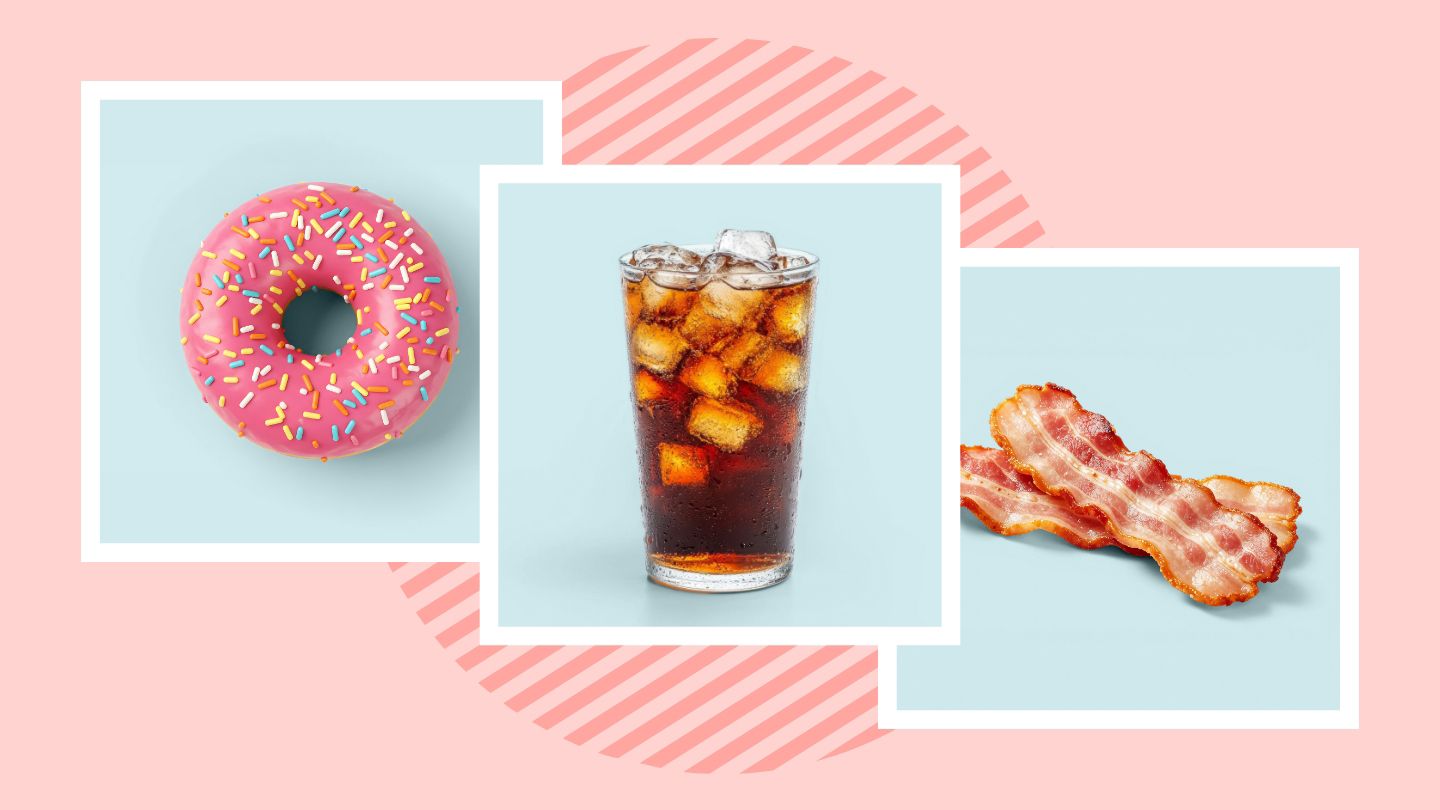
1. Skip Regular Soda
Some diabetes meal plans suggest aiming for around 30 to 45 grams (g) of total carbohydrates per meal if you’re a woman and 45 to 60 g per meal if you’re a man, says Amy Kimberlain, RDN, CDCES, who practices in Miami. But individual targets can vary based on factors such as activity level, blood sugar control, medications, and weight goals.
Instead of soft drinks, Randall recommends sparkling water with a refreshing slice of cucumber, lemon, or lime.
2. Be Wary of ‘Healthy’ Smoothies
Sodas are a no-brainer, but other drinks that contain loads of sugar aren’t as easy to spot. Take fruit smoothies: They sound nutritious, but they can pack a sugary carb punch, especially if they’re oversized and made with sugar syrup, sweetened fruit, or sweetened yogurt.
Nutrition stats on fruit smoothies vary widely, so always check the label on yours (if bottled) or request this information (if you’re ordering from a restaurant or quick-service spot). In general, a 12-oz fruit smoothie has 52 g of carbs, including 44 g of sugar. It’s possible to make a smoothie at home that’s diabetes friendly, as long as you plan out the ingredients wisely.
Or, as an alternative, Randall recommends sipping sugar-free flavored water or eating fruit whole to get its beneficial fiber while keeping carbohydrates in check.
3. Cut Back on Sugar-Bomb Coffee Drinks
Other unhealthy beverages, such as sweetened coffee drinks, are seemingly ubiquitous. For example, one popular medium frozen coffee drink packs a whopping 54 g of carbs, the majority of which come from the drink’s 51 g of sugar. So before you place your next to-go order, see if the item’s nutrition information is listed on the menu, so you can make a smarter swap.
You don’t have to ditch coffee completely. Try enhancing a regular coffee with sugar-free hazelnut syrup, some vanilla extract, or a dash of cinnamon. If you crave a little richness, Randall recommends using a few drops of half-and-half.
4. Avoid Fried Foods
Fried foods are often breaded, which can add up to lots of calories, carbohydrates, and unhealthy fats, says Kimberlain. Too much saturated fat in your diet can lead to weight gain, she adds, which can worsen type 2 diabetes and increase your already elevated risk of heart disease due to diabetes.
Rather than eating breaded and fried favorites, such as chicken nuggets, okra, onion rings, and shrimp, Randall suggests roasting or baking these foods without the breadcrumbs. Try a coating of fresh herbs or spices. If you must have breading, use whole-grain crumbs, and bake instead of frying. “That’s a happy medium,” she says.
5. Cut Back on Fatty Cuts of Meat
Many cuts of red meat are high in unhealthy saturated fat, says Kimberlain. Too much of this type of fat increases your risk for heart disease. Because people with diabetes are already at higher risk of heart disease than people without diabetes, Randall recommends limiting fatty cuts of meat. You should also steer clear of organ meats and processed options, such as bacon, hot dogs, and sausage.
6. Pass on Packaged or Processed Sweets
Packaged snacks and baked goods, such as cookies, doughnuts, and snack cakes, typically contain refined carbs that cause a sharp spike in blood sugar and can lead to weight gain when eaten in excess, says Kimberlain. They may also contain unhealthy trans fats, which can further raise your risk of heart disease, she adds.
Randall recommends limiting your consumption of high-carb, white-flour, and sugar-sweetened treats (once in a while is okay). When you do indulge, try choosing whole-grain versions whenever possible.
7. Give the Heave-Ho to Heavily Salted Processed Foods
Because salt works wonders as a preservative, most packaged and processed foods contain plenty of it. You may love the taste, but the sodium in salt is an electrolyte that can increase blood pressure, and people with diabetes are already more likely to have high blood pressure, which is another risk factor for heart disease.
8. Take Biscuits and Sausage Gravy Off Your Menu
Randall singles out this traditional Southern meal as an example of a combination that people with diabetes should avoid. The biscuits usually are made with white flour, and the sausage gravy is high in calories, fat, and sodium. A single biscuit with gravy has 493 calories, 32.3 g of fat (nearly 14 g of which is saturated), and 37.4 g of carbs.
As an alternative, Randall recommends eggs, whichever way you like them, and a whole-grain English muffin.
9. Opt for High-Fiber Fruit Over Fruit Juice
It may seem that 100-percent fruit juice is a healthy choice, because it contains no added sugar, but a mere ½-cup (4 oz) serving contains 14.3 g of carbs and about 61 calories. Meanwhile, it’s easy to drink more than ½ cup of juice, which increases the carbohydrates and calories. Beyond that, the body metabolizes 100-percent fruit juice in the same way it processes soda, leading to a quick increase in blood sugar levels.
So fruit juice isn’t ideal for people with type 2 diabetes, says Lynn Grieger, RDN, CDCES, a health, food, and fitness coach based in Prescott, Arizona, and medical reviewer for Everyday Health.
If you simply can’t give up fruit juice, limit your serving size to 4 oz per day, says Grieger. Still, a better choice is to eat a piece of fresh fruit, which contains the valuable fiber that is lacking in juice, and drink water, she advises.
10. Choose Granola, Energy, and Protein Bars Carefully
Granola, energy, and protein bars seem like healthy options, but if you read the list of ingredients and nutrition facts, you’ll be surprised at the added sugars and artificial ingredients that are in most of them, says Grieger.
Look for bars that contain the least amount of added sugar possible and several whole-food ingredients, such as nuts, oats, or dried fruit, and avoid bars with long, unpronounceable chemical ingredients, she says. Finally, always check the nutrition facts for calories and grams of carbohydrates, so you can accurately determine how to fit a bar into your daily food choices, she adds.
11. Stay Away From Sweetened Yogurt
Yogurt is often synonymous with “healthy,” but buyer beware, Grieger warns. Unless labeled “plain,” yogurt contains added sugar. To best manage blood sugar, you’ll want to limit added sugar in your diet.
The very best yogurt option is plain Greek yogurt, says Grieger. For people with type 2 diabetes who are looking to lose weight, nonfat is a great choice. A typical, 156-g container has just 5.68 g of carbs (and a whopping 16.1 g of protein, 0.265 g of fat, and 5.1 g of naturally occurring sugar). The same serving size of flavored Greek yogurt, on the other hand, contains 18.3 g of carbs, 0.2 g of fat, and 17.2 g of sugar.
Pairing yogurt with granola, candy, or other toppings adds even more carbohydrates, fat, or sugar, Grieger says.
12. Choose Plain Oatmeal Over Sweetened Cereals
Hot breakfast cereal is usually made from whole grains, such as wheat (porridge) or oats (oatmeal), which naturally contain carbohydrates, says Grieger. Sprinkling any kind of sugar on top increases carbohydrates dramatically.
To enjoy a truly healthy oatmeal, choose plain steel-cut or old-fashioned oatmeal and add your own fruit and a bit of cinnamon for sweetness, she suggests.
The Takeaway
- When you have type 2 diabetes, limiting sugary drinks, processed snacks, high-sodium meals, and fried foods can help you better manage blood sugar and protect your heart health.
- Choosing nutrient-rich foods such as vegetables, lean proteins, plain yogurt, whole grains, and whole fruit over processed options can support weight management and reduce diabetes complications.
- Small food swaps — such as replacing soda with sparkling water or sweetened cereal with plain oatmeal and fruit — can make a meaningful difference in diabetes management and your overall health.
Read the full article here