


Resources We Trust Cleveland Clinic: Dry EyesMayo Clinic: Dry EyesAmerican Academy of Ophthalmology: What Is Dry Eye? Symptoms, Causes, and TreatmentJohns Hopkins Medicine: Perimenopause, Menopause, and Dry EyesNational Eye Institute: How Tears Work
While hot flashes, night sweats, and insomnia tend to dominate conversations about menopause , one part of the body is often overlooked during this life stage: the eyes. Dry eye disease (DED) is one of the most common yet least discussed symptoms tied to the transition into menopause. In a study of nearly 2,000 perimenopausal and postmenopausal women, 79 percent reported dry eye symptoms and more than one-third experienced severe symptoms of DED.e60dc2a1-f33c-4a05-9b50-8e3e8e5976297d2dc1bc-243b-4a2f-85e9-e9a2bd2c0f1c Research also suggests that prevalence increases with age, reaching nearly 62 percent among postmenopausal women age 66 to 70 in one study.e60dc2a1-f33c-4a05-9b50-8e3e8e597629d2400d9f-0a5b-41bc-83ea-37588e965e34 Researchers are still working to understand exactly how hormonal changes affect the eyes, but evidence suggests that declining levels of estrogen, progesterone, and other hormones can disrupt the delicate balance of the tear film.e60dc2a1-f33c-4a05-9b50-8e3e8e597629bb740cc6-e1e8-4d5e-821c-94b5af0579e2 This can leave the eyes with symptoms such as burning, irritation, grittiness, and blurred vision.e60dc2a1-f33c-4a05-9b50-8e3e8e59762914e015ed-0012-4b7c-b4ef-5136805cc23a If you’ve been diagnosed with dry eye during perimenopause or menopause, understanding the connection can help you better manage your symptoms and protect your long-term eye health.
Can Hormone Therapy Help? Can Hormone Therapy Help? Knowing that hormones affect tear production and play a role in dry eye disease, many women wonder whether hormone therapy (HT) might improve their symptoms. But the answer isn’t straightforward. It’s not as simple as saying low estrogen causes dry eye and more estrogen will fix it, says Nicole Bajic, MD , an ophthalmologist at the Cole Eye Institute at Cleveland Clinic in Ohio. Research looking at HT, also called HRT (hormone replacement therapy), has come back with mixed results, with some showing improvements in tear production and symptoms and others finding an increased risk of dry eye, especially with estrogen-only therapy.e60dc2a1-f33c-4a05-9b50-8e3e8e5976297b77f6e7-f2de-44ba-b991-bd4df840a610 “It wasn’t found to necessarily reverse or benefit patients who are postmenopausal with dry eye. And in some cases, it can even make their symptoms a little bit worse,” Dr. Bajic says. A study published in 2025 of perimenopausal women with severe dry eye found that combining estrogen therapy with eye drops made from patients’ own blood improved tear production and dry eye symptoms more than either treatment alone, suggesting that hormones might play a key role in managing dry eye for some women.e60dc2a1-f33c-4a05-9b50-8e3e8e59762953952e77-bdd4-44a2-b022-72985e7933e0 Yet other research has warned that hormone therapy may increase the risk of developing dry eye, with risk increasing with longer durations of HT.e60dc2a1-f33c-4a05-9b50-8e3e8e597629523572d0-1a40-4800-a602-34998a3ce2fd Much more research is needed before suggesting hormone therapy as a dry eye treatment, Brissette says. “If a patient is considering HRT primarily for other symptoms of menopause, such as hot flashes or sleep disruption, dry eye is something to discuss as a possible coexisting problem,” Brissette says. “However, there isn’t enough evidence that hormones alone can provide improvement in the signs and symptoms of dry eye disease. It’s generally not the main reason to start HRT.” Starting, continuing, or stopping HRT for dry eye symptoms, alongside other symptoms of menopause, should be discussed with your overall healthcare team, including your ophthalmologist, Brissette says. Kanevsky agrees. “This is an incredibly important discussion to have at length with your gynecologist,” she says. “I always make a point of sending a dry eye report to my patient’s gynecologist and primary care physician because it can make an enormous difference in not just their ocular health but their overall well-being.”
How Hormones Affect Eye Health How Hormones Affect Eye Health Hormones play an important role in maintaining a healthy tear film, the protective layer that coats the surface of the eyes. The tear film consists of three components:e60dc2a1-f33c-4a05-9b50-8e3e8e5976291858c584-c84e-4e23-b120-384c393c4617e60dc2a1-f33c-4a05-9b50-8e3e8e59762954250dae-afaa-4242-954b-c34cf0f624c6 An outer oily (lipid) area that keeps the surface of the tear smooth and slows tear evaporation A watery middle layer that keeps the eyes wet, repels bacteria, and protects the cornea An inner mucus layer that keeps whole tears fastened to the eyes Estrogen, progesterone, and testosterone all help regulate the structures responsible for producing these layers. When hormone levels decline during menopause, your tears can be affected, says Ashley Brissette, MD , a spokesperson for the American Academy of Ophthalmology and an ophthalmologist at Kelly Vision in New York City.e60dc2a1-f33c-4a05-9b50-8e3e8e597629661e3644-a070-4420-8118-5c518215a94c “During menopause, the body produces less of the hormones estrogen and progesterone,” Dr. Brissette says. “There is a real link [to DED]. Sex hormones help regulate tear production, tear quality, and oil production from the eyelid oil glands that slow tear evaporation. And dry eye is a combination of lowered tear production and reduced oil production from the eyelid glands.” When the oily layer is low, tears may dry up too quickly, causing dry eye symptoms. But symptoms are also heightened when blinking is reduced, such as from too much screen time or being in cold, windy conditions.e60dc2a1-f33c-4a05-9b50-8e3e8e59762937092f9f-1570-4697-8177-969e69eb0303 Hormonal fluctuations can affect tear production and eye comfort throughout a woman’s life, but menopause is one of the most common triggers, according to Viola Kanevsky , a doctor of optometry based in New York City and a spokesperson for the American Optometric Association. “This is common during menopause, but pregnancy, lactation, birth control pills, thyroid disease , and menstrual cycle variations can all affect dry eye,” Dr. Kanevsky says. The connection is so common that many eye-care providers routinely discuss menopause with dry eye patients, she says. When asked whether she sees women diagnosed with dry eye around the time of perimenopause or menopause, Kanevsky says, “Every single day.”
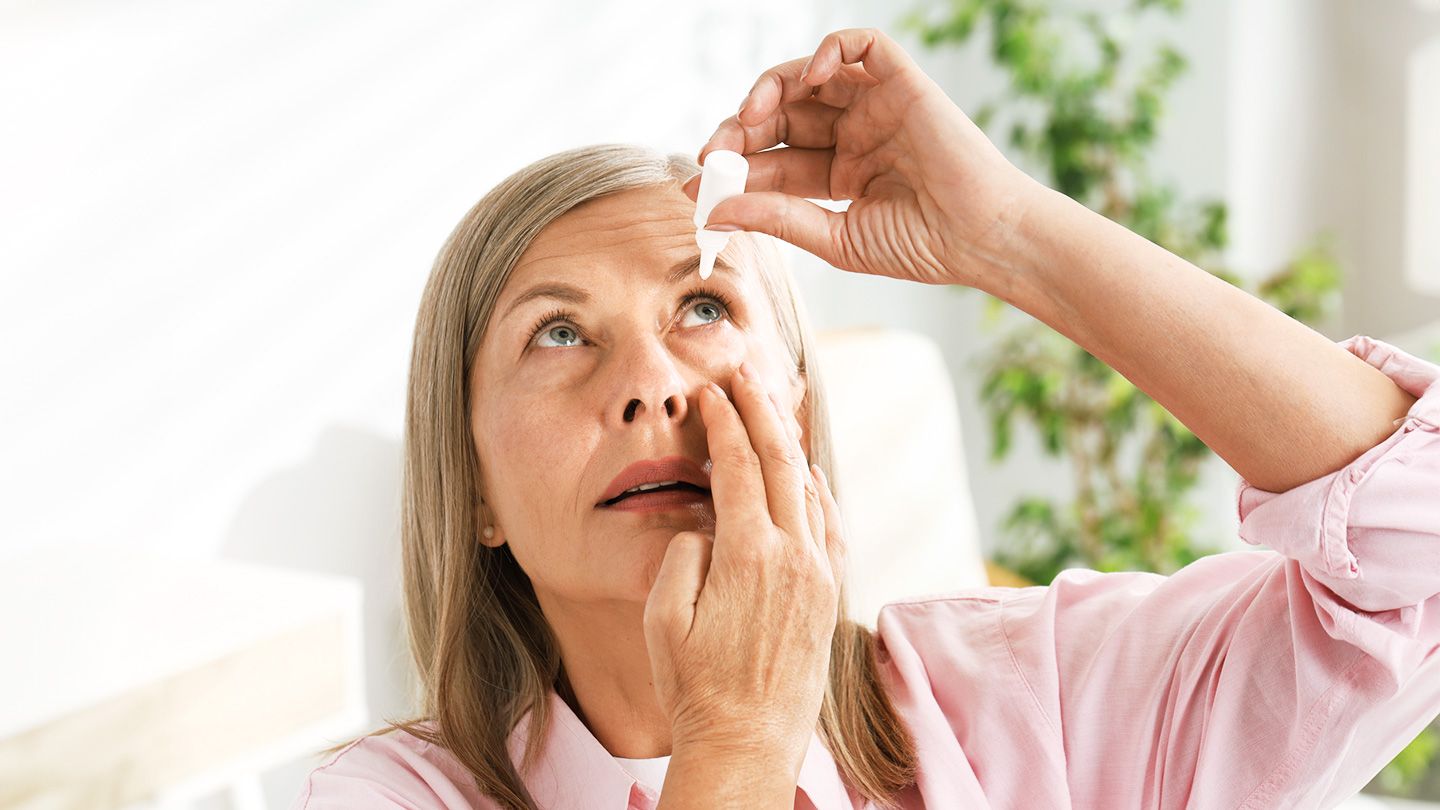
Treatments for Dry Eye Other Treatments for Menopausal Dry Eye Women going through menopause can try many treatments and lifestyle changes to manage dry eye symptoms and improve eye comfort. “My approach to treatment is long term, not just a quick fix, because this is a chronic condition,” Brissette says. “We focus on consistent at-home care like preservative-free artificial tears, warm compresses, and eyelid hygiene. Omega-3s in the diet can also be helpful.”e60dc2a1-f33c-4a05-9b50-8e3e8e597629e4d02650-7298-47d8-9a10-bb288a84c711 Artificial tears are often the first-line treatment.e60dc2a1-f33c-4a05-9b50-8e3e8e597629f86fb5e8-d4e4-49d9-a699-2be86f082faa For women who use lubricating drops more than four times a day, preservative-free formulations may be recommended to reduce irritation. That’s because preservatives designed to keep bacteria from growing inside the bottle can cause eye irritation with frequent use.e60dc2a1-f33c-4a05-9b50-8e3e8e59762926f04596-fa19-4db1-beda-c07b92bf9168 Other strategies include:e60dc2a1-f33c-4a05-9b50-8e3e8e597629b1cd74f6-4308-412f-a73f-b6f051342387e60dc2a1-f33c-4a05-9b50-8e3e8e5976299954c926-9c35-4a3c-9931-427e20d88580 Cleaning the eyelids with safe eye hygiene products Using a gentle warm compress for 10 minutes before bedtime to increase oil in your tear film Taking regular breaks from screens Running a humidifier in dry indoor environments Avoiding or reducing contact lens use Wearing sunglasses or wraparound glasses to avoid excessive wind and UV exposure According to Kanevsky, these habits can help support eye comfort throughout menopause and beyond. If your symptoms linger despite self-care measures, prescription therapies can also help. A common option is prescription anti-inflammatory eye drops, which are used alongside lifestyle modifications for moderate to severe dry eye, Bajic says.e60dc2a1-f33c-4a05-9b50-8e3e8e5976295acba002-9e40-4b2a-8fbf-018f4324c90e “I do more long-term prescription therapy that looks at reducing the inflammatory load,” she says. Depending on the underlying cause of a patient’s symptoms, eye-care providers may recommend in-office treatments. Brissette says these can include thermal pulsation, intense pulsed light, radiofrequency treatments, punctal plugs, and amniotic membrane therapy to improve meibomian gland function and help retain moisture on the surface of the eyes.e60dc2a1-f33c-4a05-9b50-8e3e8e597629d9dfc8f6-2742-450c-8cb0-cd367f838abb
Read the full article here

Leave a comment
