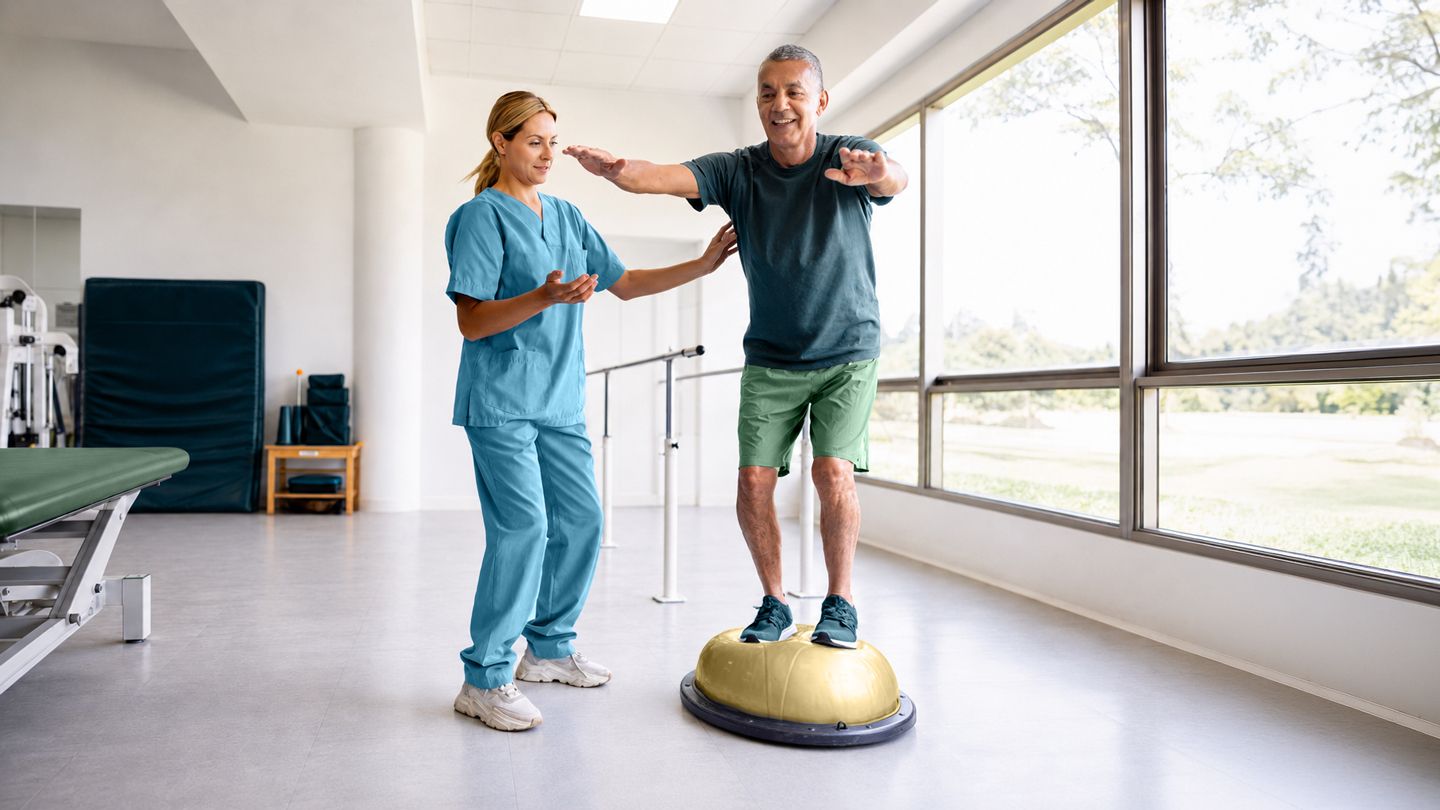
A combination of aerobic, strength, and balance exercises may offer the most benefit:
- Aerobic exercises, such as biking, swimming, and walking, may help improve memory, executive function, and cognition.
- Strength-training exercises, such as lunges, planks, and squats, can help people with Alzheimer’s maintain muscle mass and may improve memory and attention.
- Balance exercises, such as standing on one leg and heel-to-toe walking, can help reduce the risk of falls, which are common in people with Alzheimer’s.
Keep in mind, because Alzheimer’s disease can affect mobility, gait, and balance, you may need to take some precautions when starting or continuing a workout routine in order to stay safe.
1. Work With a Healthcare Professional
Before starting an exercise routine, talk with your primary care doctor or neurologist. They can help identify and address any mobility issues or underlying health conditions that may affect your ability to exercise. They can also suggest activities that meet your needs and fitness level.
Kathleen M. Buzzeo, DPT, a certified brain injury specialist at Spaulding Rehabilitation in Hanover, Massachusetts, recommends working with a professional to develop a personalized fitness plan. “This can be a physical therapist, a personal trainer who is familiar with the geriatric population, an instructor through a community exercise class at a local gym, or a National Council on Aging class.”
2. Start With Familiar Activities
If you already enjoy activities such as dancing, gardening, walking, or water aerobics, make them part of your exercise routine. Doing familiar activities can feel more comfortable and potentially less frustrating than starting an entirely new routine.
“Choose a simple activity like taking a walk or doing a seated exercise routine, and complete it at the same time each day to create a sense of routine and familiarity,” says Previte. “As you begin to get more comfortable and gain confidence, you can add on to your routine or modify it to align with your abilities and goals.”
“Exercising within familiar settings is also highly beneficial,” says Buzzeo. “Familiar environments can decrease anxiety and frustration, allowing you to feel more secure and better able to focus on the task at hand.”
3. Create a Routine
Once you find activities you enjoy, try to do them on a consistent schedule. Exercising at the same time and in the same way each day can help create a sense of structure and predictability.
“Familiarity and predictability decrease the need for new learning, problem-solving, and decision-making, which are impaired in people with Alzheimer’s disease,” says Previte. “The structure of a routine that is performed day-to-day can help limit stress, anxiety, and confusion.”
4. Focus on Fall Prevention
Older adults with Alzheimer’s are more than twice as likely to fall as adults without Alzheimer’s. Fear of falling can be a significant barrier to starting or continuing an exercise routine.
There are several ways to reduce your risk of falls:
- Keep your workout area clear. Remove any clutter or tripping hazards, such as power cords, shoes, and throw rugs.
- Exercise in a well-lit area. “This can improve visibility, help compensate for potential visual-perceptual deficits, and further reduce the likelihood of tripping or misjudging surroundings,” says Buzzeo.
- Wear supportive footwear. Choose sturdy shoes that fit well, provide good arch and heel support, and have nonslip soles.
- Choose safe walking surfaces. “Walking around a level track at a local school can be safer than walking around town, where there could be uneven sidewalks and changing surfaces,” says Previte.
- Modify exercises as needed. “Standing exercises that compromise balance can be modified by holding onto a stable support surface like a railing or countertop, having a spotter supervise the activity, or transitioning the exercise to a seated position,” says Previte.
5. Exercise When You Feel Most Alert
“Physical abilities and safety during exercise varies not only from one day to the next but also throughout the day,” says Previte. “There are many factors that contribute to this, such as fatigue, sleep quality, stress, medication timing, and cognitive load.”
To exercise more safely and comfortably, try to schedule workouts for the time of day when you feel most alert and energized, which for many people is in the morning or early afternoon.
6. Limit Distractions
Working out in a crowded or noisy space can be overstimulating and make it difficult to focus on exercising safely.
“Transitioning to a quieter, less busy environment can improve attention and reduce distractions that could lead to injury,” says Previte. “Choose a quiet corner of the gym, a more private enclosed workout room, or work out at home.”
7. Work Out With a Partner
“For people in the earliest stages [of Alzheimer’s] who remain highly functional, participation in supervised group exercise or exercising with a consistent partner may be sufficient,” says Buzzeo. “However, as cognitive impairment progresses, ongoing caregiver supervision becomes increasingly important to ensure both safety and adherence to exercise.”
Consider asking someone to join you for a walk or a fitness class. Or sign up to work with a personal trainer who has experience working with older adults.
8. Get Outside Safely
Going for a walk or bike ride is a great way to stay active. But it’s important to take some precautions before you head outside, especially if you’re going alone.
These tips can help you stay safe:
- Let someone know when you’re leaving, where you intend to go, and how long you’ll be gone.
- Use a fitness tracker or smartphone with features such as emergency SOS, GPS tracking, and location sharing.
- Carry your ID, and consider wearing a medical alert bracelet.
- Stay in familiar areas with even, well-lit paths.
- Wear a helmet when riding a bike.
9. Stay Hydrated
It’s essential to drink plenty of water when you exercise to help replace fluids lost due to sweat. Staying hydrated can also help your muscles work more efficiently, cushion your joints, and regulate your body temperature.
10. Watch for Changes
As Alzheimer’s progresses, you may need to modify your exercise routine to meet any changing physical capabilities. You and your caregiver or workout partner should watch for signs that modifications are needed.
Pain is one indicator an exercise may no longer be suitable. “People with Alzheimer’s may lose the ability to clearly communicate discomfort, so caregivers should be attentive to nonverbal cues, such as facial grimacing,” says Buzzeo. “Additionally, increased hesitation or unwillingness to participate in an activity may reflect underlying discomfort or difficulty they can’t fully express.”
Other signs you may need to modify your current workout routine include changes in balance or mobility, increased confusion, or more frequent tripping or falls. “At this point, a referral to a physical therapist is essential,” says Buzzeo. “Prompt evaluation can reduce the risk of injury, improve safety, and support continued engagement in physical activity.”
You don’t need to follow an intense or complex workout routine to get the benefits of exercise. The important thing is to find an activity you enjoy and stick with it. “It can be as simple as walking outside or taking an extra lap around a grocery store,” says Buzzeo. “The sooner exercise becomes part of your normal routine, the lower your risk of falls, declines in muscle mass, heart disease, depression, and injury.”
Read the full article here