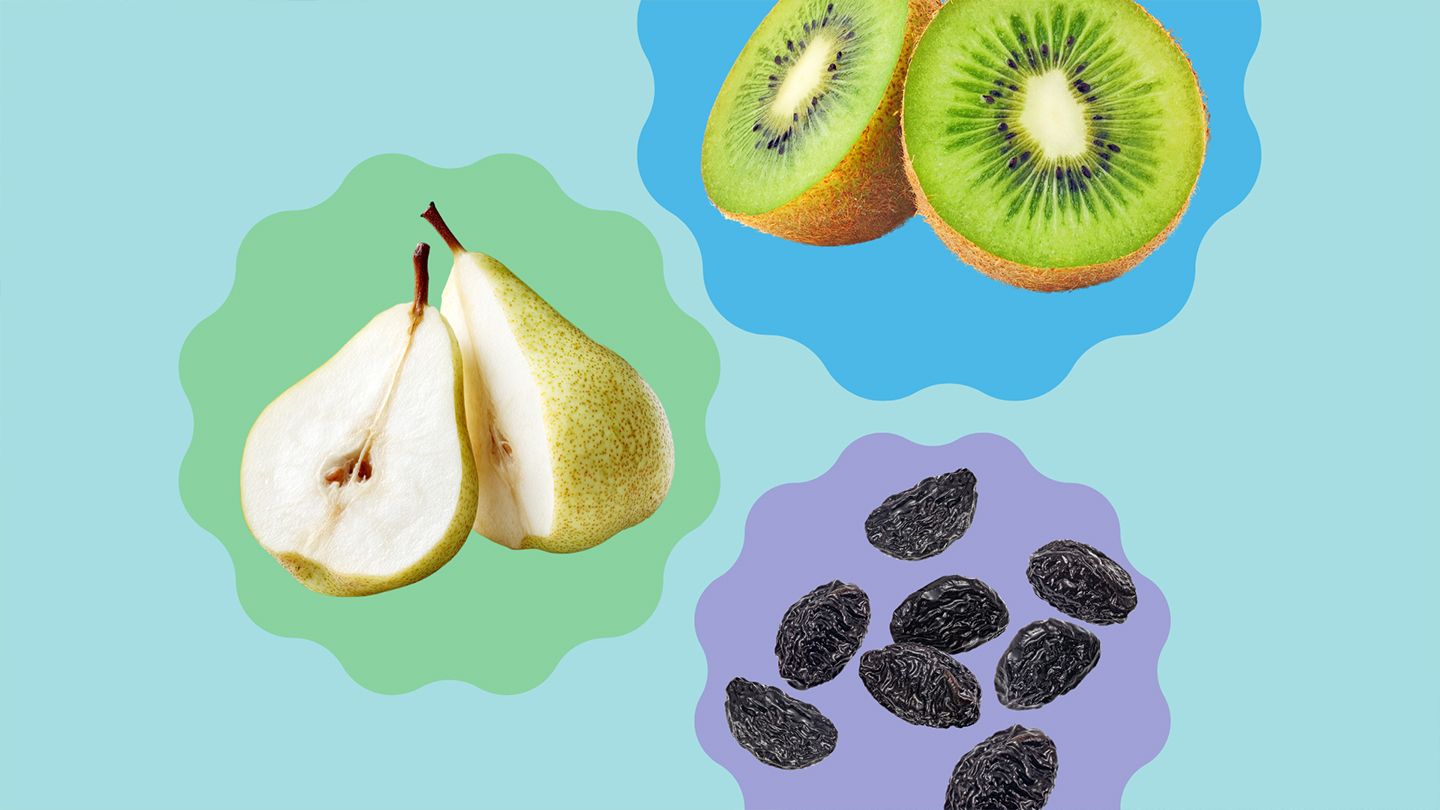
Fruits may not be the first remedy that comes to mind when you’re looking for constipation relief, but there are plenty of reasons why you should think again.
Another fruit superpower: Many are rich in non-digestible sugars, such as sorbitol and fructose, which help pull water into the colon.
“Lack of fluids is one of the contributing factors for constipation,” explains Laura Ali, RDN, a culinary nutritionist based in Pittsburgh, Pennsylvania. Non-digestible sugars, she says, “add liquid to the stool, softening it and making it easier for you to pass.”
When you’re feeling backed up, here are three fruits that may help get things moving.
1. Pears
Fiber: 4g per cup
“Pears, especially with the skin on them, are a great source of fiber, both soluble and insoluble,” Ali says. Pear flesh is full of soluble fiber, while the skin is largely insoluble. Eating a pear with the skin on can “add bulk to your stool, helping keep you regular,” Ali says.
In addition to their high fiber content, pears are excellent sources of both fructose and sorbitol. Because fructose and sorbitol don’t get absorbed well in the small intestine, they accumulate in the colon, where they draw water via osmosis.
More water in the colon means softer and bulkier stools that are easier to pass. Young pears primarily contain sorbitol, but as they ripen, they accumulate more fructose.
Similar fruits: Ali recommends apples or berries if you’re not a fan of pears.
2. Kiwi
Fiber: 2g per medium kiwi
3. Prunes
Fiber: About 3g per 5 pitted prunes
Ali recommends eating 4 to 5 prunes in one serving. “They are sweet and can be added to cereal or yogurt, salads, grain bowls, or baked goods,” she adds.
Similar Fruits: Ali suggests figs or avocados if you don’t like prunes.
What to Expect
It can take a couple of days for you to see an improvement in your symptoms after consuming any of these fruits. But if you haven’t had a bowel movement after three days of increasing your fruit and fluid intake, call your doctor, Ali says.
Keeping a food log or diary can help you monitor which fruits are making a big or little difference in your symptoms, she adds.
Pro Tip: Don’t Forget to Hydrate
As you increase your fiber intake, remember to also drink more water. Relieving constipation involves both upping your fiber and water consumption to help make stools softer and easier to pass through the colon.
“As fiber and foods with sorbitol and fructose move through your GI tract, they pull fluid in. If you aren’t drinking enough water, your GI tract won’t have enough to work with, and this may cause further constipation,” Ali says.
While everyone has different hydration needs, Ali recommends aiming for 6-8 eight-ounce glasses of water daily.
Eating too many high-fiber foods without proper hydration can make constipation feel worse.
Read the full article here