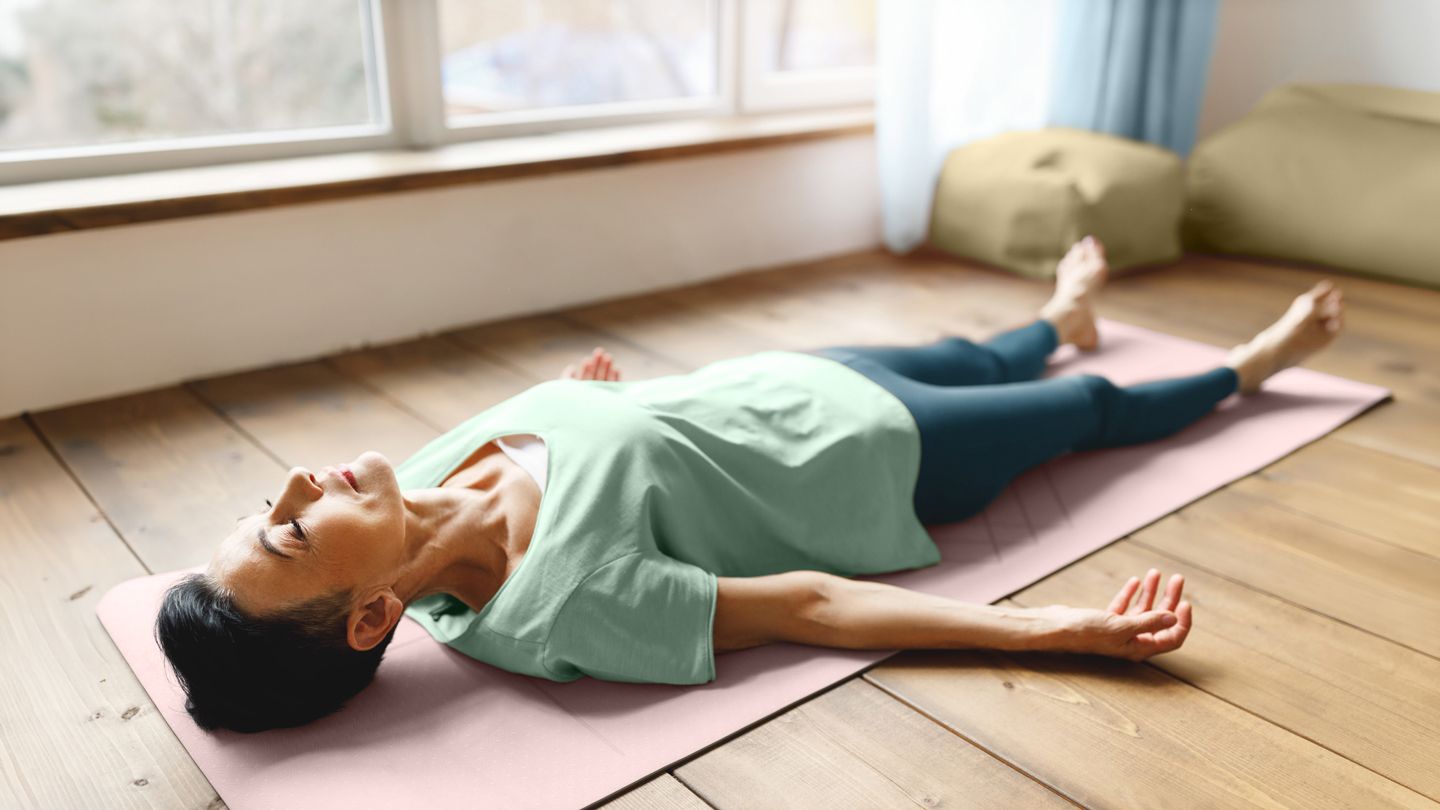
Practicing PMR on a regular basis is key to reaping its benefits. “PMR should be done daily, if possible,” suggests Krel. PMR can be practiced in short sessions, often 10 minutes or less, and you can use mobile apps, online videos, or audio recordings to guide you. App examples include Calm and Superchill, and Therapy in a Nutshell.
Once you get the hang of PMR, you can do it on your own, too. Here are ways to add PMR to your daily migraine management routine:
- Stick to a certain time of day. You might do PMR first thing in the morning, midday on your lunch break, or at night as you prepare for bed. “Instead of counting sheep, focus on relaxing your toes, then legs, then arms, neck and shoulders,” says Krel.
- Use PMR when stress arises. PMR can also be done when you’re stuck in a traffic jam, waiting at the airport for a delayed flight, or sitting through a stressful meeting.
- Try it when you have migraine warning signs. If you experience early migraine symptoms or “auras,” doing a short PMR session can help soothe neck and upper back muscles.
However, if you’re already in the midst of a full-blown migraine attack, it’s best to skip PMR — at that point, it may actually increase your pain.
Over time, PMR can become a practical coping tool for managing stress and migraine-related disruptions in your life.
Read the full article here