Common Triggers and Smart Swaps
When your Crohn’s symptoms are worse than usual and certain foods or textures are making things harder, try the following expert-recommended swaps.
1. Swap Raw Pear Slices for Skinless Baked Pears
But sometimes, the insoluble fiber content of pears can be too much for your digestive system. “Skins of fruits and vegetables can irritate the walls of the colon, which can worsen symptoms by increasing urgency or frequency of bowel movements,” Nicolai says.
If you want the benefits of pectin, but even peeled pears aren’t well tolerated, apples contain pectin as well. “Consider swapping [pears] for [baked] apples [or] applesauce,” says Courtney Schuchmann, RD, a registered dietitian in the department of gastroenterology, hepatology, and nutrition at University of Chicago Medicine. “Some patients with Crohn’s who have strictures or are at risk of obstructions have to be extra cautious.”
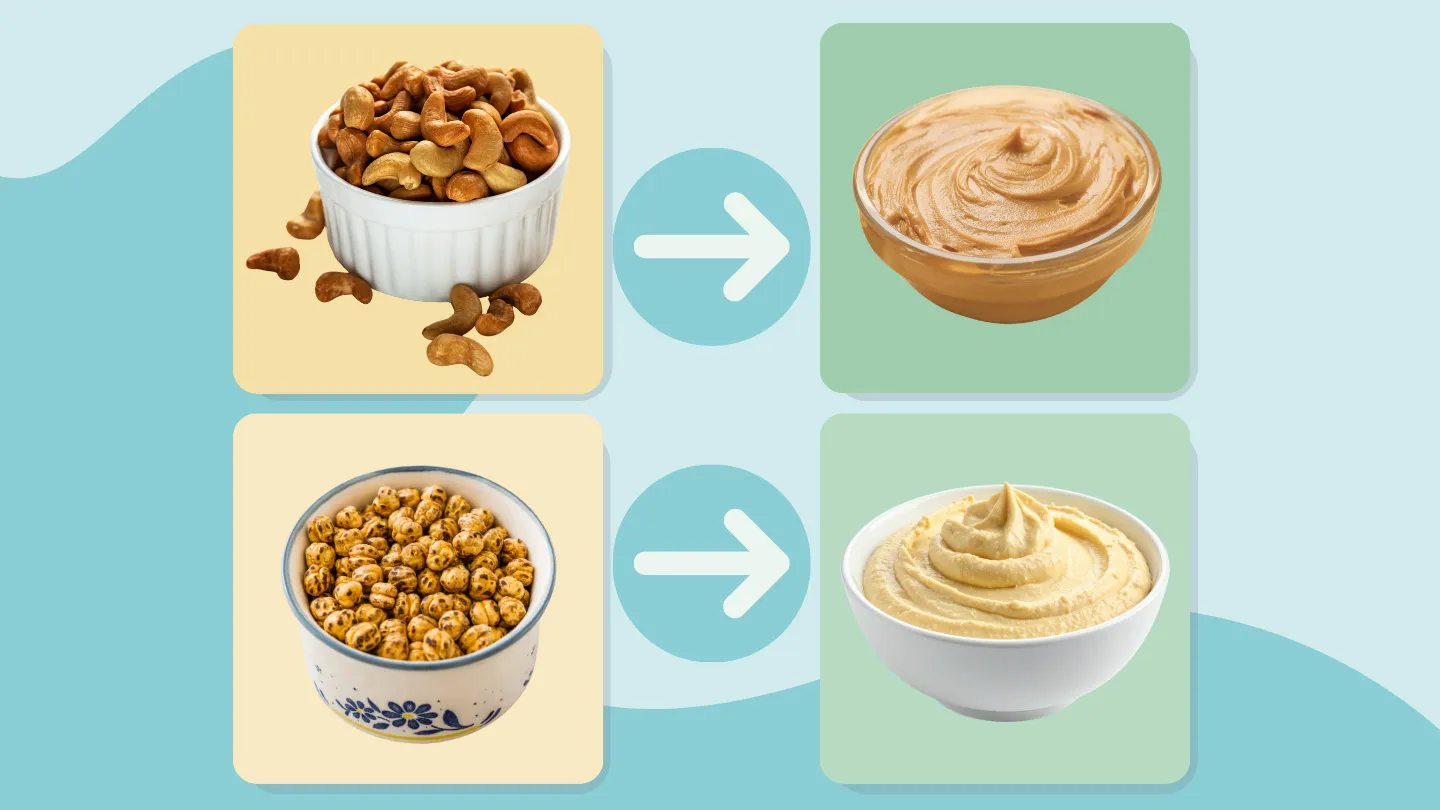
2. Swap Roasted Cashews for Cashew Nut Butter
But even softer nuts like cashews can be tough to digest when you have active inflammation or strictures. “Nuts in their whole form can have large hard pieces, which can be physically abrasive on the GI tract and brush up against the lining of the gut, causing more irritation,” Nicolai says.
But swapping a snack of roasted cashews for something like cashew butter on sourdough toast can make digestion easier. “These have the exact same amount of fiber, but the texture is smooth, which helps improve tolerance,” says Schuchmann. “Try other nut [or] seed butters [like] peanut butter, almond butter, [or] tahini if you find one version easier to tolerate than another. Each nut and seed provides slightly different micronutrients, which is why it is helpful to aim for a variety.”
3. Swap a Salad With Raw Leafy Greens for Pureed Soups
“Finely chopped leafy greens like spinach and kale are great to add to soups to increase fiber, vitamin K and iron intake,” says Schuchmann. “If needed, you can blend these vegetable soups to create a smooth texture, which is sometimes easier to tolerate. Green leafy vegetables also are a great addition to smoothies or blended into vegetable sauces for pasta.”
Whether you use an immersion blender, a regular blender or a food processor, the benefit is the same. “The smaller particle size of fiber found in pureed or blended foods requires less work for our digestive system to break down,” Nicolai says.
4. Swap Roasted Chickpeas for Hummus
Breaking down the chickpeas’ fiber mechanically to make hummus can make them even easier to digest. “Blend[ing] them into dips like hummus are a great way to incorporate these if you have difficulty tolerating whole beans [or] lentils,” Schuchmann says. “Try serving them with roasted carrots or peeled cucumbers for an additional fiber boost.”
5. Swap Raw Carrots for Roasted Peeled Carrots
Before you put the carrots in a roasting dish, make sure to peel them. “Skins can contain rough insoluble fiber, which is harder to break down,” Nicolai says. “Removing the skins of vegetables removes the larger particle size.”
The nutrients in roasted, peeled carrots make them more than just a side dish. “Carrots are a great source of fiber and vitamin A,” says Schuchmann. “Roasting them softens the texture of the fiber, which makes them easier to tolerate. Serve roasted carrots cold alongside dips, or serve warm with a drizzle of tahini for an addition[al] fiber and nutrient boost.”
Read the full article here