


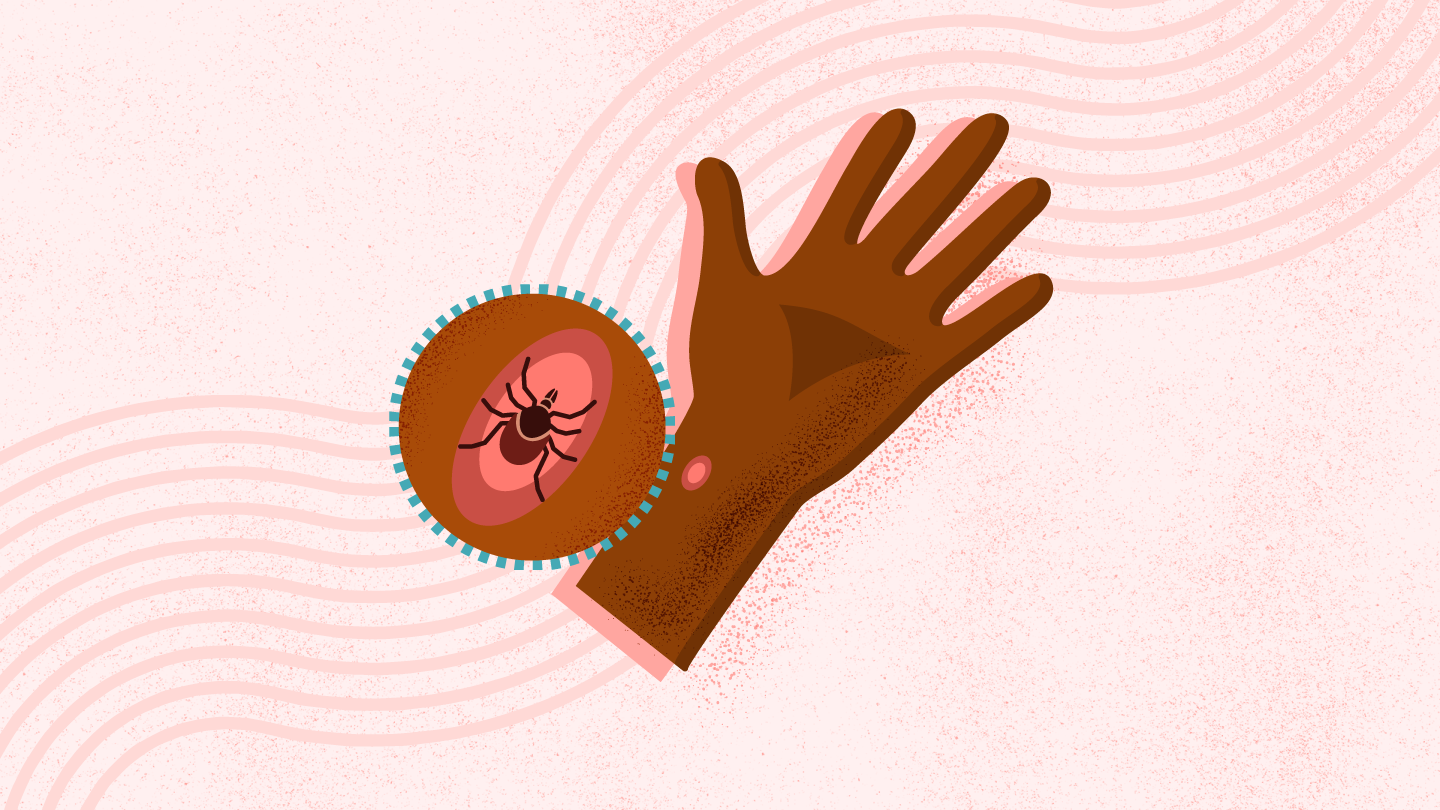
Causes Causes and Risk Factors of Lyme Disease Lyme disease is caused by the bacteria Borrelia burgdorferi or, rarely, Borrelia mayonii . Humans can get Lyme disease if they are bitten by an infected blacklegged tick (commonly called a deer tick).e60dc2a1-f33c-4a05-9b50-8e3e8e597629581300cd-920e-4eac-890f-03f3e2c4fdc7 Usually, the deer tick must be attached for 24 to 36 hours to transmit Lyme disease.e60dc2a1-f33c-4a05-9b50-8e3e8e597629d6ea613a-8740-4670-8730-4c90ee946b34 Not all ticks carry Lyme disease, and some ticks carry other diseases . Your chances of getting bitten by a tick and getting Lyme disease can depend on where you live or travel, or what you do for a living. Common risk factors for contracting Lyme disease include:e60dc2a1-f33c-4a05-9b50-8e3e8e597629581300cd-920e-4eac-890f-03f3e2c4fdc7 Spending a lot of time in wooded or grassy areas, especially in the Northeast and Midwest United States Exposed skin, which can make it easier for ticks to attach or bite you Removing ticks incorrectly or removing them 24 hours or more after they’ve attached to your skin, which allows the bacteria from the bite to enter your skin
Resources We Trust Mayo Clinic: Lyme DiseaseAmerican Lyme Disease Foundation: Updates in Lyme ResearchLymeDisease.org: About Lyme DiseaseMedlinePlus: Lyme DiseaseCenters for Disease Control and Prevention: Lyme Disease
Symptoms Signs and Symptoms of Lyme Disease Lyme disease symptoms will depend on the progression of the disease. It’s typically divided into three stages, ranging from stage 1, a localized infection, to stage 3, when it has spread throughout the body.e60dc2a1-f33c-4a05-9b50-8e3e8e5976297bbde9a2-21c3-4650-81e3-ab80b3a3184a Symptoms of a localized infection (stage 1) include: Fever or chills Swollen lymph nodes Headache Joint or muscle pain Neck stiffness Bull’s-eye rash (also known as erythma migrans) In early disseminated (stage 2) Lyme disease, which occurs weeks to months after the tick bite, other symptoms may develop, including:e60dc2a1-f33c-4a05-9b50-8e3e8e5976297bbde9a2-21c3-4650-81e3-ab80b3a3184a Nerve pain or numbness Facial or Bell’s palsy, a paralysis or weakness in the muscles on one side of the face Heart problems, like palpitations, chest pain, or shortness of breath Late disseminated (stage 3) Lyme disease, which develops months to years after the infection begins, may cause:e60dc2a1-f33c-4a05-9b50-8e3e8e5976297bbde9a2-21c3-4650-81e3-ab80b3a3184a Arthritis with severe joint pain and swelling, especially in large joints such as the knees Pain in the tendons, muscles, joints, and bones Abnormal muscle movement Numbness and tingling Cognitive problems, including issues with speech and short-term memory Muscle weakness
Diagnosis How Is Lyme Disease Diagnosed? Your doctor can make a preliminary diagnosis of Lyme disease based on your symptoms and history of exposure to blacklegged ticks. Your doctor may confirm your diagnosis with laboratory blood tests or may conduct these tests if you don’t meet all the above criteria. If a patient’s symptoms and history suggest that Lyme disease is likely, the doctor will probably begin treatment without waiting for a blood test.e60dc2a1-f33c-4a05-9b50-8e3e8e597629a98a84de-7e60-43ae-846b-9120c1a1b06b
Lyme disease is a bacterial infection that is spread through black-legged (deer) tick bites. The disease may resemble the flu at its onset, but many early signs and symptoms of Lyme disease are mild and may be missed. Its most distinctive symptom is a bull’s-eye-shaped rash. But in at least one-quarter of Lyme disease patients, the telltale rash doesn’t develop.e60dc2a1-f33c-4a05-9b50-8e3e8e5976291c883ea0-d68b-41ff-bdd6-e6fcc48b83af If caught early, most cases can be cured with antibiotics, but if Lyme disease goes untreated, it can lead to neurological and other potentially serious complications.
Additional reporting by Becky Upham .
Lifestyle and Prevention Lifestyle Changes and Prevention of Lyme Disease There isn’t a U.S. Food and Drug Administration–approved vaccine to protect against Lyme disease in humans. The following precautions can help reduce your chances of getting a tick bite:e60dc2a1-f33c-4a05-9b50-8e3e8e5976296aed242f-bbb2-40bb-b657-e7af7e1705c9 Avoid woody, brushy, and grassy areas, especially in May, June, and July. Wear light-colored clothes, so that you can spot a tick if it gets on you. Wear long pants, a long-sleeved shirt, and shoes that cover your whole foot (no sandals). Tuck your pant legs into socks or shoes, and tuck your shirts into your pants. Wear a hat to protect your head. Spray an insect repellent containing DEET on clothes and areas of uncovered skin. If you’re on a trail, walk in the center to avoid brush and grass. Take off your clothes right away when you come in from the outdoors, and wash and dry them at high temperatures. Carefully check your body and head for ticks after outdoor activities.
Prognosis How Long Does Lyme Disease Last? Lyme disease can last for a month or two or as long as months or years, depending on whether it is promptly or effectively treated.e60dc2a1-f33c-4a05-9b50-8e3e8e597629409c5178-d8ab-4c2f-9cdc-9db62fd1861c When treated with antibiotics, most people recover from Lyme disease within a few weeks. If it isn’t treated right away because symptoms weren’t present or it was misdiagnosed, the infection can affect different parts of the body and last several months.e60dc2a1-f33c-4a05-9b50-8e3e8e597629409c5178-d8ab-4c2f-9cdc-9db62fd1861c Late persistent Lyme disease may develop without proper treatment. This phase can cause arthritis, fatigue, and numbness. Although rare, heart problems such as inflammation around the heart can occur months or years after the tick bite.e60dc2a1-f33c-4a05-9b50-8e3e8e597629a53d2447-c788-4930-ac2e-a059abaabb03 In some cases, people may develop post-treatment Lyme disease syndrome (PTLDS). This can occur when there is no longer an active Borrelia burgdorferi infection but the patient is still experiencing long-term symptoms. If you suspect that you may have PTLDS, talk with your doctor about treatment options.e60dc2a1-f33c-4a05-9b50-8e3e8e597629409c5178-d8ab-4c2f-9cdc-9db62fd1861c
Complications Complications of Lyme Disease Complications can begin to develop in early disseminated (stage 2) Lyme disease. These complications may include:e60dc2a1-f33c-4a05-9b50-8e3e8e597629899124e0-4dfd-4a87-9468-f163485cde71 Vision disturbances Reduced ability to concentrate Facial paralysis Sleep and memory disorders Nerve damage in the legs and arms ( neuropathy ) Joint inflammation (Lyme arthritis) Heart problems
Treatment Treatment and Medication Options for Lyme Disease Lyme disease is treated with antibiotics. Typically, the sooner the treatment is started (and completed), the faster the recovery will be. Medication Options The standard treatment for adults and children for early-stage Lyme disease is oral antibiotics.e60dc2a1-f33c-4a05-9b50-8e3e8e597629220d6aeb-c7ac-4c2b-847c-19340bc57f8c Doxycycline can be used for adults and children older than 8. Amoxicillin or cefuroxime is recommended for adults, younger children, and pregnant or breastfeeding women. If Lyme disease progresses to a more advanced stage and involves the nervous system, intravenous antibiotics may be needed. These are usually prescribed for 14 to 28 days and will eliminate the infection.e60dc2a1-f33c-4a05-9b50-8e3e8e597629220d6aeb-c7ac-4c2b-847c-19340bc57f8c There are no proven treatments for Lyme disease other than antibiotics. There are alternative or complementary treatments that are marketed to people with Lyme disease, but there is no scientific evidence to prove that they work or are safe to use.e60dc2a1-f33c-4a05-9b50-8e3e8e597629220d6aeb-c7ac-4c2b-847c-19340bc57f8c
Read the full article here


Leave a comment
