3. Canned Black Beans
- Fiber 1 cup-serving: 18.2g
Beans provide both insoluble and soluble fiber, which is beneficial for gut health and helps prevent constipation, Tinoco says, noting that beans are also good protein sources.
Black beans are low in calories and can keep you feeling full, which can prevent overeating and help you manage your weight. The beans work well in soups, salads, tacos, and more.
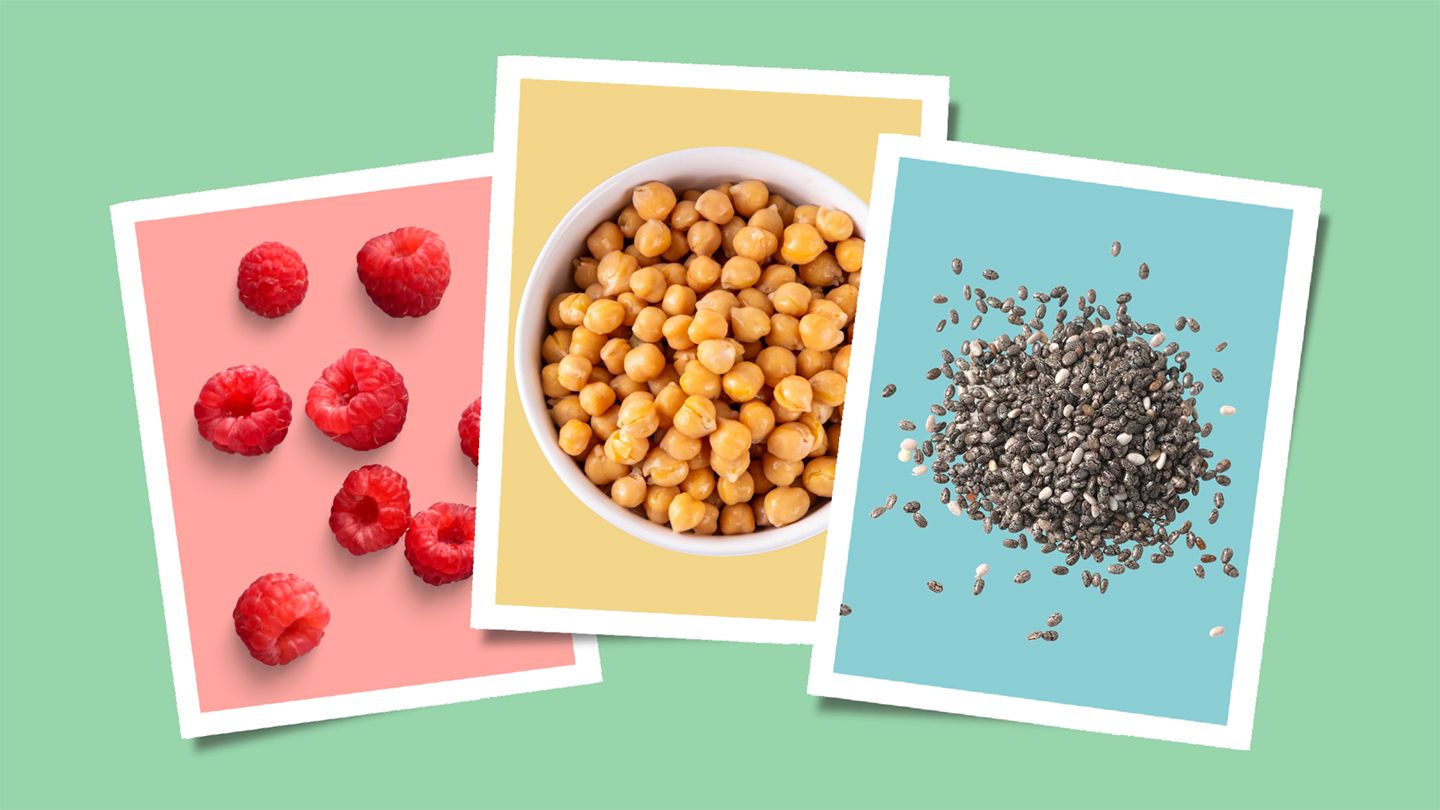
4. Chia Seeds
- Fiber in a 1 ounce-serving (about 2 tbsp): 9.75g
Seeds are one of Tinoco’s go-to sources of fiber. Chia seeds are a good option, as they also contain protein, antioxidants, and omega-3 fatty acids. Eating chia seeds can lower your blood pressure and cholesterol, reduce inflammation, help you manage diabetes, and improve digestion.
Sprinkle the tiny black or white seeds on yogurt, add them to smoothies, or make a chia seed pudding.
5. Almonds
- Fiber in a ½-cup serving of whole nuts: 8.9g
Along with being fiber-rich, almonds are a good source of protein, Tinoco says. Almonds are high in calcium, which supports bone health. Research shows they can also improve the gut microbiome, boost cardiovascular health, and slow cognitive decline.
Toss almonds into salads or yogurt bowls or snack on them throughout the day.
6. Pears
- Fiber in one medium pear: 5.5g
Research suggests pears’ high fiber content and gut health benefits, including constipation relief, set them apart from other fruit. They’re also full of antioxidants, potassium, vitamin C, and a slew of other nutrients.
Studies show that eating pears can help lower blood pressure and reduce inflammation, which can lower the risk of chronic diseases like cancer, heart disease, and Alzheimer’s disease.
Try sliced fresh pears as a snack or bake them into sweet or savory dishes.
7. Broccoli
- Fiber in 1 cup of chopped broccoli: 2.4g
Vegetables, in general, are good sources of fiber, Tinoco says. Cruciferous vegetables, like broccoli and Brussels sprouts, are particularly fine choices. They contain soluble and insoluble fiber, which are both important for digestion and health, and are rich in vitamin C (which supports the immune system), vitamin K (important for bone health), and compounds that can potentially lower cancer risk.
Opt for fresh or frozen broccoli, which you can steam, roast, or sauté.
Read the full article here