Attend Appointments With Your Loved One
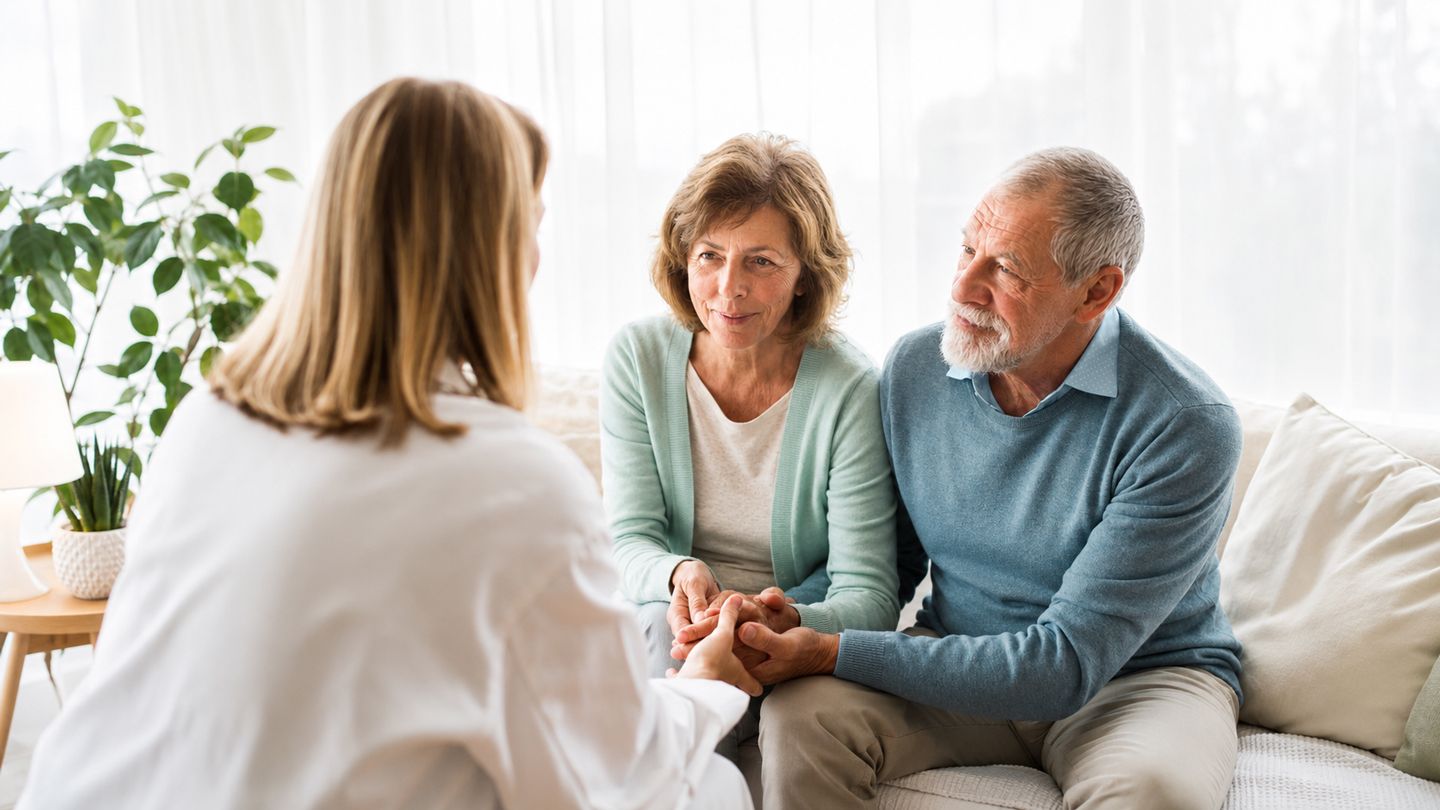
As Alzheimer’s progresses, it can become harder for your loved one to speak up in settings such as the doctor’s office. They may feel overwhelmed by the amount of information shared, intimidated, or embarrassed to ask the doctor to repeat themselves. Accompanying your loved one to the appointment can be a great source of relief and info gathering.
JKP: My mom lived in Milwaukee. My sister was living there, and I wasn’t, so she was a bit more hands-on. But I was able to call in for many appointments. My sister would put me on FaceTime, so I could hear what was going on. I think it helped my sister, too, having someone else there who could back her up. I was able to ask questions she wouldn’t have known to ask. … Don’t be afraid to be a pain. They’re the medical expert, and you’re the expert on your loved one. Ask what you want to ask, and demand that they take the time to give you the answers.
Kathy Hawkins: A few years before my husband was diagnosed with Alzheimer’s, he was diagnosed with prostate cancer. As his memory worsened, I started accompanying him to his urology checkups. The urologist ignored me. He only wanted to address my husband, but I needed to be there to reframe questions for him. The urologist would ask, ‘Are you in pain?’ My husband would say no. But then I would ask, ‘Are you feeling discomfort?’ and my husband would say, ‘Well, yes.’
Streamline Alzheimer’s Care
Successfully managing Alzheimer’s often requires seeing several doctors and everything that entails, from scheduling appointments to ensuring test results and other information are shared among healthcare providers. Finding ways to simplify your loved one’s care can make it feel like less of a juggling act.
KH: I got to a point where I felt that it was advantageous for my husband to have all of his doctors under one hospital system, under one umbrella. And that has worked out beautifully. It’s easy to transfer from one doctor to another. It’s easy when you need a specialist. The data is there, and they know how to talk to each other.
Seek Out Community
Having a community of people who can directly relate to your experience can help you feel less alone and provide you with real-world, actionable advice that you may not get in a doctor’s office.
JKP: Find somebody else who’s gone through some of the same things you are who can share their experience and offer a sense of support. We didn’t have any. … It felt like we were kind of on a little island without a boat.
KH: I joined a caregiver group, and I found them very tolerant of my emotional reactions to everything I was going through. I began to get a wealth of knowledge from the group, and I felt understood.
Read the full article here