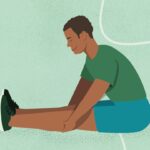
Athlete and trainer Joseph Pilates created the exercise technique, which dates back to the beginning of the 20th century. Pilates includes 50 specific movements designed to boost physical fitness by improving flexibility, strength, balance, and more.
How Often Should I Do Pilates?
Beginners to Pilates certainly can do the exercises daily. But you don’t have to in order to start reaping the health benefits of this muscle-boosting workout. Heather Milton, CSCS, a board-certified clinical exercise physiologist with NYU Langone Health in New York City, recommends starting with one or two Pilates workouts a week.
For a balanced exercise regimen, think of these sessions as complementary. That means you can do them in addition to other cardio and strength-training workouts throughout the week, Milton says.
The Ideal Length of a Pilates Session
The short answer to the question of how long a Pilates session should be? It depends. “If it’s your first time trying Pilates, I would encourage you to aim for at least 20 minutes and slowly increase as you become more familiar and comfortable with the structure of classes,” says Bianca Wise, an Australia–based Pilates instructor with Alo Wellness Club.
Milton says you should see your efforts start to pay off within about two months. “When you start, it’s a lot of neuromuscular education — so, training the nerves to activate the right muscles,” she says. “You can see improvements within six to eight weeks. And that’s when you’re doing it consistently: about one or two times a week.”
The Best Type of Pilates for Beginners
Some Pilates classes include specialized equipment, such as a tower or a reformer. Milton recommends starting with a traditional mat-Pilates class, however.
Since any Pilates class can be intimidating when you’re brand new and unfamiliar with the exercises, getting personal instruction is ideal. That may be one-on-one or in a small class taught by a certified Pilates instructor.
“Getting some private instruction under your belt and understanding the core principles can help set the basis for classes,” says Jesse Barnett, CSCS, a New York City–based Pilates instructor and a personal trainer with Physical Equilibrium. “You’ll know how to handle yourself in the class.”
In larger classes, the instructor may not be able to give each student personal attention needed to correct form.
If private instruction is out of your budget, check to see if a studio near your home offers introductory sessions, says Victoria Popoff Ardis, a certified Pilates instructor and owner of Studio V Pilates and Fitness in Modesto, California.
These are often free or offered at a reduced rate and help you get comfortable with the workout.
Read the full article here