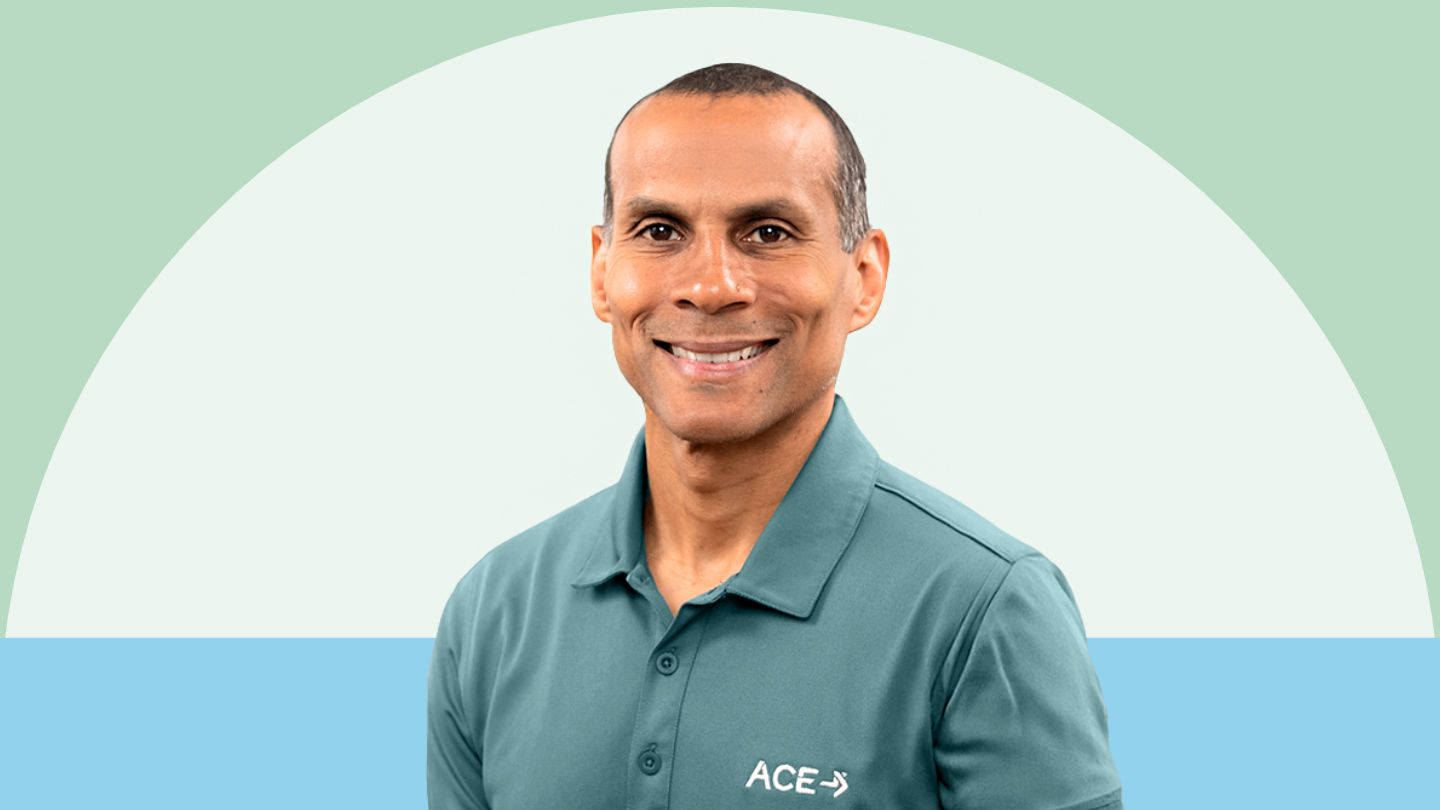
To keep his fitness up, here are the five exercises Wall fits in every week.
We’ve listed some modifications below if these exercises are too advanced for you. But remember that before starting any new fitness routine, it’s a good idea to talk to your doctor if you have any health condition or injury that could interfere with your ability to safely exercise.
1. 3-Mile Runs
Running is an effective form of aerobic exercise, but not necessarily appropriate for everyone. Because you’re jumping from foot to foot when you run, the motion puts extra stress on your joints compared with walking or other lower-impact forms of exercise. “The joints and tissue need to be able to tolerate the ground forces,” Dr. Getzin says. “The best way to know if your joints can tolerate running is to listen to your body. If you have progressive pain, the load is too great.”
Low-impact alternatives to running (that are still great forms of aerobic exercise) include walking, swimming, and using an elliptical machine or stationary bike.
2. Hip Drops
Getzin adds the exercise can help avoid common over-use injuries. “Hip Drops are a great way to maximize lateral hip strength, in particular the gluteus medius and gluteus minimus, and thereby possibly minimize running-related injuries,” he says. The stronger those muscles are, the better someone can maintain correct form and avoid poor form that contributes to injuries.
Other lower-body resistance exercises can help, too, Getzin says. Try squats and bridges can help strengthen the quadriceps and hamstrings in addition to the lateral hip muscles.
To do a hip dip, stand on the edge of the stairs or a small block. Start with your right foot on the step and the left foot hanging off the side of the step with your hips level. Without bending your right leg, slowly lower your left foot a few inches, pause, and return to the level position. The motion should come from your hips. Wall recommends 3 sets of 8 to 12 reps on both sides. If you can’t do that many, decrease the reps or sets and slowly add more as you can.
Read the full article here