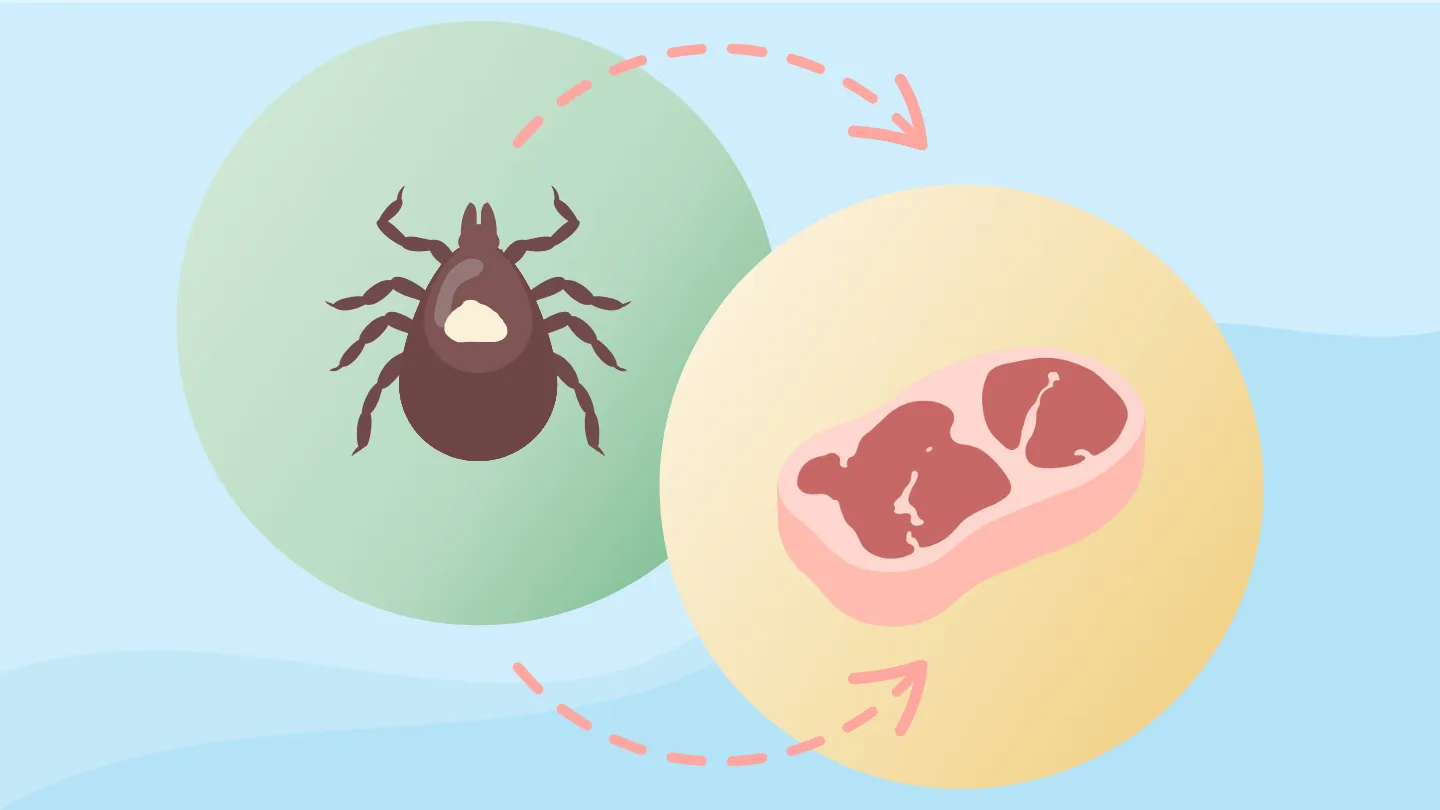
Alpha-gal syndrome (AGS) — a disease mainly spread by the lone star tick that can trigger a delayed allergic reaction to red meat — has been considered rare since it was first identified nearly 20 years ago. But a growing body of research suggests it may be far more widespread, frequently undiagnosed, and potentially life-threatening.
The U.S. Centers for Disease Control and Prevention’s most recent estimate of 450,000 cases is “almost certainly an undercount,” says Benjamin Casterline, MD, an immunologist and dermatologist at University of Missouri Health Care in Columbia.
He notes that cases are only identified when healthcare providers think to order a test — and many are still unfamiliar with the range of symptoms or even the cause of alpha-gal syndrome.
“Many people are never tested because the symptoms can look like common stomach problems, food intolerance, or a routine allergic reaction,” says Vinay Jahagirdar, MD, a gastroenterology and hepatology fellow and AGS researcher at Virginia Commonwealth University in Richmond.
Cases Are Rising — and Now Showing Up in More Parts of the U.S.
Once thought to be largely confined to the southeastern United States, alpha-gal syndrome is now affecting a much wider swath of the country.
Within these regions, “The prevalence likely reaches about 2 percent, but in other areas it is quite uncommon,” says Dr. Wilson.
Experts say this pattern reflects both improved recognition and a true rise in cases as the lone star tick (named for the distinctive white dot on the female) expands its range northward and westward.
Why Experts Think Many Alpha-Gal Cases Are Still Being Missed
Even as diagnoses increase, alpha-gal syndrome remains notoriously difficult to recognize.
One of the biggest challenges is timing. Unlike most food allergies, symptoms are delayed — often appearing two to six hours after eating red meat or other mammalian products.
“If you have dinner at 7 p.m., there may be no symptoms until midnight or later,” says Scott Commins, MD, PhD, a professor of medicine and alpha-gal researcher at the University of North Carolina School of Medicine in Chapel Hill. That makes it difficult to connect the reaction to food, he adds.
Symptoms can also vary widely, and they don’t always look like those of a typical allergy. Some people develop hives or swelling, while others experience primarily gastrointestinal symptoms such as abdominal pain, nausea, or diarrhea — which are frequently mistaken for more common conditions like food intolerance or irritable bowel syndrome, says Dr. Casterline.
Further complicating diagnosis, alpha-gal has an unusual pattern for a food allergy. It’s rare for adults to suddenly develop a severe allergy to foods they’ve eaten safely for decades. “Adults often blame seafood, peanuts, tree nuts — anything but red meat,” says Dr. Commins.
What Alpha-Gal Syndrome Is — and How It Happens
Alpha-gal syndrome is an allergy to a sugar molecule called galactose-α-1,3-galactose (alpha-gal), which is found in most mammals but not in humans.
The condition typically develops after a tick bite, most often from the lone star tick in the United States, which can trigger the immune system to produce antibodies against alpha-gal. When a person is later exposed to that molecule, such as by eating red meat or using products derived from mammals, it can lead to an allergic reaction.
In some cases, AGS can cause anaphylaxis, which is a severe, potentially life-threatening allergic reaction.
There is no cure for alpha-gal syndrome, but people typically manage symptoms by avoiding foods and products that contain alpha-gal and by preventing additional tick bites.
Dairy Products and Even Medicines Can Trigger a Reaction
Although alpha-gal syndrome is often described as a red meat allergy, its effects can extend beyond red meat.
Some people react to dairy products such as milk, cheese, butter, or ice cream (though most patients tolerate dairy) while others may be sensitive to mammal-derived ingredients found in medications and medical products. These can include drugs like heparin, pancreatic enzymes, certain vaccines containing gelatin, and inactive ingredients such as magnesium stearate.
“It’s more than just ‘don’t eat steak,’” says Dr. Jahagirdar. Hidden exposures can make the condition harder to manage, he adds.
There is ongoing research exploring whether alpha-gal-related immune responses could be linked to other health issues, including inflammation tied to cardiovascular disease. But experts emphasize that this connection is still being studied and has not been proven.
How Is Alpha-Gal Diagnosed?
For people with unexplained symptoms, testing may help clarify the diagnosis. Blood tests that measure alpha-gal-specific IgE antibodies are typically considered when someone has a pattern of delayed reactions, especially in areas with a high level of lone star ticks, says Casterline.
Testing may also be appropriate for people with unexplained hives, swelling, anaphylaxis, or recurring gastrointestinal symptoms that seem to occur after eating meat. But results need to be interpreted alongside a person’s history, he says.
“The antibody test is not a screening test, and it is only meaningful when there is a compatible symptom pattern,” says Casterline.
It’s also possible to test positive without having symptoms. In population studies, as many as 80 to 90 percent of people with alpha-gal antibodies do not report clinical reactions, says Wilson.
What to Consider as Tick Season Begins
With warmer weather approaching, the risk of tick bites and alpha-gal syndrome is likely to increase.
The lone star tick is most active from early spring through late fall, particularly in wooded or grassy areas. People who spend time outdoors in high-risk regions are more likely to be exposed.
Preventing tick bites remains the most effective way to reduce risk. “Taking precautions to avoid tick bites is certainly time and effort well spent,” says Commins.
Using insect repellents, wearing protective clothing, and checking for ticks after outdoor activity can all help reduce exposure.
Read the full article here