


Atopic dermatitis , the most common type of eczema, is a chronic inflammatory skin disease that can affect anyone. But research shows that it’s more prevalent in certain communities of color, especially Black children. In the United States, 19.3 percent of Black children have atopic dermatitis, compared with 16.1 percent of white children and 7.8 percent of Hispanic children.e60dc2a1-f33c-4a05-9b50-8e3e8e59762943b51b13-fa86-4ec5-95a4-30714ddab413 The reasons for the disparities are complex and include various genetic, immune, and environmental factors. “It’s truly multifactorial as to why people of color are disproportionately affected with atopic dermatitis,” says Shawn Kwatra, MD , the chief of service in dermatology and the chair of the department of dermatology at the University of Maryland School of Medicine in Baltimore. Here’s what you should know about the symptoms, causes, diagnosis, and treatment of atopic dermatitis in skin of color.
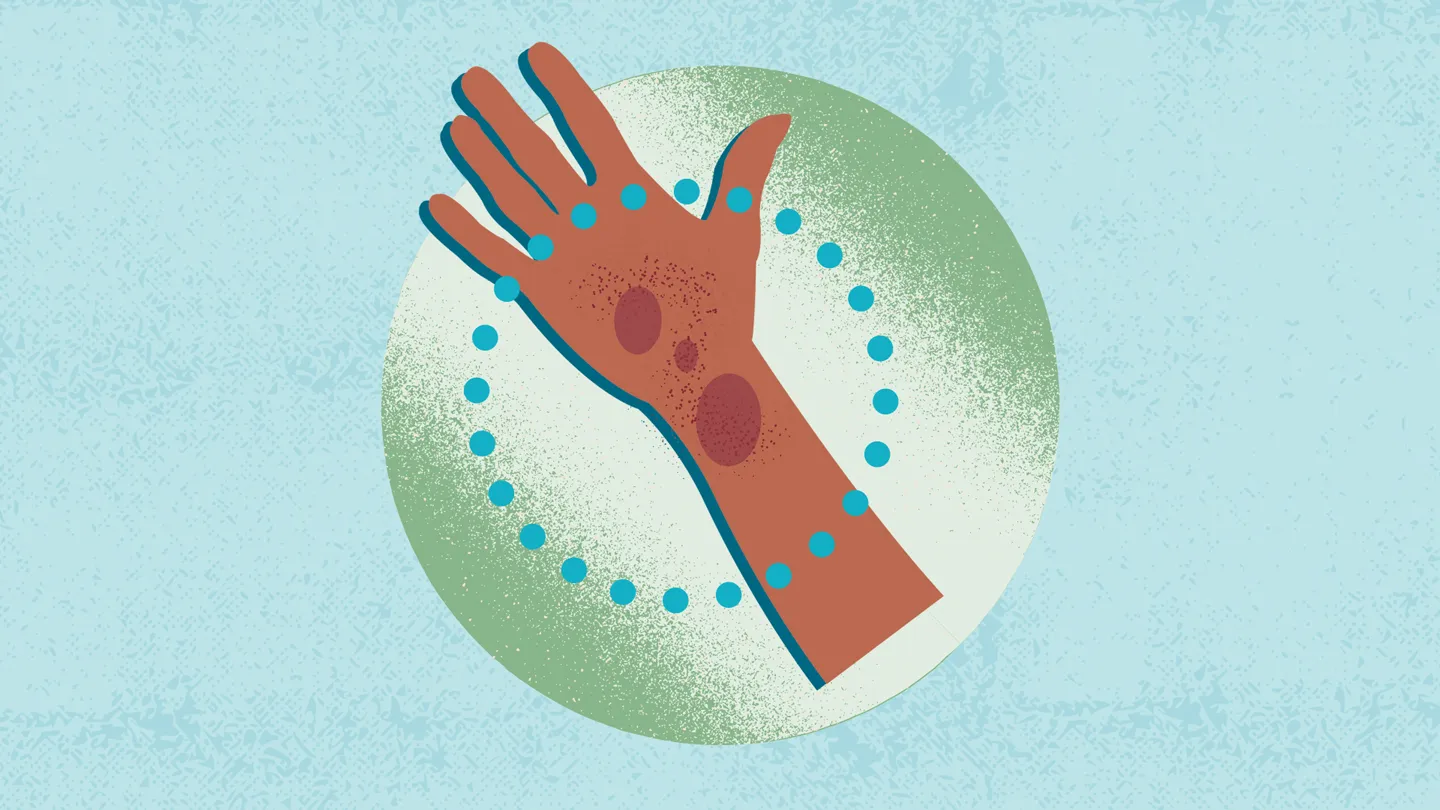
Signs and Symptoms of Atopic Dermatitis in Skin of Color Symptoms Many symptoms of atopic dermatitis are similar for everyone with the condition, but some can vary by skin tone. In general, the condition causes dry, itchy skin and rashes on various areas on the body, which can include the face, hands, feet, elbows, behind the knees, or the scalp, says DiAnne Davis, MD, a cosmetic dermatologist at Hopkins Dermatology in Dallas. The affected areas can be swollen, warm, itchy, dry, or scaly, says Kemunto Mokaya, MD , a dermatologist at Complete Dermatology in Woodland, Texas. It can be more challenging to diagnose atopic dermatitis in skin of color than in white skin because the condition has a different appearance on darker skin and can be more severe, according to research published in 2023 by Dr. Kwatra and his team. “The disease has a unique presentation on skin of color,” he says.e60dc2a1-f33c-4a05-9b50-8e3e8e5976290f381115-b9c3-4f12-9e4c-ab94a1d6bf78 In lighter skin tones, rashes can appear in various shades of red, ranging from a pale pink to salmon color, says Dr. Mokaya. But on darker skin, it can appear like a purplish bruise or a darker brown patch. Then the affected skin may become darker than the areas around it after the rash has healed (known as hyperpigmentation ). “The erythema (redness) is less visible on darker skin, making inflammation harder to assess,” says Mokaya. Over time, “the dry patches can appear ashy or gray on darker skin, while they look white and flaky on lighter skin.” Black patients also are more prone to what’s known as papular lesions, or small bumps on the torso, arms, and legs, says Kwatra. These bumps can also show up around hair follicles, a condition known as follicular accentuation, he adds.
Causes of Atopic Dermatitis in Skin of Color Causes As mentioned, atopic dermatitis is not contagious. It’s caused by a combination of genetic, immune-related, and environmental factors, some of which can vary by race or ethnicity. Genetic and Immune-Related Factors Genetics often play a major role in atopic dermatitis. Many children with the condition have at least one family member with atopic dermatitis or related chronic health problems, such as asthma and allergies. “Studies found this to be true for 70 percent of the patients with atopic dermatitis,” says Dr. Davis.e60dc2a1-f33c-4a05-9b50-8e3e8e59762900dc7545-c6c0-4871-af80-0dc5176ab458 Atopic dermatitis is often linked to a weakened skin barrier and underlying immune system issues within the body. “Patients may have a genetic mutation that leads to abnormality in proteins (filaggrin) that form the skin barrier,” says Vivian Shi, MD , an associate professor in dermatology at the University of Arkansas for Medical Sciences in Little Rock. The lack of normal protein levels can harm the skin barrier, causing it to lose moisture and be susceptible to inflammation. This mutation is more common in white children than Black children, research shows.e60dc2a1-f33c-4a05-9b50-8e3e8e59762964e09a37-1a93-445b-8d61-3774ba6536f5 But people with darker skin tones are more likely to develop dry skin, a known trigger of atopic dermatitis, than people with lighter skin tones. That’s because darker skin has a higher rate of transepidermal water loss (TEWL) than lighter skin, which means that darker skin loses moisture faster, says Dr. Shi. TEWL is the amount of water vapor lost through the skin when sweat glands aren’t active. What’s more, darker skin tones have lower levels of ceramides (lipids that help protect the skin) than lighter skin tones, Kwatra adds. Lower levels of ceramides are also linked to increased skin dryness. Environmental and Socioeconomic Factors As for the environmental influence, children of color — particularly Black children — are more likely to grow up in cities where they’re exposed to harmful pollutants and allergens, like dust and mold, says Kwatra. Research shows that exposure to secondhand smokee60dc2a1-f33c-4a05-9b50-8e3e8e597629f6b59a98-390f-439f-8df2-e61119c4d9e1 and air pollution from traffice60dc2a1-f33c-4a05-9b50-8e3e8e597629fb5a4856-2847-47be-859a-94b1eef9ef04 are contributing factors to developing atopic dermatitis, Kwatra adds. Over time, this increased exposure can trigger or worsen atopic dermatitis, says Mokaya. “Socioeconomic factors affecting some people of color like limited access to healthcare and effective treatments can delay diagnosis and management, exacerbating the condition,” adds Mokaya. One reason is that people in many communities of color are less likely to have health insurance than their white counterparts, data shows.e60dc2a1-f33c-4a05-9b50-8e3e8e5976293f6eacd0-0731-43b9-88da-4b2886c3eeb9 Children with darker skin tones also often have decreased access to pediatric dermatology, which can offer more specialized care for skin conditions like atopic dermatitis than primary care.e60dc2a1-f33c-4a05-9b50-8e3e8e597629cab5ca7f-058f-446b-bd43-960464906b2a High levels of stress can also worsen the condition, Mokaya notes.
Diagnosis of Atopic Dermatitis in Skin of Color Diagnosis Most diagnoses of atopic dermatitis are based on personal health history, family history, and a skim exam. To get the right diagnosis as a person of color, it can help to find a dermatology provider who specializes in treating skin of color. “Seek out a culturally competent healthcare provider who understands atopic dermatitis in skin of color people and advocates for your specific needs,” says Shi. Be sure to write down all the symptoms you’re experiencing and bring it to your appointment. For a diagnosis of atopic dermatitis , the focus should be on how itchy the skin feels, says Kwatra. “I am focused on the itch with all of my patients, and I ask them what is your worst itch level from 1 to 10,” he says. “Asking about the itch level is a way to eliminate the disparities.”
Treatment Options for Atopic Dermatitis in Skin of Color Treatment Treatments for atopic dermatitis are the same for all skin tones, but the specific treatments someone receives vary by their symptoms and the severity of their condition. The most common treatment options include:e60dc2a1-f33c-4a05-9b50-8e3e8e5976296a4cfb40-fc85-4bc7-9bc9-94af2ccdd05f Topical Treatments Prescription topical steroids and other topical treatments reduce inflammation and itching during a flare-up. They’re often used for mild cases, Davis says. Antihistamines Antihistamines can help reduce severe itch.e60dc2a1-f33c-4a05-9b50-8e3e8e5976293030225e-fdf7-4b9b-ba9b-edb6d1f7dd40 Light Therapy Also known as phototherapy, light therapy involves exposing symptomatic areas of your skin to controlled amounts of natural sunlight. This treatment option is most often used among people whose symptoms don’t improve with topical treatment or quickly flare up again after treatment. Oral Steroids (Oral Immunosuppressants) To treat severe flare-ups, a doctor may prescribe oral steroids. “[These medications help] modulate the immune system to get the condition under control,” Davis says. Systemic Medications For people with moderate to severe eczema that doesn’t improve with topical treatments or light therapy, systemic medications such as injectable biologics could help. Self-Care There are several gentle skin-care strategies you can do at home to care for your skin and lower your risk of flare-ups. This includes avoiding hot showers, bathing in lukewarm or cool water for no more than 10 minutes, using gentle non-soap cleansers rather than traditional soaps, gently patting your skin dry after a bath or shower, and applying an unscented moisturizing cream or ointment quickly after showering or bathing to lock in moisture. Along with treatment, it’s also important to figure out if any allergens or irritants are triggering your symptoms and avoid those triggers . “Those allergens may include, but are not limited to scented products like perfumes or colognes,” Davis says. Other common triggers include heat, abrasive fabrics like wool, chemicals like cleaners or detergents, and stress, she notes.
The Takeaway Atopic dermatitis — the most common type of eczema — can affect anyone, but it’s most prevalent in Black children. Certain symptoms of atopic dermatitis can vary by skin tone. For instance, atopic dermatitis may look red or pink in white skin, but can appear brown, purple, or ashen gray in Black or brown skin. Treatment options are the same for all skin tones, but may differ from person to person depending on symptom severity.
Resources We Trust Mayo Clinic: Atopic Dermatitis (Eczema)Cleveland Clinic: Atopic DermatitisNational Eczema Association: The Science of Eczema on Brown and Black SkinAmerican Academy of Dermatology: Eczema Types: Atopic Dermatitis OverviewEczema in Skin of Color: Atopic Dermatitis in Skin of Color
Read the full article here


Leave a comment
