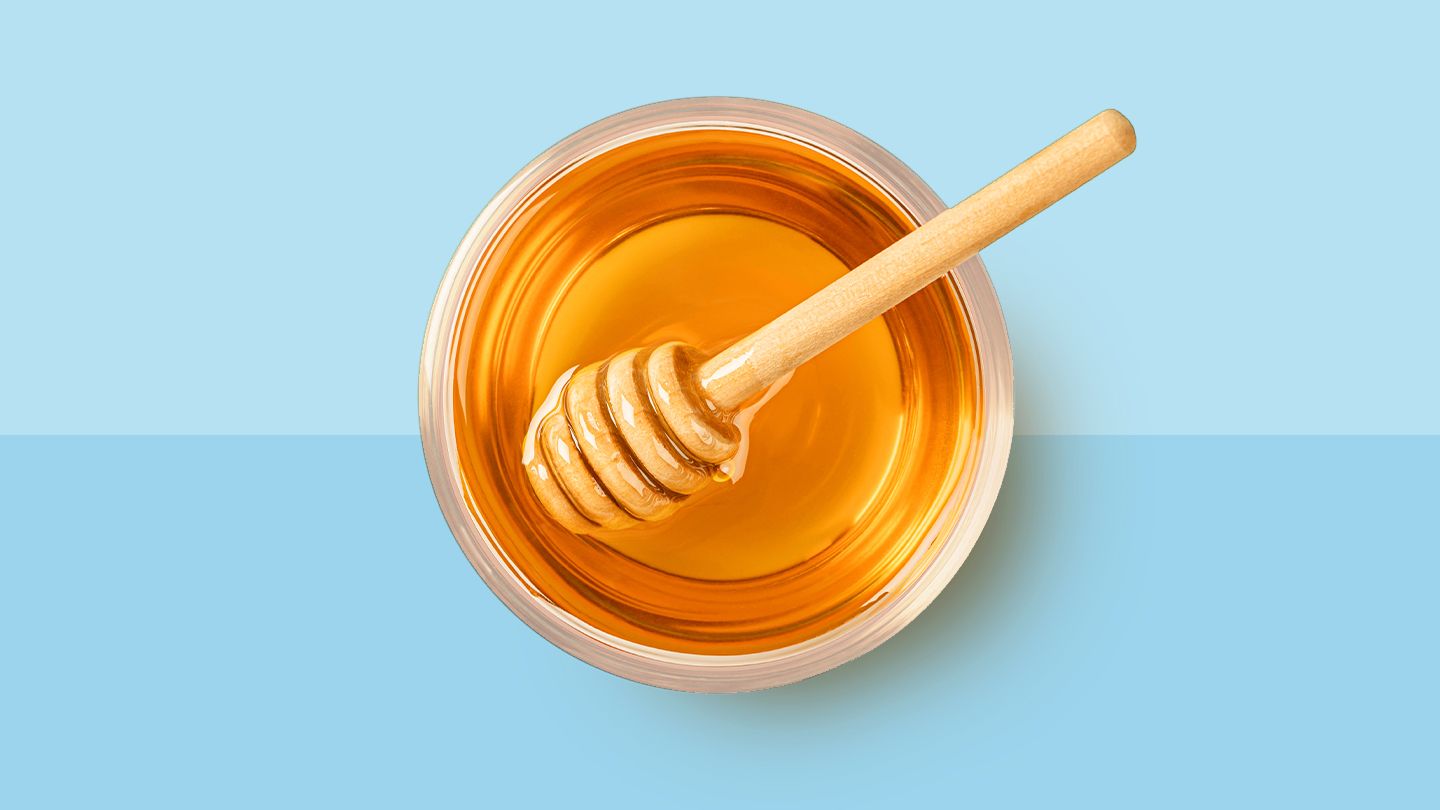
You may have heard that honey is the bee’s knees when it comes to soothing acid reflux. But, despite these claims that honey can coat and soothe your esophagus when gastric juices flow up, science (and our experts) say not so fast. Honey may not be the reflux remedy you thought it could be.
Why Honey Doesn’t Help
“I am not familiar with any research on honey having a soothing effect on gastroesophageal reflux (GERD),” says Hannah Kittrell, RD, CDN, Physiolab manager and clinical research associate at Icahn School of Medicine at Mount Sinai in New York City.
In fact, Kittrell says, by eating honey, you could be actually making things worse for you and your esophagus.
“Honey is a simple sugar, meaning it is easy for our body to digest,” Kittrell says. “Sugars such as this cause a rapid increase in blood sugar, which produces an osmotic effect, pulling water into the gastrointestinal tract. Excess water being pulled into the GI tract quickly could actually trigger acid reflux symptoms.”
On the other hand, Julie Stefanski, RDN, LDN, registered dietitian, and spokeswoman for the Academy of Nutrition and Dietetics in York, Pennsylvania, has actually heard an argument in favor of honey for acid reflux.
Some say honey can be used to soothe irritation from gastroesophageal reflux (GERD) because it is high in antioxidants, she says. (According to Mayo Clinic, antioxidants are substances that stop free radicals from causing cell damage.)
“People probably picture the honey connecting right with the tissue as you swallow it and it reducing the stress of the damage,” Stefanski says. “But that’s not how antioxidants work. The body would use antioxidants after digesting them in the small intestine.”
If Not Honey, What Can Help?
Got (nonfat) milk? Like honey, milk is often linked with heartburn relief. But it really depends on what kind of milk you’re drinking, Johns Hopkins Medicine explains. The fat in milk can aggravate your reflux, but nonfat milk can have soothing properties for your reflux. Without fat, this milk variety could provide a buffer between the lining of your stomach and its acidic contents, giving you immediate — albeit temporary — relief.
Stefanski agrees that low-fat dairy products (including yogurt) may be a soothing alternative for your reflux. She also says that, just like the fat in milk, high-fat foods in general often trigger reflux symptoms due to both the time it takes to digest them and the amount of stomach acid and enzymes needed to break them down.
Fiber Is Also a Good Idea
High-fiber foods are another option to help relieve your reflux symptoms. Why they work is unknown, Kittrell says. However, the thinking is that these foods fill you up and keep you fuller longer, so you eat less — because overeating can be a cause of acid reflux, she explains.
Johns Hopkins Medicine recommends filling your shopping cart with these high-fiber foods for reflux relief:
- Whole grains like oatmeal, couscous, and brown rice
- Root vegetables like carrots, sweet potatoes, and beets
- Green vegetables like asparagus, broccoli, and green beans
Ultimately, Do What Works for You
Remember that what works for you may not work for your friend or relative with GERD. So it’s always best to stick to a management plan that helps your symptoms.
“Dietary management of GERD is very individualized,” Kittrell says. She explains that’s why it may be helpful to keep a diary about what you eat, when you eat, and how you feel after eating. “It is wise to avoid foods that cause unpleasant symptoms for you, but different foods will trigger symptoms in different individuals,” Kittrell adds.
If your GERD is constant and bothersome, your healthcare provider may prescribe medication to help keep it at bay, according to Cleveland Clinic.
However, other lifestyle changes can also help. Kittrell recommends trying the following:
- Eat slowly, and chew your food well.
- Limit any eating too close to bedtime (allow two to three hours before bed for digestion).
- Avoid lying down for at least one hour after eating.
- Sleep on an incline if nighttime symptoms are a concern for you.
- Don’t exercise immediately after meals.
These changes should help decrease the frequency and severity of acid reflux attacks, Kittrell says. But if you still have heartburn after eating, “the most direct way to reduce negative symptoms is to take over-the-counter antacids,” she adds.
It’s also a good idea to speak with your healthcare provider or a registered dietitian for ways to manage acid reflux. They can help you come up with a treatment plan that is suitable for your individual needs.
Read the full article here