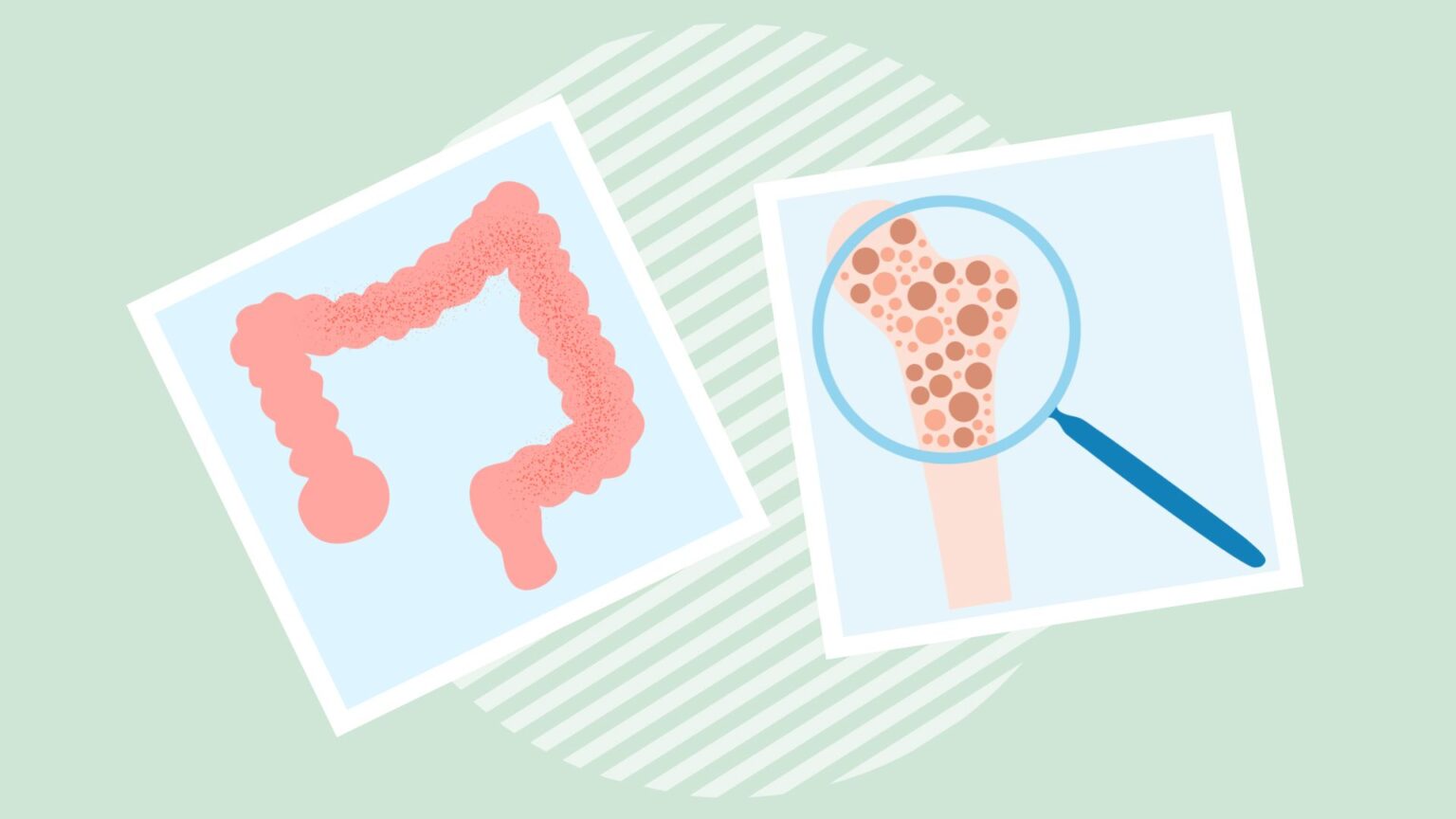
The three major factors that can affect bone health in Crohn’s disease are often interconnected, says Dr. Pont. Here’s how each of them contribute to lower bone mass.
Chronic Inflammation
Systemic, ongoing inflammation is a hallmark of Crohn’s, and it can disrupt the normal bone-remodeling process that helps your bones maintain their density.
Bone creation, repair, and strengthening is controlled by three key cell types:
- Osteoclasts break down old bone tissue that is no longer needed, releasing the minerals stored in that tissue so it can be used for other functions.
- Osteoblasts form new bone tissue to replace the old tissue, to remodel or heal any bone that needs to be strengthened as you age or that’s been damaged.
- Osteocytes are transformed osteoblasts that monitor changes in bone integrity and trigger the activity of osteoblasts and osteoclasts.
This bone remodeling cycle is dynamic and continuous, but inflammation can disrupt the process. That might lead to osteoclasts breaking down bone faster than osteoblasts can replace tissue. People with IBD often have elevated concentrations of immune proteins called cytokines, some of which increase the body’s inflammatory response. These can sabotage the bone remodeling process.
Malabsorption and Nutrient Deficiencies
Steroid Use
One study found that chronic steroid use — defined as three months or more — roughly doubles the risk of osteoporosis in people with IBD, compared with those who didn’t have chronic steroid exposure. A more recent research review suggested that the exact risk of short- or long-term steroid use contributing to osteoporosis in Crohn’s is still unclear.
This is because corticosteroids disrupt the formation of new bone tissue by:
- Decreasing how much calcium is absorbed in the intestine and increasing the elimination of calcium in urine
- Suppressing osteoblasts and osteocytes and increasing the activity of osteoclasts
- Reducing estrogen and testosterone, hormones that contribute to bone health
Read the full article here