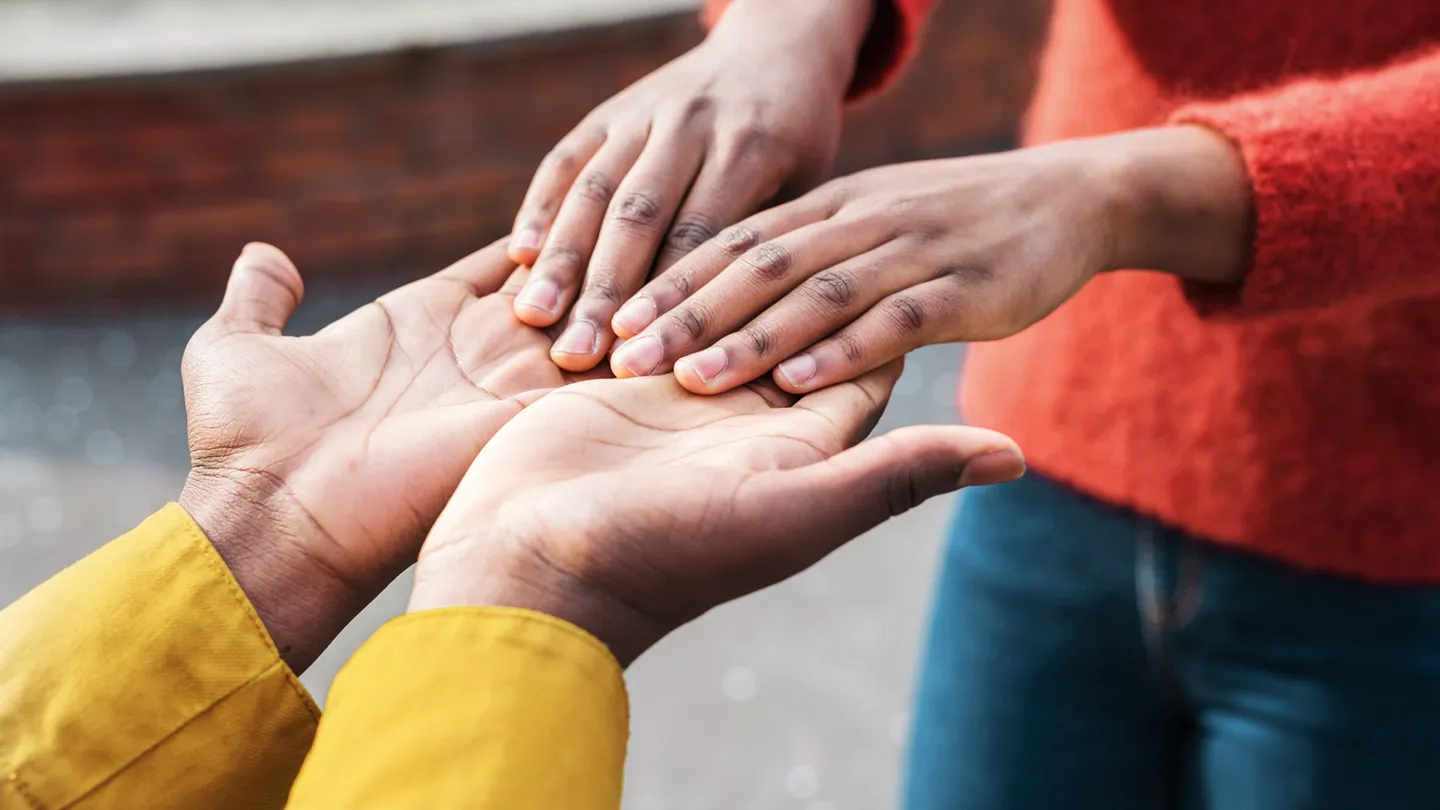
“I’m always delighted by the data showing kindness is as beneficial for the giver as the receiver,” says Kelli Harding, MD, MPH, an assistant clinical professor of psychiatry at Columbia University Irving Medical Center in New York City, and the author of The Rabbit Effect: Live Longer, Happier, and Healthier With the Groundbreaking Science of Kindness.
“We know intuitively that being kind feels good,” Dr. Harding says. “It’s great to know it’s also good for us. For example, evidence that shows volunteers live longer.” A meta-analysis that included studies involving adults ages 55 and older found that volunteering was associated with a 24 percent lower risk of mortality, on average, over a given period of time.
Practicing kindness can help you when you’re dealing with other people and everyday stressors. Showing kindness toward people who are rude to you or who cut you off on the road can help tamp down your stress response by putting you in a better mindset to think compassionately toward the other person (and not be overrun by your emotions), explains Julie Brefczynski-Lewis, PhD, a research assistant professor at West Virginia University in Morgantown, who studies how compassion meditation training can help relieve stress.
“Compassion meditation,” Dr. Brefczynski-Lewis adds, “helps one move from simple empathy, which can be quite distressing, into a balanced care for others.” It can help you tap into a warm feeling toward someone else without becoming overwhelmed.
Here are some of the significant ways kindness and improved health may be linked:
- Kindness buffers stress. Practicing kindness can lower cortisol and decrease depression and anxiety, says Harding. And research has found that even just observing acts of kindness can help to reduce stress.
- Kindness is good for facets of your mental health too. Some research shows that showing kindness toward yourself can be one tool in relieving depression, as well as social anxiety.
- Kindness is good for your heart. Kindness cultivates your sense of social support and lessens stress, which can protect your health, says Harding. “We know this from both animal studies and decades of public health research looking at the social dimensions of health. Kindness is not only heartwarming but also heart protective,” she says.
- Kindness increases longevity. Research has found that loving-kindness meditation may protect telomeres, a part of your DNA that serves as a biological marker of aging. A small study found that just 12 weeks of this type of meditation can buffer cellular aging when compared with a wait-listed control group.
Loving Kindness Meditation in Action
When Jeffrey Brantley, MD, founder and former director of the Mindfulness-Based Stress Reduction Program at Duke Integrative Medicine in Durham, North Carolina, arrived at a meditation retreat years ago, he expected his teachers to focus on mindfulness. Then the instructors announced that the students would be practicing loving-kindness meditation as part of their retreat: a Buddhist meditation in which you wish people well, including loved ones, strangers, people you find difficult, and yourself.
Dr. Brantley had a quick reaction. He says he remembers thinking: “What’s that got to do with being mindful?”
He felt some aversion to what the instructors had said. He judged them a bit — and wondered if they were taking the wrong approach. But he began the daily practice. He thought of others and wished them well with phrases like “may they be happy,” “may they be healthy,” and “may they find peace.” By the end of a week of directing kindness toward others, he noticed a change in himself, he says: “I became much more soft, if you will, and receptive to whatever came up.”
He realized that the teachers had included this practice for a reason. Trying to practice mindfulness — letting thoughts pass through your mind without attaching judgment to them — required kindness.
After the week of practicing kindness, he began to feel less judgmental toward the instructors. And he noticed that cultivating kindness in this way improved his mood, supported anger management, and helped him navigate complex interactions.
Brantley went on to work for decades as a psychiatrist specializing in meditation, including loving-kindness. He realized that cultivating warmth toward others and toward himself (self-compassion) — despite his initial annoyance with his teachers’ approach — has many benefits for our health.
As a clinician who integrates Eastern and Western traditions, Brantley says that his career has taught him that kindness toward others and toward oneself can be deeply connected.
For many people, he says — especially those who tend to beat themselves up about things — the hardest person to be kind to is yourself. By cultivating a kindness practice directed outwardly toward others, he says, you can eventually begin to direct more kindness inwardly too.
Read the full article here