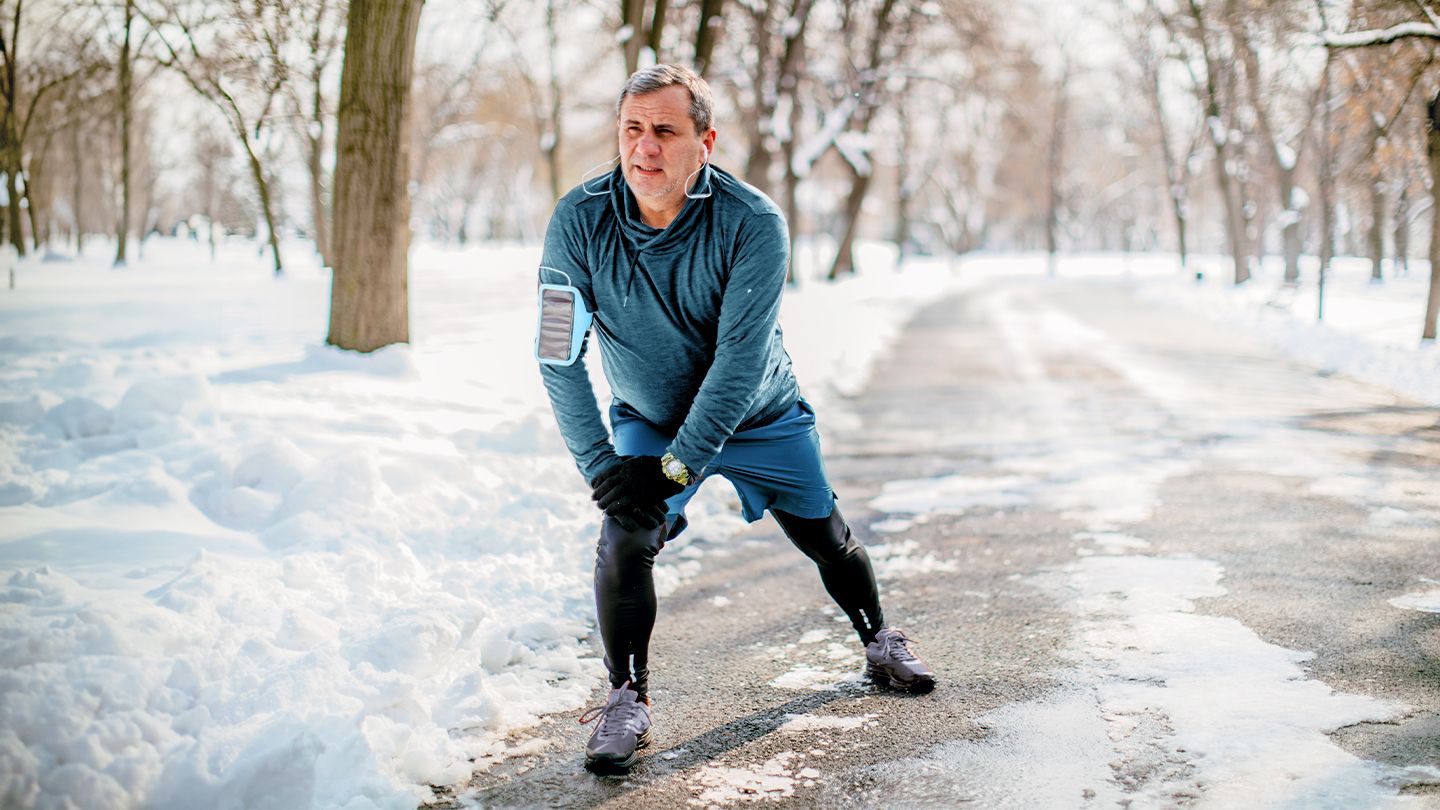
Whether you’re exercising outdoors in winter or simply spending time in a cold environment, feeling chilly prompts the body to burn more calories by increasing metabolism to better regulate body temperature, says Dominique Gagnon, PhD, the director of the Helsinki Clinic for Sport and Exercise Medicine in Finland, who has researched the effects of temperature on metabolism during exercise.
This happens via thermoregulation, the process by which the body produces or releases heat to maintain its core temperature of around 98.6 degrees F, all controlled by a structure known as the hypothalamus in your brain. When you’re cold, your body has to work harder to stay warm, which increases your basal metabolic rate — or the speed at which it burns calories (energy) to perform necessary functions, such as breathing and digestion.
As a first line of defense against the cold, vasoconstriction occurs, which is where the blood vessels contract in an attempt to retain heat.
From there, two thermoregulation mechanisms, known as shivering and non-shivering thermogenesis, can kick in. “Both processes require fuel to make this happen, which leads to the increase in calorie burn,” Dr. Ocobock explains.
Non-shivering thermogenesis is how the body first attempts to generate heat without muscle movement. It produces heat by activating brown adipose tissue (BAT), or specialized brown fat cells that transfer energy from food and boost calorie burn. “BAT is a type of fat that burns only to keep you warm when you are cold-exposed,” explains Ocobock, adding that increasing BAT activity can lead to increased calorie burn.
Shivering thermogenesis happens next, generating heat through rapid, uncontrolled muscle contractions. “Shivering thermogenesis is the dominant form of heat production under cold stress,” Dr. Gagnon says. “Shivering can produce up to five times the heat we generate from our resting state,” he adds, explaining that because muscles are one of the most metabolically active tissues in the body, they can generate warmth by burning fuel (or calories).
Together, these processes may contribute to weight loss. “You burn more calories in the cold,” says Caroline Apovian, MD, a professor of medicine and the codirector of the Center for Weight Management and Wellness at Harvard Medical School in Boston, explaining that both BAT activation and thermogenesis can lead to increased calorie burn.