


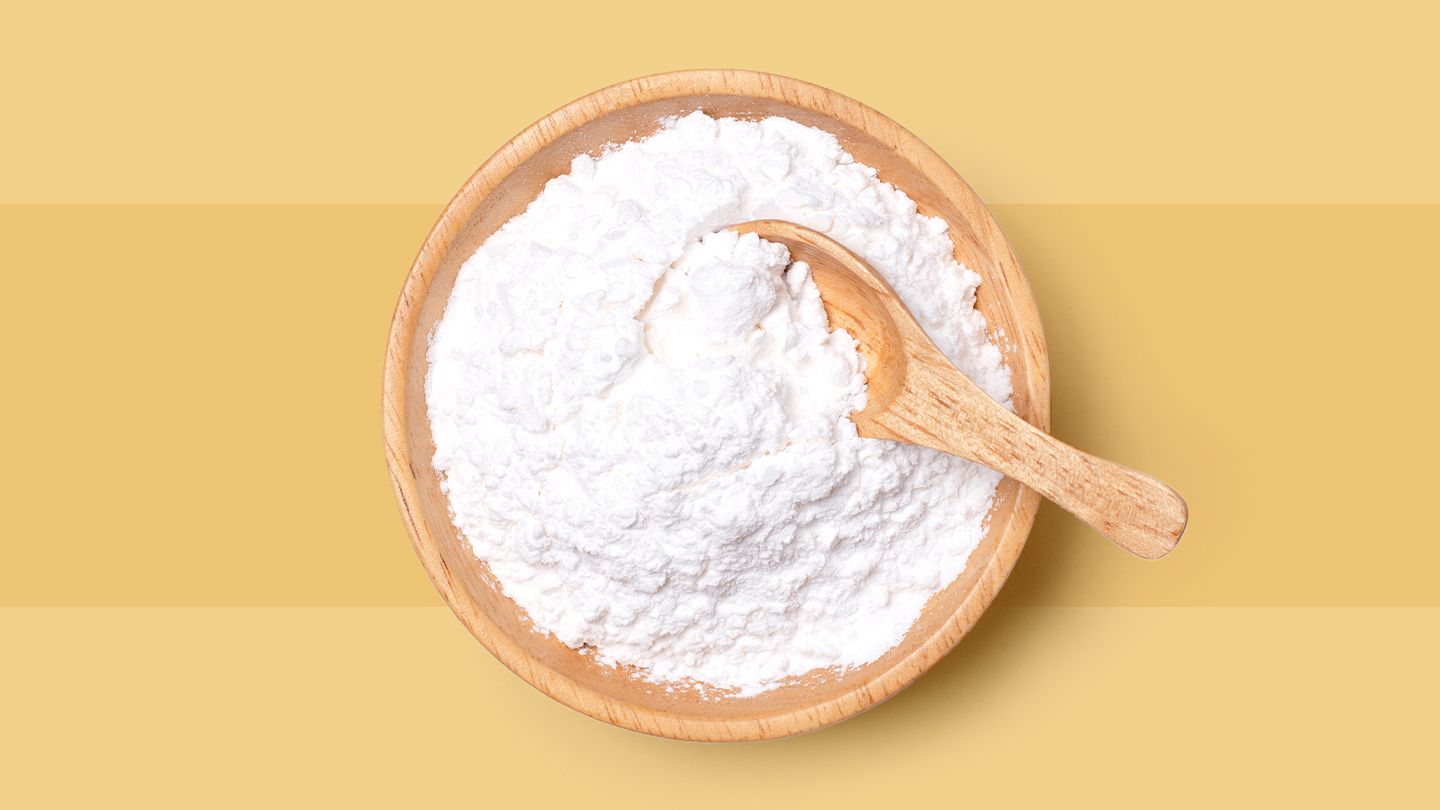
What Is Cornstarch?
Starch is the most abundant carbohydrate in the human diet, according to research, accounting for more than 50 percent of your carbohydrate consumption, and 70 to 80 percent of all calories eaten by humans worldwide, according to a review published in the journal Foods. It’s found naturally in plant cell walls and is particularly plentiful in tubers such as cassava and potatoes, according to The Johns Hopkins Patient Guide to Diabetes, and in grains such as wheat, oats, barley, rice, and corn, according to the American Diabetes Association.
According to The Nutrition Source, each corn kernel has three main parts: the germ, bran, and endosperm. The bran is the hard outside shell, which is high in fiber. The germ is the lower part of the kernel, which can sprout into a new plant and is rich in fats. Most of the starch in corn is inside the endosperm, which makes up the interior layer of the kernel, according to Purdue University.
To make cornstarch, sometimes called maize starch, farmers first separate the bran, germ, and endosperm of corn kernels. Then the starch from the endosperm of the kernels is extracted through a process called wet milling, according to a review article published in Food Technology & Biotechnology. Finally, the cornstarch is dried and packaged, and is therefore considered a highly processed food.
Besides being a common food additive, cornstarch has many commercial uses, according to the Corn Refiners Association. It can be found in products like batteries, baby powder, bioplastics, matches, and cosmetics. When mixed with water, cornstarch forms a non-Newtonian fluid called Oobleck, which is a liquid when stirred but a solid when force is exerted upon it, according to the Cornell Chronicle.
Read the full article here


