1. The Progestin Pill for Emergency Contraception
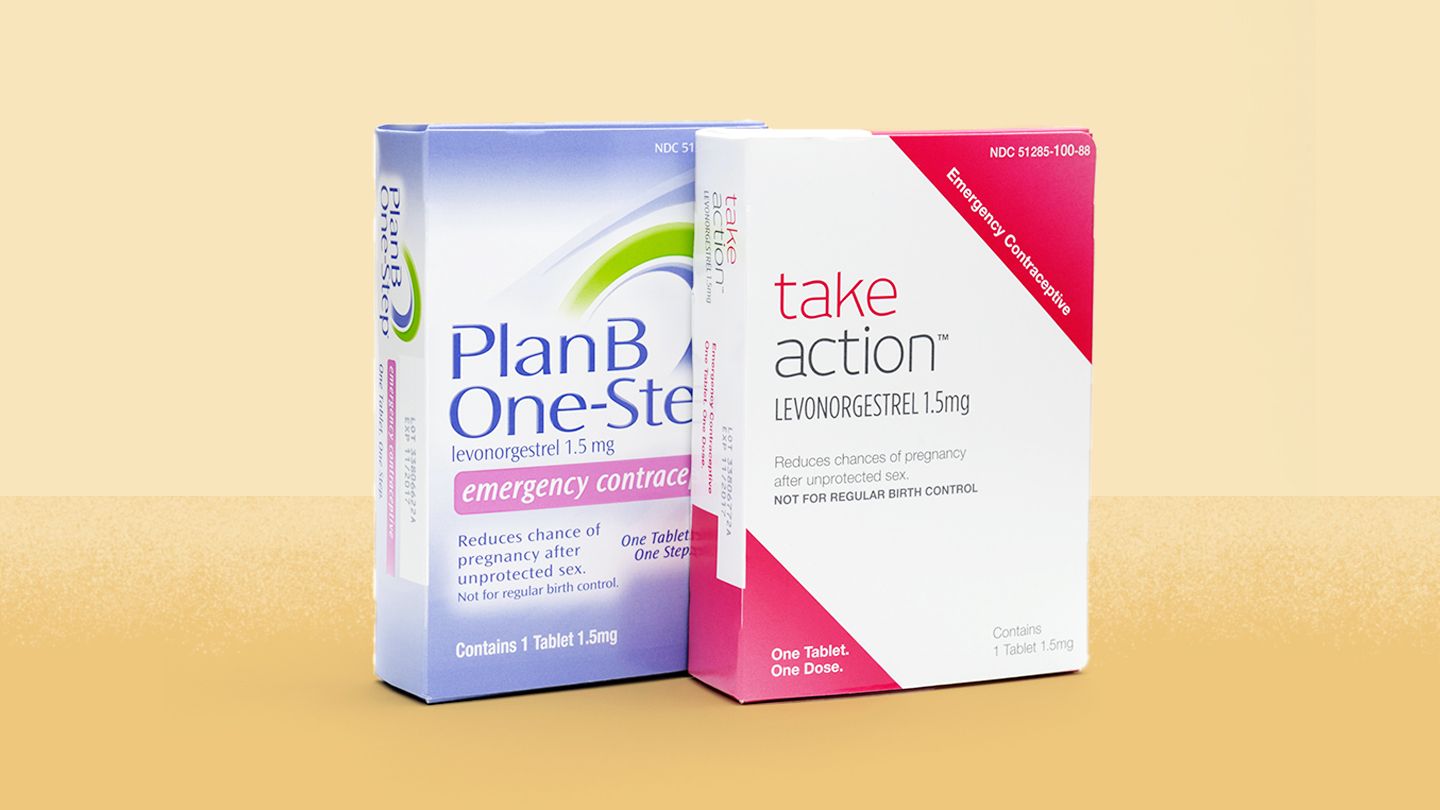
Also known as the “morning-after pill,” the progestin or levonorgestrel pill is often associated with its leading brand, Plan B One-Step.
Generic brands include:
- Take Action
- My Way
- AfterPill
- Preventenza
- EContra EZ
- Next Choice One Dose
The progestin pill is a single pill that should be taken as soon as possible after unprotected sex — within 72 hours — and the sooner you take it, the better it works.
A progestin morning-after pill can lower your chance of getting pregnant by 75 to 89 percent if you take it within three days of unprotected sex. It may be less effective if your weight is over 165 pounds.
Progestin side effects aren’t very common, but your next period may come earlier or later than expected, and be heavier, lighter, or more spotty. You may also:
- Get an upset stomach
- Feel lightheaded or dizzy
- Have tender breasts
If you vomit within two hours of taking the pill, it will not be effective and you’ll need to take it again.
How to Get the Progestin Pill: No Prescription Needed
Progestin pills are all available over the counter.
“One of the challenges is that people are unaware that you do not need a prescription to obtain emergency contraception,” says Dr. Bond. “An individual may be discouraged from requesting emergency contraception because they think you have to be female and show ID. The truth is that you don’t have to be a woman or have identification.”
The Progestin Pill: What Does It Cost?
Plan B usually costs about $40 to $50 nationwide. Generic versions usually cost about $11 to $45.
If you have health insurance, it’s likely that you can get the progestin pill for free — but you’ll need to get a prescription from your doctor or healthcare provider so that your health insurance will cover it (even though you don’t need a prescription to buy these types of pills over the counter).
You may also be able to get the morning-after pill for free or low cost from a Planned Parenthood health center, your local health department, or another family planning clinic.
The Progestin Pill: Where Can You Find It?
Progestin pills are available in the family planning aisle of many major pharmacy chains.
In cases where it’s kept locked up or behind the counter, a pharmacist “should be able to provide it for you, but you may come across some pharmacists who may try to prevent you from getting it, because a lot of people are very judgmental,” says Bond.
If a pharmacist refuses to provide you with progestin pills, ask them or another staff member if they can find another pharmacist for you to speak with.
2. Ulipristal (Ella) for Emergency Contraception
Ella is the brand name of a pill that contains ulipristal acetate, which delays or possibly prevents ovulation. Like with progestin, you just take one pill.
“When taken as directed, ulipristal is more effective in preventing pregnancy than progestin-only or combined emergency contraception pills,” Ghodsi says.
Ulipristal reduces your chances of getting pregnant by 85 percent if you take it within five days of unprotected sex.
Ulipristal works better than other EC pills for people who weigh 165 pounds or more. But if you weigh 195 pounds or more, ulipristal may not be as effective.
Like with progestin, after you take ulipristal, your next period may come earlier or later than expected, and be heavier, lighter, or more spotty. It’s not common, but you may get an upset stomach. If you vomit within two hours of taking ulipristal, it won’t be effective and you’ll need to take it again.
Where to Find It: Ulipristal Requires a Prescription
You need a prescription to get ulipristal. Talk with a healthcare professional immediately if you want to use this option — they may be able to send a prescription right to your local pharmacy.
Depending on which state you live in, you may be able to get a prescription for ulipristal directly from your pharmacist. You may even be able to order it online and have it delivered.
Ulipristal usually costs about $50 at a pharmacy or drugstore, but it might be free if you have health insurance. You may also be able to get ulipristal for free or low cost from a Planned Parenthood health center, your local health department, or another family planning clinic.
3. Combined Birth Control Pills for Emergency Contraception
Known as the Yuzpe method, this form of EC must be done under the supervision of a physician, as the number of pills you would take depends on the brand of birth control that you have.
Nausea and vomiting are common with high doses of birth control pills, which may affect how effective this EC method is — if vomiting occurs soon after taking it.
Combined Birth Control Pills: Where Can You Find Them?
This may be a good option if you have a prescription already and easy access to a supply. But “do not try to do this on your own,” says Ghodsi. “You need to know the specific amount to take.”
Talk with a doctor or a pharmacist about how many pills to take if you are already on this kind of birth control method and you have it on hand, because “the number of pills needed to use as emergency contraception differs for each brand of pill,” she says.
4. Copper IUD for Emergency Contraception
A nonhormonal IUD (also called the copper IUD) is a T-shaped copper-containing device. It makes sperm less likely to fertilize an egg, and can be used as a regular form of birth control or as a form of EC.
Brand names for the copper IUD are Paragard, Mirena, and Liletta. If inserted within five days of having unprotected sex, the copper IUD is highly effective, and if you weigh 165 pounds or more, the copper IUD may be a more effective EC option for you than other forms.
“The IUD is the most effective EC method in preventing pregnancy,” says Ghodsi. It can then be left in and used for long-term birth control, or removed at any time if you want to try to get pregnant.
During the first three to six months after insertion, spotting and heavy or prolonged bleeding can be common, but it should generally decrease with continued use.
Copper IUD (Paragard): Where to Find It
To use the copper IUD as EC, you’ll need to see a healthcare professional to have it inserted.
An IUD can cost up to $1,300, but it may be obtained for free or for a lower cost under many health insurance plans and some government programs. But even if an IUD costs more than other forms of EC, it may provide overall cost savings by providing effective birth control for between 8 to 12 years. Other forms of EC are only effective at the time they are used.
To get an appointment, call your doctor or health clinic as soon as possible.
Read the full article here